


Financial Markets and Economy
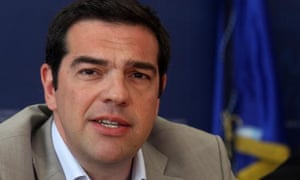 Alexis Tsipras to face take-it-or-leave-it ultimatum from lenders over debt offer (The Guardian)
The Greek prime minister, Alexis Tsipras, will be presented with what is expected to be a take-it-or-leave-it plan on Wednesday after five months of drama-filled negotiations to keep his debt-stricken country afloat.
The radical left leader is to be given the ultimatum after lenders at the EU, European Central Bank (ECB) and International Monetary Fund (IMF) agreed on the contours of a cash-for-reform deal late on Tuesday.
There’s no margin for error in today’s 2% economy (Market Watch)
The post-mortems on Friday’s revision to first-quarter gross domestic product featured all of the well-anticipated factors depressing economic growth. The U.S. economy contracted at an annualized 0.7 percent pace, the result of harsh winter weather; a strong dollar, which slashed exports by 7.6%; and a West Coast port strike, which caused delays in the flow of goods into and out of the country.
Some economists pointed to a fourth factor: “residual seasonality” in the first-quarter GDP data that isn’t adequately accounted for by the existing seasonal adjustment factors.
Futures Slide Then Rebound On Endless "Unnamed Source" Greek Chatter, Dollar Slides; China Surges (Zero Hedge)
Once again it's all about Greece, with the latest iteration of a "Greek deal is imminent" rumor making the rounds and, just like yesterday, sending futures in the green, just a little over an hour after the increasingly more illiquid E-mini future has slid 0.7%. The EUR, where the bulk of Virtu headline kneejerk reacting algos are to be found, has surged over 100 pips overnight on more hope and optimism.

 Don't blame the Fed for widening inequality. Blame Congress (CNN)
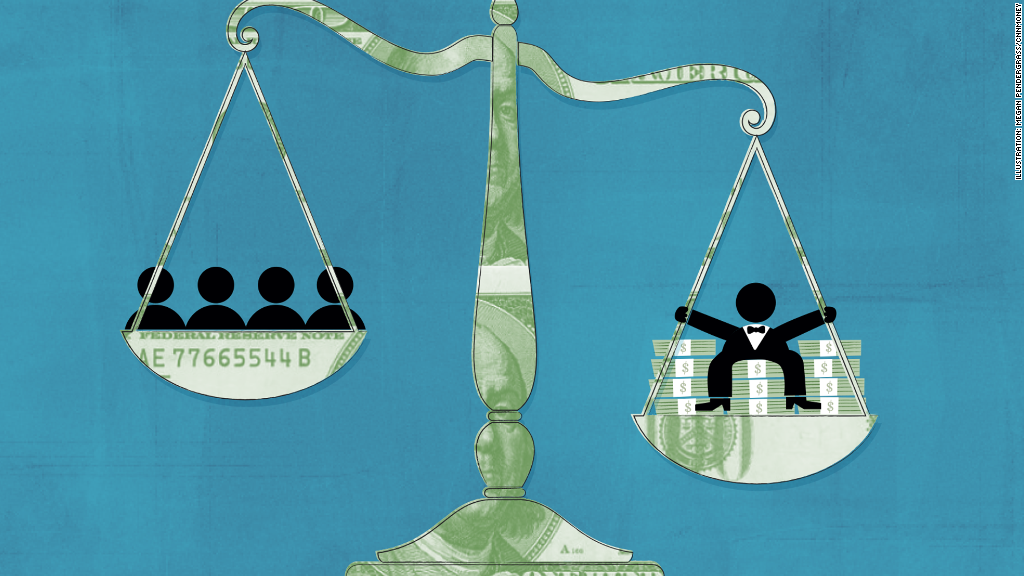
Yes, income inequality is a major problem, one that was worsened by the Great Recession and the sluggish recovery.
And yes, the Fed's response to the crisis — unprecedented amounts of easy money — did boost the stock market. That, in turn, made many rich Americans even better off.
But those arguing that the Fed intensified inequality miss the boat: The Fed was the only game in town in 2008 because Congress didn't act more forcefully to save the U.S. economy. And if the Fed didn't step up to the plate, income inequality would likely be far worse today.
 China After the Bubble (Bloomberg View)
Chinese Premier Li Keqiang says that rebalancing China's economy will be as painful as "taking a knife to one's own flesh." That may not be much of an exaggeration.
The news on China's economy is bad. Growth has slowed to a little over 5 percent (quarter on quarter, at an annual rate); prices are falling; consumer confidence is weak; corporate and local-government debts remain dangerously high. Even now, a well-managed exit from the country's credit binge may be possible, but an entirely painless one is not. Trying too hard to delay the inevitable will end up making things worse.
Expect The Recent Oil Rally To End Badly If OPEC Doesn’t Cut (Naked Capitalism)
By Arthur Berman, a petroleum geologist with 36 years of oil and gas industry experience. He is an expert on U.S. shale plays and is currently consulting for several E&P companies and capital groups in the energy sector. Berman is an associate editor of the American Association of Petroleum Geologists Bulletin, and was a managing editor and frequent contributor to theoildrum.com. He is a Director of the Association for the Study of Peak Oil, and has served on the boards of directors of The Houston Geological Society and The Society of Independent Professional Earth Scientists. Originally published at OilPrice
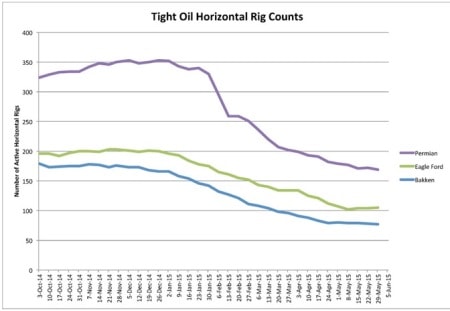
The U.S. rig count dropped by 10 rigs this week after only falling by 3 last week. No doubt some analysts will say that this increase is somehow important and that a return to normal–i.e., high oil prices–is around the corner.
U.S. factory orders weak; robust auto sales a bright spot (Reuters)
New orders for U.S. factory goods fell in April on weak demand for transportation equipment and other goods, suggesting that manufacturing remained constrained by a strong dollar and spending cuts in the energy sector.
The outlook for manufacturing and the broader economy, however, got a lift from another report on Tuesday showing automobile sales in May rising at their briskest pace in a decade.
State Of Emerging Markets: All About Those Central Banks (Value Walk)
This spring my travels have taken me to Europe, where I’ve had the pleasure of speaking with colleagues, clients and companies in the region that are on our team’s radar. I’ll be back in London for Franklin Templeton’s 2015 London Investment Conference, which has the theme: “Investing for What’s Next™: A Roadmap for Active Investors.” Certainly, the value of active management is one we champion at Franklin Templeton, and we in the Templeton Emerging Markets Group are quite active in our travels around the world searching for potential investment opportunities. At the conference, I’ll be sharing some key themes I see shaping emerging markets today, but here’s a sneak peak.


What's OPEC Going to Do With Iran's Million Barrels a Day? (Bloomberg)
Just when it looked like OPEC was winning the war with U.S. shale-oil drillers, a new front is opening up within its own ranks.
The Organization of Petroleum Exporting Countries’ summit on June 5 to determine the group’s output will come three weeks before a deadline for a deal on Iran’s nuclear program. The government in Tehran says it can add almost 1 million barrels to daily production within six months of sanctions being lifted.
Stocks and Trading
 Chinese Flock to Hong Kong to Buy Stocks They Could Get at Home (Bloomberg)
Stephen Qin, a 28-year-old office worker in northern China, traveled 1,000 miles and set up an account in Hong Kong to trade Chinese stocks he could have bought at home.
The money of thousands of mainland investors is doing a similar round trip, flowing into brokerages in Hong Kong and then returning to China via share purchases through the city’s stock connect with Shanghai.
Eight Ways To Know It’s Time To Sell Your Stock (Value Walk)
Much has been written about when to buy a stock. There is a well-defined process – look for possible undervalued stocks by focusing on low price-to-earnings (P/E) or price-to-book (P/B) stocks, examine the stocks to determine their intrinsic value and finally make the decision to buy only if the margin of safety is satisfied.
 European Stocks Down on Greek Jitters (Wall Street Journal)
By midmorning, the Stoxx Europe 600 was down around 0.6%. Italian and Spanish bonds sold off sharply, sending the yield on the 10-year Italian bond to above 2% for the first time this year. Bond yields rise as prices fall.
Ian Williams, an economist and strategist at brokerage Peel Hunt said that stocks have broadly rallied so far this year and that as a result, it doesn’t take much for investors to pull back.
Don't Let the European Stock Rally Fool You (Bloomberg)
Anyone looking at the direction of Europe’s benchmark stock averages last month could get the impression investors are untroubled by the situation in Greece.
Looking a little deeper suggests otherwise.

 A 99-Year-Old Wall Street Veteran Reveals the Secrets of Her Success (Bloomberg)
As she nears 100, Irene Bergman has some advice for enjoying a long career on Wall Street: Don’t do anything stupid.
Consider investment returns, the financial adviser at Stralem & Co. said in an interview at her New York apartment, where, surrounded by paintings from Dutch masters, she telephones her clients. While many investors nowadays obsess over quick profits, it’s best to wait at least three years, or better yet, many more, before evaluating holdings. But don’t be afraid of revising your thesis, she said. If thorough research favors a portfolio shift, have courage and make changes.
Politics
 South China Sea Debate Could Lead To World War 3 (Value Walk)
A conflict, which has shaken the whole world, is still making headlines. And the reason is clear: the tiny islands of the South China Sea could lead to a world war.
It is all about the confrontation between China (and, apparently, also Russia now) from one side, and the US and its allies from the other side, over the vast South China Sea, a body of water larger than the Mediterranean.
The Selzer Score Shows Scott Walker Is Actually Trouncing Republicans in Iowa (Bloomberg)
Scott Walker has an edge on other Republican contenders in the latest Bloomberg Politics/Des Moines Register Iowa Poll, winning the backing of 17 percent of likely Republican caucus-goers in the Hawkeye State. By another metric—the "Selzer Score"—he jumps even higher.
With the Republican field growing by the week, methods of evaluating candidates' strength can be difficult to come by. Only a few percentage points can separate leaders from the field.

 Martin O'Malley Is Running for President. Here's What You Need to Know (Mother Jones)
The wait is over. Martin O'Malley is running for president. The former Maryland governor formally kicked off his quest for the Democratic presidential nomination on Saturday in Baltimore, the city he served as mayor for six years. O'Malley, who has been publicly weighing a bid for years, is aiming to present himself as a solidly progressive alternative to former secretary of state Hillary Clinton. But it's going to be an uphill slog—in the most recent Quinnipiac poll, he received just 1 percent—56 points behind Clinton, and 14 points behind Vermont Sen. Bernie Sanders, who was an independent until he entered the 2016 Democratic contest.
 The Beltway’s Clinton derangement syndrome: What I saw inside a Hillary campaign briefing (Salon)
So I attended that now-infamous briefing with Clinton campaign officials in Brooklyn last Thursday. I wasn’t going to write about it. No news was broken. Still, I learned some things I could see myself using along the way. It was a snapshot; here’s what senior officials thought about the race six weeks in, and seven months from the first caucuses in Iowa. I knew it was set up to give increasingly restless Clinton beat reporters time to ask questions of campaign officials, to diffuse the obviously building tension. I wasn’t sure it would work, but it seemed worth a try.
 US President Obama Sends A Warning To China (Value Walk)
President Barack Obama has warned China about its aggressive land reclamation projects in the South China Sea. Speaking at the Young Southeast Asian Leaders Initiative Fellows Program, Obama said that Beijing should not try to expand its sovereignty by "throwing elbows" because it will be counterproductive.
Obama said that China is big, and it will be successful. And maybe some of their claims in the South China Sea are legitimate. If Beijing's claims are legitimate, people would recognize them. But China shouldn't establish that by pushing people out of the way or by throwing elbows. He reiterated that the U.S. was willing to work with any country that wanted to establish and enforce rules "that can continue growth and prosperity in the region."
Technology
 Blocks Modular Smartwatch-In-The-Making Will Run On Android (Tech Crunch)
U.K. hardware startup Blocks Wearables, which is in the process of building a modular smartwatch — shown off in concept-form in this teaser video last fall, and originally inspired by Google’s Project Ara modular smartphone — has confirmed the device will run on a modified version of Android Lollipop, rather than the Google Wear platform.
Also today the team has revealed the device’s core module will be powered by a Qualcomm Snapdragon 400 chipset, with peripheral modules using ultra-low-power ARM processors.
Airdog's follow-you-everywhere camera drone set for August Launch (Digital Trend)
AirDog’s auto-follow action sports drone looks set to take to the skies at the end of August, the startup behind the flying machine has revealed.
These follow-you-everywhere drones have gotten plenty of attention recently, with Squadrone System also pushing out a similar device to the AirDog in the fall.
AirDog, which works with GoPro cameras, lets you grab Hollywood-style aerial shots all by yourself, “just in case you can’t rent a helicopter plus professional photographer,” the Palo Alto-based team says on its website.
Health and Life Sciences
 Missing link found between brain, immune system; major disease implications (Science Daily)
"Instead of asking, 'How do we study the immune response of the brain?' 'Why do multiple sclerosis patients have the immune attacks?' now we can approach this mechanistically. Because the brain is like every other tissue connected to the peripheral immune system through meningeal lymphatic vessels," said Jonathan Kipnis, PhD, professor in the UVA Department of Neuroscience and director of UVA's Center for Brain Immunology and Glia (BIG). "It changes entirely the way we perceive the neuro-immune interaction. We always perceived it before as something esoteric that can't be studied. But now we can ask mechanistic questions."
 Herbal extract boosts fruit fly lifespan by nearly 25 percent (Science Daily)
The herbal extract of a yellow-flowered mountain plant long used for stress relief was found to increase the lifespan of fruit fly populations by an average of 24 percent, according to UC Irvine researchers.
But it's how Rhodiola rosea, also known as golden root, did this that grabbed the attention of study leaders Mahtab Jafari and Sam Schriner. They discovered that Rhodiola works in a manner completely unrelated to dietary restriction and affects different molecular pathways.
 Studies Try To Find The Right Doses Of Our Favorite Drugs: Coffee And Alcohol (Forbes)
The world’s most-used stimulant and best-loved depressant – caffeine and alcohol, respectively – have shared an interesting phenomenon in recent years: They’ve both moved from the probably-not-healthy-but-socially-acceptable category to the probably-healthy-in-moderation-because-science-says-so category. Based on the scientific evidence of the last decade or two, coffee is now believed to reduce risk of everything from Parkinson’s and Alzheimer’s diseases to depression to erectile dysfunction to some forms of cancer to overall mortality. Alcohol is thought to reduce the risk of heart disease, stroke, and perhaps even curb obesity and type 2 diabetes risk. Each drug has been shown to have these much-desired health benefits, and few risks, provided they’re consumed in moderation. The operative words are of course in moderation.
Pre-existing inflammation may promote the spread of cancer (Science Daily)
Although normal inflammation plays an important role in helping to fight off infections, there is mounting evidence that chronic inflammation is linked to increased risk of tumor development. A new study conducted by researchers in the Charles E. Schmidt College of Medicine at Florida Atlantic University is helping to shed light on the important link between inflammation and cancer, and how pre-existing inflammation may aid in the metastatic process.
Life on the Home Planet
We now spend more than eight hours a day consuming media (QZ)
If you weren’t reading this article, you would probably be scanning something else on the internet, watching TV, or maybe—just maybe—reading a newspaper or magazine. In short, you would be consuming media.
On average, people spend more than 490 minutes of their day with some sort of media, according to a new report by ZenithOptimedia. Television remains dominant, accounting for three hours of daily consumption—an hour more than the internet, in second place. (The report measures media consumed in its traditional form—for example, broadcasts on television sets and newspapers in print. Watching videos on the web or reading a newspaper’s website counts as internet consumption.)

 Everest Glaciers Could Disappear By 2100: Scientists (Value Walk)
Global warming is going to change the Mount Everest dramatically by the end of this century. According to a new study published in The Cryosphere, up to 99% of glaciers around the Everest could disappear by the year 2100 if greenhouse gas emissions continue at the current pace. Joseph Shea of the International Center for Integrated Mountain Development in Nepal and lead author of the study said that he did not expect to "see glaciers reduced at such a large scale."
 Flood Threat to Millions as Storms Bring Rain from South to Northeast (Time)
Millions of Americans were under the threat of flooding Tuesday as severe storms brought torrential rain from the Gulf Coast to the Northeast—including areas already waterlogged by recent downpours.
Flood watches and advisories were in place from Washington, D.C., through to Boston as heavy overnight rain was forecast to continue until the early afternoon.
 Ocean Species Set for Reshuffle Unseen in 3 Million Years (Scientific American)
The world’s oceans could face a massive reshuffling by the end of the century—the likes of which hasn’t been seen in as many as 3 million years—due to warming waters.
Changes are already afoot in the oceans. Roughly 93 percent of the heat trapped by human greenhouse gas emissions is ending up in the world’s seas and already contributing to changes from slowing plankton growth to recent incursions of tuna near Alaska, thousands of miles from their normal range.

