Financial Markets and Economy
Bear market may wait for equities to extend gains (Market Watch)
Contrarians are a lot more upbeat about the stock market’s prospects than they were only two weeks ago.
That’s because Wall Street’s mood turned remarkably sour over the first half of this month, and that, in turn, makes contrarians more cheerful.

Black Hills Burns for Gas as Power Utilities Hunger for Growth (Bloomberg)
Black Hills Corp.’s deal to buy SourceGas Holdings LLC for $1.89 billion shows how sales-challenged electric utility owners are on the hunt for natural gas delivery companies that promise better growth.
Power sellers and distributors such as Black Hills, already grappling with rising costs from new environmental rules, are facing stagnant electricity demand because of energy conservation measures. Over the past five years, the amount of power sold by Black Hills has declined, with wholesale volumes falling by more than half, data compiled by Bloomberg show.

 What Is The Freelance Economy? (Forbes)
Freelancing is clearly a hot topic as of late, and you may have heard of the freelance economy. But what exactly is that? Sadly, there’s a lot of confusion around what the freelance economy is and what or who a freelancer is! Trying to define this new space is a bit like trying to explain art, “I’ll know it when I see it,” has become the best explanation.
This is due to a couple of reasons. First, we have a lot of different ways to describe the same thing – contingent workers, freelancers, 1099 workers, and on-demand workers to name a few. Second, depending on which research report you use, freelancers are defined in different ways such as a person who does freelance work full-time to a full-time employee who does one freelance project a year.
 U.K. Inflation Slows to Zero as Core Rate Unexpectedly Falls (Bloomberg)
Britain’s inflation rate fell back to zero in June, led by prices for food and clothing, while the core measure dropped to match a 14-year low.
The stagnation in headline prices follows a 0.1 percent increase in May and was in line with the median estimate in a Bloomberg survey of economists. The core rate fell to 0.8 percent from 0.9 percent, the same as April, which was the lowest since March 2001.
 Hedge Funds Reassess China After Market Free Fall (NY Times)
It wasn’t long ago that hedge funds were preparing for one of the biggest openings into China in years. In November, foreign investors were for the first time able to buy and sell shares listed in the Shanghai market directly. It was a chance to ride the great China bull run.
How times have changed.
The investors who passed on Airbnb’s seed funding had their reasons (Quartz)
Over the weekend, Airbnb CEO Brian Chesky shared some of the rejection letters he received in 2008 when the company was raising a $150,000 seed round at a $1.5 million valuation. That amount would’ve given investors a 10% stake in the startup, now worth $25 billion.

 Oil prices drop after Iran inks nuclear deal (CNN)
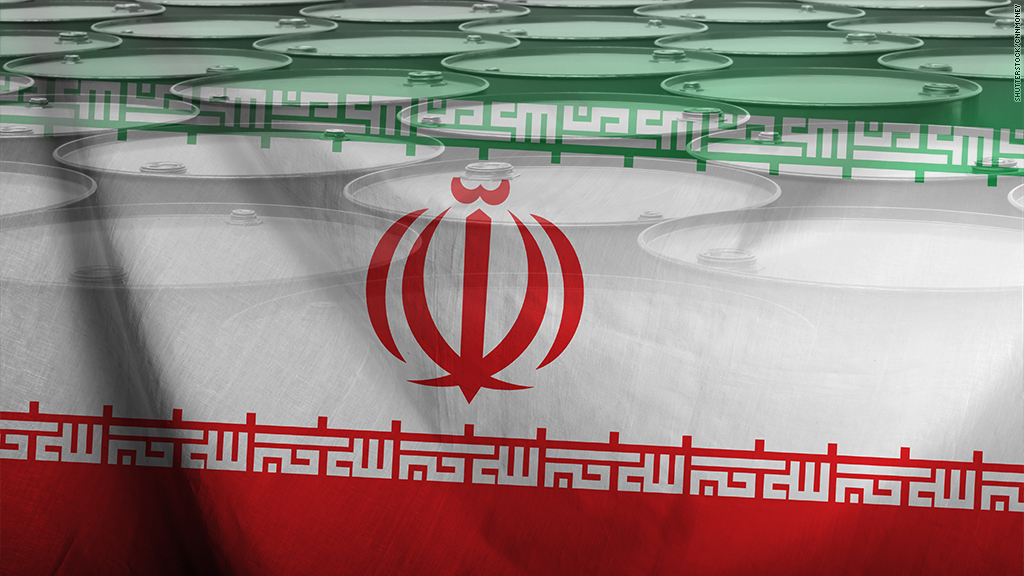
Oil prices continued to decline Tuesday after Iran and global powers agreed on a historic deal that would shed sanctions in exchange for curbs on Tehran's nuclear program.
Sanctions have long restricted Iran's oil production and exports, and the country is eager to regain its status as a global energy power.
Crude prices fell by as much as 2.3% to $50.98 a barrel as investors reacted to the freshly-inked deal.
 Crude oil slides to three-month low after Iran deal (Market Watch)
Crude oil prices plunged early on Tuesday after reports that six world powers have reached a nuclear deal with Iran in exchange for removing economic sanctions on the country, allowing it to resume oil exports.
August West Texas Intermediate crude CLQ5, -1.95% dropped $1.03, or 2%, to $51.17 a barrel, setting it on track for the lowest settlement price since mid-April. Brent crude for the same month LCOQ5, -1.88% slid 90 cents, or 1.5%, to $56.95 a barrel.
 Oil prices tumble as Iran, global powers reach nuclear deal (Business Insider)
Oil prices tumbled more than a dollar on Tuesday as Iran and six global powers reached a nuclear deal that could see an easing of sanctions against Tehran and a gradual increase in its oil exports just as Asian economies showed further signs of weakness.
Iran and six major powers have reached a historic nuclear deal, which will grant Tehran sanctions relief in exchange for curbs on its nuclear programme, an Iranian diplomat said on Tuesday.
 Here’s how you can be ‘The Millionaire Next Door’ (Market Watch)
The word “millionaire” used to evoke a world of extravagant wealth. But, these days, it’s nothing special, as everyone needs to save at least $1 million for retirement.
And that money shouldn’t be spent in retirement, but instead lived on through income-producing investments such as dividend stocks, bonds and real estate. What’s important is how much income you can generate with that nest egg to keep you (and your spouse or partner) living comfortably for an indefinite period.
 Censored By Sanction? Barclays Freezes Accounts Of Russia's News Agency (Zero Hedge)
The UK has frozen the bank account of Russia's Rossiya Segodnya news agency without any explanation. "To close the account of one of the world’s leading news agencies is censorship, the direct obstruction of journalists’ work," Dmitry Kiselyov, head of the news agency, exclaimed, asking "what kind of press freedom and democracy can Britain claim to have if it prevents one of the world's largest news agencies from working in the country?" As RT reports, while no official justification for the move has been offered, a source in the banking sector told the agency the Exchequer has put Dmitry Kiselyov on an anti-Russian sanctions list. With David Cameron in full tyrannical 1984-mode, this latest move is perhaps not entirely surprising (though we await the boomerang from Putin).
 European Index Futures Fall as Greece, Central Banks in Focus (Bloomberg)
European stocks fell as investors shifted their focus to central banks and weighed whether the Greek parliament will pass the reforms necessary for a new bailout.
Oil stocks declined as Iran was said to reach a deal with world powers over its nuclear program, fanning speculation that it will increase crude shipments into an already oversupplied market. Subsea 7 SA dropped 3.1 percent and SBM Offshore NV slid 2.4 percent.
 Chinese rebound fizzles as shares end lower (Market Watch)
A rebound in China fizzled Tuesday as investors question whether the rally would be able to continue without fresh government help.
The Shanghai Composite SHCOMP, -1.16% closed down 1.2% at 3924.49, knocking off some of the gains from a three-day rally. The index remains down nearly a quarter from its peak on June 12.
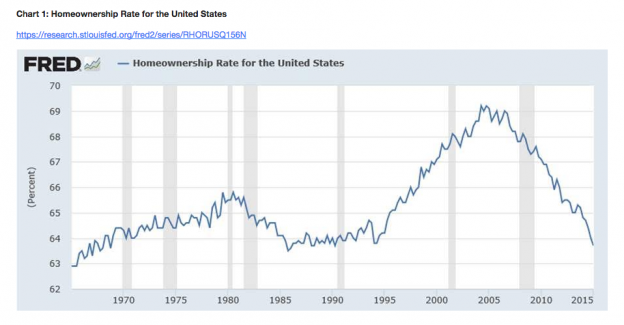
Individual Houses: 754,000 In 1988 vs 657,000 Today (Value Walk)
There are ~100,000 fewer individuals building houses today than there were in April 1988 yet the US population at 320 million in 2015 is 31% larger than the 244.5 million in April 1988. This says volumes about the current state of our economy, what has happened to home lending, what our perceptions are about income equality, US Real GDP and the next few years of SP500 price performance.
 MPLX, MarkWest Merger Gets Lukewarm Reception from Investors (24/7 Wall St)
Midstream and downstream petroleum company Marathon Petroleum Corp. (NYSE: MPC) announced Monday morning that MPLX L.P. (NYSE: MPLX), a master limited partnership (MLP) spun out of Marathon in 2012, will acquire MarkWest Energy Partners L.P. (NYSE: MWE). The transaction is valued at $15.8 billion and will be a tax-free “unit-for-unit” exchange and include a one-time cash payment to MarkWest unitholders. Including MPLX’s assumption of MarkWest’s debt, the deal is worth a total of about $20 billion.
 SNB Bite Proving Worse Than Bark With Investors Kept on Toes (Bloomberg)
Half a year after roiling markets and putting his credibility on the line, Swiss National Bank President Thomas Jordan’s approach to keep markets guessing seems to be working for now.
Jordan’s strategy of interventions and negative interest rates since dropping a key measure has held the franc in a steady range below parity with the euro, prevailing against ever-mounting pressure on the single currency from Greece’s debt crisis.
 Greece’s new deal simply won’t work for these two reasons (Market Watch)
How fitting that a tourism-driven nation like Greece signs a debt-restructuring deal whose one certainty is that everyone involved will once more book tickets.
The bad news is that the trip sure to be taken isn’t to the Parthenon or the Greek Islands. It will be back to Brussels in a few years, when this deal fails and has to be renegotiated yet again.
No Exit for Investors as India Dithers on Stock Exchanges IPOs (Bloomberg)
Toronto-based Caldwell Securities Ltd. chose India over China in 2007, buying about 5 percent of what was then the Bombay Stock Exchange. Eight years later, Chairman Thomas Caldwell is frustrated because he has few exit options.
The 140-year-old bourse, now renamed BSE Ltd., and its younger rival, the National Stock Exchange of India, haven’t yet sold shares to the public. Policy makers have long viewed the bourses as public utilities to promote an equity culture in the world’s second-most populous nation rather than as a business.

 China's Tsinghua Unigroup offers to buy Micron Technology for $23 billion: WSJ (Business Insider)
China's Tsinghua Unigroup Ltd offered to buy U.S. memory chipmaker Micron Technology Inc <MU.O> for $23 billion, The Wall Street Journal reported, citing people familiar with the matter.
Tsinghua Unigroup offered $21 per share for Micron, which is at a 19.3 percent premium to the stock's close on Monday, the Journal said.
Why the bond market went bananas one day (Market Watch)
It was the day that shook the bond market’s world — Oct. 15, 2014.
After a somewhat worse than expected retail sales report, the market for Treasurys went absolutely bananas.
The yield on the 10-year Treasury — the yardstick for basically all of global finance — experienced a 37 basis point trading range, one of the biggest swings of all time, without any real fundamental reason.
.png)
Politics
 Donald Trump: A False Flag Candidate? (Anti-War)
That we have to take Donald Trump seriously confirms my longstanding prognosis that we’ve entered another dimension in which up is down, black is white, and reason is dethroned: in short, we’re living in BizarroWorld, and the landscape is not very inviting. Yet explore it I must, since the reality TV star and professional self-promoter is rising in the polls, and garnering an inordinate amount of media attention – and whether the latter is responsible for the former is something I’ll get into later, but for now let us focus on what practically no one else is paying much attention to, the Trumpian foreign policy.
Right off the bat, we run into trouble, however, since the signature sound-bites that characterize the Trump style don’t really qualify as anything close to a “policy.” Yet his various effusions on this topic do indeed translate into a mindset, which one might callblowhard-ism….
 What Hillary Clinton Didn't Say in Her Economic Policy Speech (Bloomberg)
For all of the economic issues that Hillary Clinton ran through during her politics-heavy economic policy speech—from raising the minimum wage to overhauling the capital gains tax—it's just as instructive to look at what she left out.
Following the Democratic front-runner's first major economic policy speech of the campaign, Republicans were quick to accuse Clinton of pandering to the liberal wing of her party. "I thought Secretary Clinton did a decent job of delivering Senator Warren's speech," said Tony Fratto, a member of former President George W. Bush's administration who now advises banks and hedge funds at Hamilton Place Strategies, referring to Senator Elizabeth Warren of Massachusetts, a favorite of the Democratic Party liberals….
Technology
 These Futuristic Car Tires Never Go Flat (Wired)
OVER THE PAST 100 years, many things about the automobile have advanced. Safety, fuel efficiency, and price—they’ve all improved dramatically. But one thing that hasn’t been revolutionized is the tire. Sure, we have advanced compounds to optimize fuel economy and traction in the snow, but at their core they’re just piles of air, surrounded by a rubber donut.
Hankook thinks we can do better. The South Korean manufacturer been developing a non-pneumatic tire for a while. We first saw the concept in 2013, when it was one integrated unit, combining tire and rim in one.
 Nike designed a sneaker for people with disabilities (Engadget)
Whether it be in clothing or footwear products, Nike is known for never being afraid to experiment with new technologies. The latest example is the company's new Zoom Soldier 8, a gorgeous shoe that was designed for people facing disabilities — such as amputees and those who have suffered a stroke or cerebral palsy. With the sneaker's Flyease tech, which features an unusual zipper mechanism that ties around the heel, Nike's made it easier for the disabled community to tie their shoes. Instead of having to use both hands to accomplish this task, something that may not be possible or easy for some, Flyease simplifies this by letting them rely on one hand to open or close the shoe.
Health and Life Sciences
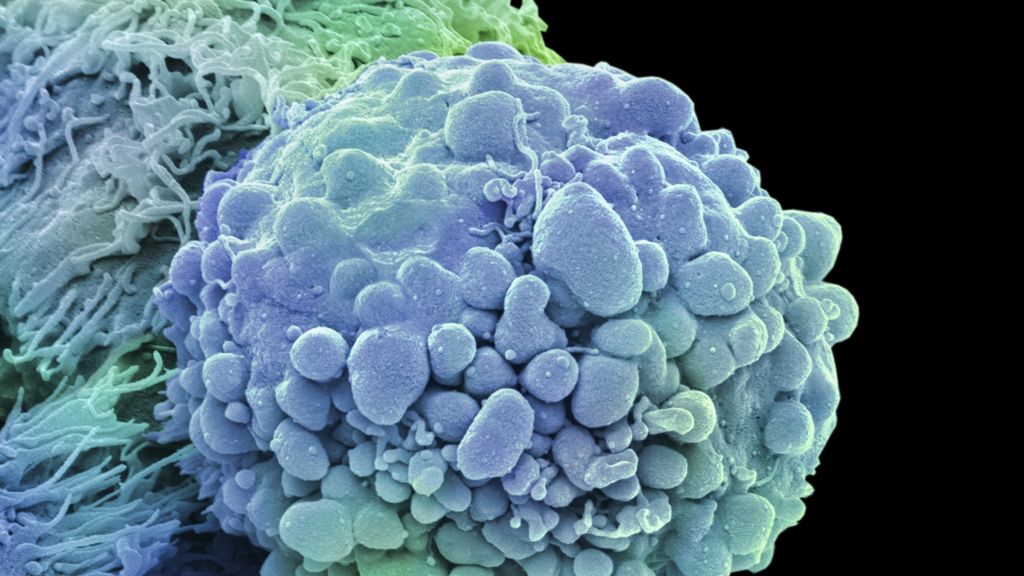 'Softener' may help kill cancers (BBC)
It may be possible to "soften-up" cancers before hitting them with chemotherapy drugs, researchers suggest.
A study, published in the Cancer Cell, uncovered how tumours can become resistant to commonly used drugs.
The University of Manchester team suggest drugs already in development may be able to counter this resistance to make chemotherapy more effective.
 Marijuana may be helping to overcome painkiller abuse in America (Quartz)
It’s yet another feather in the cap of those who champion legalizing pot in the US.
In a working paper published by the National Bureau of Economic Research (paywall), researchers observed that in US states with medical marijuana dispensaries, the number of admissions to rehabilitation facilities for pain medication and opioid overdoses has decreased by 15% and 16% respectively.
Life on the Home Planet
 Warming 'worst case' must be studied (BBC)
For too long the world has seen rising temperatures as a problem of predicting long range weather forecasts.
The authors says that leaders must focus on the 'worst case scenarios' and how likely they are to occur.
The report has been compiled by an international group of scientists and experts in risk.
 Endangered Antelope with Fur More Valuable Than Gold on Its Way to Recovery (Scientific American)
“Soft gold”—that’s what poachers call the soft underfur of the Tibetan antelope, also known as the chiru (Pantholops hodgsonii). The fur is woven into yarn to make luxurious shawls known as shahtoosh, which sell for anywhere between $4,000 and $40,000. All of this trade is illegal.
The shahtoosh’s high price comes with an equally high cost: Three to five antelopes die for every shawl.
he high demand for these extravagant shawls nearly wiped out the Tibetan antelope. Their population plummeted from nearly a million at the beginning of the 20th century to about 70,000 in 2000.