

Visit Phil's Stock World for up-to-the-minute news, market commentary and investing ideas.
Financial Markets and Economy
 Global Stocks Jump After Greeks Vote Themselves Into Even More Austerity (Zero Hedge)
And so the 2015 season of the Greek drama is coming to a close following last night's vote in Greek parliament to vote the country into even more austerity than was the case before Syriza was voted into power with promises of removing all austerity, even with Europe – which formally admits Greece is unsustainable in its current debt configuration – now terminally split on how to proceed, with Germany's finmin still calling for a "temporary Grexit", the IMF demanding massive debt haircuts, while the rest of Europe (and not so happy if one is Finnish or Dutch) just happy to kick the can for the third time.
Sales of U.S. Bonds in One Day This Week Were Twice as High as European Bond Sales so Far This Month (Bloomberg)
Syndicated sales of bonds in Europe this month totaled half the amount sold in a single day in the U.S. as the Greek debt crisis weighed on debt offerings on one side of the Atlantic and not on the other.

This chart shows just how badly HSBC got slayed on social media for being late on Apple Pay (Business Insider)
Apple Pay launched in the UK on Tuesday, with most of the big banks and plenty of big name chains already signed up.

 Audi Said to Revise China Sales Target as Stock Rout Saps Demand (Bloomberg)
Audi AG has abandoned a target to sell 600,000 cars this year in China, its biggest sales region, as the country’s stock market rout sapped demand for luxury vehicles, two people familiar with the company’s plans said.
The German carmaker will provide an update on the market situation when it announces first-half results on July 30, said the people, who asked not to be named because the information isn’t public. Audi’s Chinese sales rose 1.9 percent to 273,853 cars in the first half.
 How Cuba is using capitalism to save socialism (Quartz)
If you are fantasizing about your first trip to Cuba, that fantasy presumably includes cruising down the Malecón, Havana’s seaside promenade, in an open-topped 1957 Chevrolet Bel-Air, with the tropical light playing over the decrepit buildings and the warm sea breeze tickling your scalp. Cigars are probably involved, and rum.
The rum and cigars are produced by state-managed Cuban enterprises. But who is maintaining the classic cars? In many cases, not the Cuban government, but self-employed entrepreneurs.
Irans Museum-Vintage Jets Open New Market for Boeing-Airbus Duo (Bloomberg)
The historic nuclear deal with Iran gives Boeing Co. and Airbus Group SE a rare opportunity to reshape a civilian aviation industry.
Once the accord is implemented, the republic will be able to start replacing hundreds of museum-vintage jumbo jets that still rumble over Tehran as mainstays of an aviation fleet frozen in time by economic sanctions. The investment could total at least $20 billion.

 FTSE 100 gains, but Rio Tinto, Anglo American underperform (Market Watch)
U.K. stocks climbed Thursday, with shares in Dixons Carphone PLC rising after the electronics retailer’s earnings came in better than expected, while Rio Tinto PLC and Anglo American PLC fell after trading updates from the mining giants.
The FTSE 100 UKX, +0.45% was up 0.4% to 6,778.24, on track for its seventh straight advance.
 China's debt is now twice the size of its gross domestic product (Business Insider)
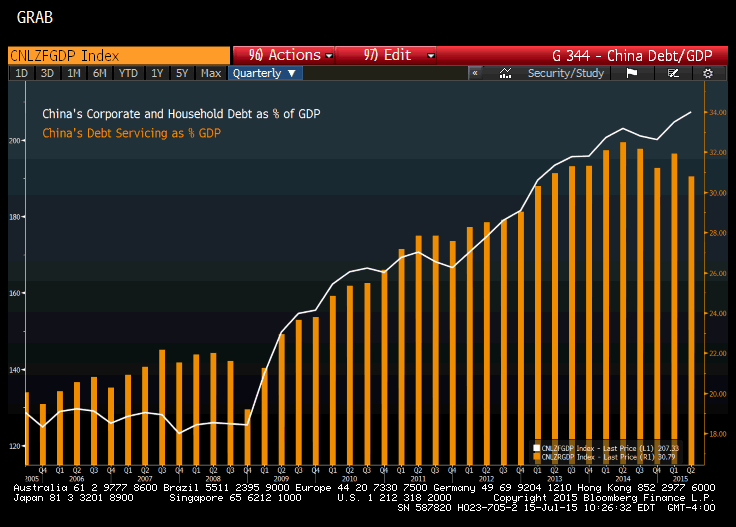
While China’s economy expanded at a faster-than-expected pace in the year to June there was something that accelerated even quicker – private sector debt.
According to Bloomberg, outstanding loans for companies and households stood at a record 207% of gross domestic product (GDP) at the end of June, nearly double the 125% level seen in 2008.
Having delivered four rate cuts, three reserve ratio requirement reductions and implementing debt swap facilities to reduce financing costs for local government authorities in the past nine months, the renewed stimulus push by China’s central bank, the PBOC, risks creating conditions that will encourage more debt to be taken on, potentially increasing risks of instability in China’s financial system.
China'sDebt-to-GDP Ratio Just Climbed to a New Record High (Bloomberg)
While China's economic expansion beat analysts' forecasts in the second quarter, the country's debt levels increased at an even faster pace.
 Stocks tumble to slash $30 billion from China's growth (CNN)
China's economic growth could take a multi-billion dollar hit due to recent stock market volatility.
The world's second-largest economy enjoyed a boost as Chinese markets rallied to incredible highs in the first half of the year. At its peak, the benchmark Shanghai Composite was up by 60%, while the smaller Shenzhen Composite more than doubled in size.
 China's 'bubbly' stock market is 'a bigger global threat' than Greece (Business Insider)
China’s stock market has been the talk of investors, along with Greece, for the best part of 2015. The rapid rally that began midway through last year, something that saw the benchmark Shanghai Composite rally more than 150% in just 9 months, fascinated markets.
Then in mid-June the rally stopped and was savaged, losing more than 30% in just a few short weeks.
Not only has it captured the imagination of investors, it also raised serious concerns about the trajectory the market was on as well as the broader Chinese economy.
 U.S. Charges 12 Alleged Darkode Hackers in Global Shutdown (Bloomberg)
A computer hacking forum known as Darkode, “the most sophisticated English-speaking forum for criminal computer hackers in the world,” has been dismantled, the U.S. Justice Department said.
Federal authorities Wednesday announced criminal charges against a dozen individuals associated with the forum, the result of an undercover investigation during which the FBI infiltrated Darkode’s membership, prosecutors said.
 Gundlach Doesnt See Fed Raising Interest Rates This Year (Bloomberg)
Bond manager Jeffrey Gundlach said he doesn’t see the Federal Reserve raising interest rates in 2015 even as Fed Chair Janet Yellen reiterated the central bank remains on course for such a move.
Gundlach, co-founder of DoubleLine Capital, said on Wednesday at the CNBC Institutional Investor Delivering Alpha Conference in New York that if the Fed increases interest rates prematurely, it will have to cut again. The money manager also said that high-yield bonds will be a “debacle” in three to four years, although they are a good investment bet in 2015.
 The UK labor market has suddenly stopped growing (Business Insider)
We have got used to living with the productivity puzzle but the labor market figures released today now add a labor market conundrum. The total number of people in work fell by nearly 70,000 comparing the three months to May 2015 with the previous three months – the first significant dip in the figures since 2010. But why? We would normally associate sharp falls like this with the onset of recession, and there is absolutely no sign of that.
Your Google Searches Could Help the FDA Find Drug Side Effects (Bloomberg)
Millions of people search online for information about symptoms and prescription drugs. Patterns in their searches might reveal previously unknown side effects of medications.

 China's real estate market could trigger the next global crash (Business Insider)
I’ve been stressing several different triggers that could cause the next great crash and depression, after over six years of non-stop stimulus and bubble denial. They are: the faults in southern Europe starting with Greece; the faults in the U.S. fracking and Canadian tar sands industries; rising long-term government debt rates despite continued QE; and municipal defaults including Illinois and Puerto Rico.
But the ultimate trigger would be the bursting of the greatest bubble in modern history – China!
Amid global turmoil, Russia is a best buy (Market Watch)
Russian stocks are among the cheapest in the world by almost any measure, writes Jeff Reeves.

Chinas Steel Slowdown Spreads as Koreas Posco Gets Shake-Up (Bloomberg)
The impact of China’s cooling steel industry is starting to spread.
South Korea’s Posco, the world’s fifth-biggest steel producer, plans to purge business units to try to counter the China-induced slump in global steel markets. The company reported a 61 percent drop in second-quarter profit.

 Amazon or Walmart: Which stock is the better buy? (CNN)
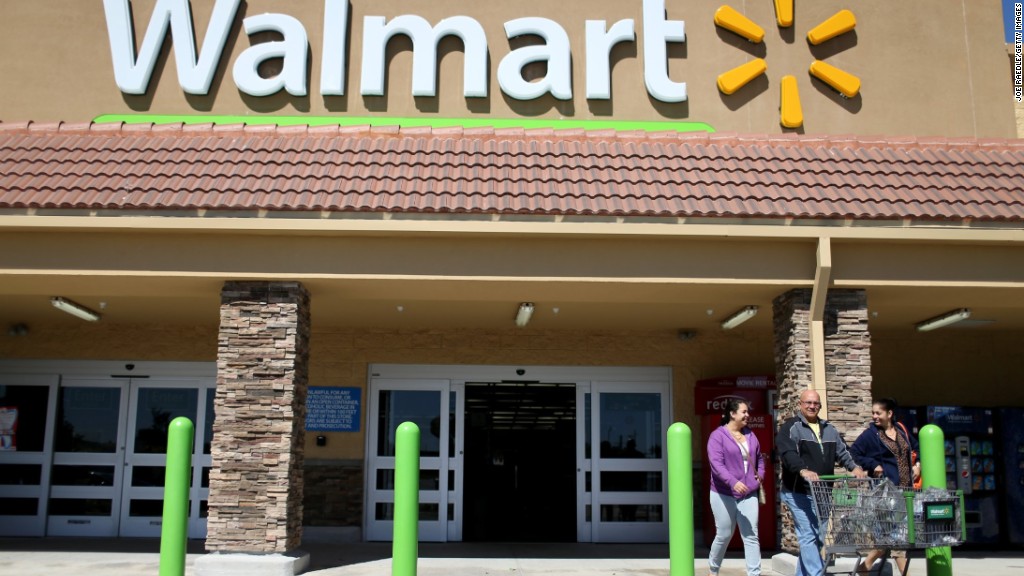
If Amazon really wanted to give its customers a special treat on Prime Day, it would offer a massive sale on its stock.
Shares of Amazon (AMZN, Tech30) are up more than 50% this year and are trading near an all-time high. The company is now worth $215 billion.
Cheap Oil Is Bad for the Economy (at Least, So Far) (Bloomberg)
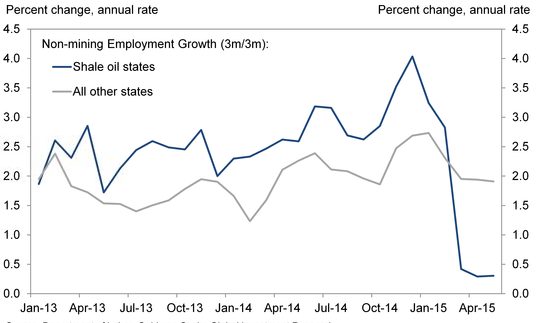
Goldman finds thatadecline in energy investment has outweighed gains from consumer spending.
 A summer stock market rally is looking more likely (Market Watch)
Isn’t it amazing how last week’s big market headaches have become this week’s trivia questions?
Last week, China’s markets, reeling from a huge sell-off, were dropping even further after the Chinese government took some steps to stanch the bleeding. Since then, the government has essentially halted trading on huge parts of the market and ordered fund managers to buy the rest.
BofA Sees Weaker Ruble Mitigating Iran-Spurred Oil Swings (Bloomberg)
Potential economic risks to Russia triggered by oil-price volatility in the aftermath of Iran’s nuclear accord will be mitigated by the ruble, according to Bank of America Corp.

Russia May Lure Skeptics to Inflation-Linked Debt as Sale Starts (Bloomberg)
Russia’s debut sale of bonds that protect against inflation looks set to appeal to investors even as consumer-price growth slows.

Politics
 Obama: ‘Nonsense’ that he was content not to get hostages back (Market Watch)
President Barack Obama on Wednesday reacted angrily during a news conference to a question on whether he was “content” to conclude a nuclear deal with Iran without the return of U.S. hostages.
The question was posed by Major Garrett of CBS. “Can you tell the country, sir, why you are content with all the fanfare around this deal to leave the conscious of this nation, the strength of this nation unaccounted for in relation to these four Americans,” the reporter asked.
 Obama Girds for Battle on Iran Deal (Wall Street Journal)
President Barack Obama delivered an unusually animated and sometimes combative defense of the Iran nuclear deal the day after it was reached, girding for a complicated political challenge likely to force him to use his veto to save his crowning foreign-policy achievement.
Lawmakers have 60 days to review the agreement and an option to vote on approving or disapproving it, with opposition to the deal widespread among Republicans who control both houses of Congress. If they vote it down, the deal’s survival will hinge on Mr. Obama’s ability to secure enough support from his own Democratic Party to prevent a two-thirds majority in each chamber from overriding his promised veto.
How Bush and Trump Are Opposites on Ideological Consistency (NY Times)
Candidates running for president spend a lot of their time soliciting donations. But they are also donors. Where they put their money is a pretty good litmus test of their ideology.
.png)
 Wall Street is betting on Bush and Clinton (Market Watch)
Wall Street opened its wallet for Republican presidential contender Jeb Bush and Democratic front-runner Hillary Clinton in their first weeks as candidates, despite the sometimes tough talk on the campaign trail about closing the nation’s wealth gap.
Bush collected nearly $145,000 from employees at Goldman Sachs and almost $167,000 coming from seven other big banks. Another $63,100 in contributions came from employees of the financial firm Neuberger Berman, run by his cousin, George Herbert Walker IV, who previously worked at Goldman Sachs, according to campaign financial-disclosure reports released Wednesday.
Technology
 Cooking food in a pan cut in half shows the magic of induction cooking (Gizmodo)
Induction cooking is sorcery masked as science through the power of magnets. That’s what I believe in my heart, at least. The heat is created from magnetic induction (as opposed to a gas stove flame or electric heating) which means without the right type of pan, you won’t be able to cook anything, even if the stove is on.
Yuppiechef clearly demonstrates this by showing different foods be cooked (eggs, chocolate and bacon) in a pan cut in half. You can see it cooking on one side but not on the other. Sorcery, I say!
 Robots run Japan's Weird Hotel (Mashable)
The Weird Hotel – seriously – has some pretty unusual employees
The hotel in Sasebo, Japan opens July 17 and will be manned almost entirely by robots. What started as an effort to cut down on labor costs ended up turning into the world's wackiest hotel.
Health and Life Sciences
 Guidelines for cholesterol lowering meds (CNN)
Two new, separate studies from Harvard researchers aim to put to rest the ongoing controversy over the updated 2013 cholesterol management guidelines.
Both studies explore one particularly controversial aspect of the guidelines: a special formula that predicts a person's cardiovascular event risk by taking into account risk factors such as age, blood pressure and cholesterol levels.
 Mitochondrial disease treatment hope (BBC)
US scientists say they have taken the first step towards treating people born with mitochondrial diseases – debilitating genetic disorders.
Their study, in Nature, showed healthy cells could be produced in the laboratory from affected patients.
The team suggest future treatments could use the healthy tissues to repair the heart and other damaged organs.
Life on the Home Planet
 Matter: A Social Parasite’s Sophisticated Mimicry (NY Times)
An ant colony is an insect fortress: When enemies invade, soldier ants quickly detect the incursion and rip their foes apart with their oversize mandibles.
But some invaders manage to slip in with ease, none more mystifyingly than the ant nest beetle.
 Big organic farms may actually add emissions (Futurity)
Large-scale organic farming operations aren’t reducing greenhouse gas emissions, according to a review of almost a decade of data from 49 states.
The increasing numbers of commercialized organic operations, which now make up just 3 percent of total agricultural lands, appear to contribute to increased and more intense levels of greenhouse gases coming from each acre of farmland, reports Julius McGee, a doctoral student in the University of Oregon sociology department.
 Why We Play Sports: Winning Motivates, But Can Backfire, Too (NPR)
Playing sports has always been important to 31-year-old Erik Johanson, a city planner in Philadelphia. Johanson thrived in baseball and ice hockey as a kid, he says — "one of the best players on the team in high school."
Today, Johanson is married and expecting his first child but is still passionate about ice hockey — and about winning. He plays on a highly competitive team of guys who got together after college and still play weekly in an adult league; they hope to take the crown this year.

