


Financial Markets and Economy
Wild Trading Exposed Flaws in ETFs (WSJ)
At issue is one of Wall Street’s most popular products ever. Investors have poured hundreds of billions of dollars into ETFs over the past decade, drawn by low fees and the prospect of being able to buy or sell a mutual-fund-like product whenever they want like a stock. But trading records and conversations with investors show ETFs couldn’t keep that promise when the Dow Jones Industrial Average dropped more than 1,000 points in the first minutes of trading on Aug. 24.
 Oil prices dip as demand stalls, but U.S. supported by rig cut (Business Insider)
Oil prices dipped on Monday in Asia as weakening demand weighed on markets, although U.S. futures received some support from reduced American drilling.
Front-month Brent crude futures were down 37 cents at $47.77 per barrel at 0535 GMT. U.S. crude futures dipped 6 cents to $44.57.
China Stock-Index Futures Rise as Data Spurs Stimulus Optimism (Bloomberg)
China’s stocks slumped the most in three weeks as data over the weekend added to concern the economic slowdown is deepening and traders gauged the level of state support for equities.

 What Should I Do With My Failing Investments? (Trader Feed)
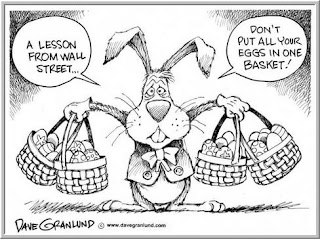
A Stock Twits reader asks a difficult question: "Much of my retirement is in PG stock. Any idea when this slow bleed will stop? What can I expect in short term?"
There are many possible answers to this; let's start with the most basic. If you're asking a similar question following a market decline, you've made a cardinal error. A sizable proportion of your retirement funds should be concentrated in no single stock, even if it's a solid, dividend paying company that you've researched well. If you look at how those stocks traded during the bear moves of 2001-2003, 2008, and 2011, for example, you'll find stomach-wrenching drawdowns. When it's your future financial security at risk, it's difficult to tolerate those drawdowns. That increases the odds that you'll bail out at the worst possible times.
 Get into bank stocks for the money (Market Watch)
All eyes are on the Federal Reserve this week to see whether central bankers will raise interest rates at long last. And as a result, many investors are speculating about the future of bank stocks.
The obvious bull case for financial stocks is the hope of higher rates and better net interest margins. While many remain convinced that the Fed will not move quickly on rates and will delay any increase until after the upcoming September FOMC meeting, the bottom line is that rates have nowhere to go but up.
 Which Fed Leaders Fear Inflation? Look at When They Grew Up (NY Times)
If you are an 18-year-old college freshman in the United States, inflation in your lifetime has averaged less than 2 percent. If you are a 30-year-old millennial, you experienced inflation above 5 percent for only one year — when you were in kindergarten, perhaps in the form of the coins in a piggy bank buying fewer pieces of candy the longer they sat unspent.
If, by contrast, you are one of the 17 people who set monetary policy for the United States, you have had a rather different experience. The median age of the Federal Reserve System’s policy-making committee members is 58, meaning all of them were fully formed adults during the double-digit inflation of the 1970s and early 1980s. They know firsthand how it feels when mortgage rates are astronomical and a dollar buys substantially less every year.
Investors haven’t been this worried about a stock-market bubble since 2000 (Market Watch)
Investor fears that the stock market is overvalued have hit their highest level since the dot-com bubble’s peak in 2000, and that could lead to a bear market, warns Nobel-winning economist Robert Shiller.
This is the chart that has Robert Shiller seriously worried about the stock market (Business Insider)
Robert Shiller is worried about the stock market.
And the Nobel laureate's concern can be summed up in this chart, which shows a steady decline in the valuation of the stock market from both institutional and individual buyers.

China Slowdown Stokes Bets Kuroda Will Cushion Impact in Japan (Bloomberg)
The bond market is preparing for Bank of Japan Governor Haruhiko Kuroda to increase stimulus even as he sticks to his rhetoric that China's market meltdown won't wreck his inflation goals.

 Dollar dips against yen, euro ahead of FOMC meeting (Market Watch)
The U.S. dollar was lower against the yen and euro in Asian trade Monday, with investors keeping a close eye on the policy meeting of the Federal Reserve and the Bank of Japan later this week.
The dollar USDJPY, -0.26% was at ¥120.37 around, compared with ¥120.57 late Friday in New York.
 Here are the 2 questions Fed members need to ask themselves this week (Business Insider)
On Thursday, the Federal Reserve will announce its most anticipated monetary policy decision in years. Currently, markets aren't pricing in a move from the Fed, which hasn't raised interest rates since July 2006.
But many economists on Wall Street think the US economy is currently strong enough to warrant a rate hike and consequently expect the Fed to act on this basis.
El-Erian Says Rate Move Close Call as Bonds Suggest Fed to Wait (Bloomberg)
Mohamed A. El-Erian says the chance of a Federal Reserve interest-rate increase this week is to close to call. The bond market suggests theres no need to worry about the meeting being a cliffhanger because policy makers will wait.

 Gold nudges higher ahead of Fed’s key rate decision (Market Watch)
Gold futures traded modestly higher in early Monday trade as investors trained their sights on this week’s crucial Federal Reserve decision on interest rates, which will come Thursday at the conclusion of the central bank’s two-day policy meeting.
Investors appear divided on the likelihood of a rate increase—the first since 2006—but gold is finding some support from traders who view the probability of the Fed ending its ultraloose monetary policy this month as low.
Oil Search Rejects Woodsides $8 Billion Takeover Bid as Too Low (Bloomberg)
Oil Search Ltd. rejected Woodside Petroleum Ltd.’s $8 billion takeover bid, saying the proposal undervalues the company’s liquefied natural gas expansion plans in Papua New Guinea.

 Economists don't see a major China slowdown (CNN)
China's stock market has gone haywire, the yuan has depreciated and the country's massive factory sector appears to be weakening.
But economists aren't hitting the panic button just yet.
 How Wall Street grabs $17 billion from investors’ portfolios every year (Market Watch)
The House Financial Services Committee is about to conclude four days of public hearings on the Department of Labor’s proposed rule change for financial advisers. If passed, the rule would expand the application of the fiduciary standard — requiring advisers to put clients’ interests first — to all providers of retirement investment advice.
At the hearing, Wall Street will undoubtedly continue its campaign against the rule change. The industry’s enablers in politics and media will dutifully regurgitate bogus message points designed to alarm middle class investors. Both Republican and Democratic legislators have already attempted to attach a provision to the fiscal year 2016 Labor, Health and Human Services Funding Bill that would defund the Department of Labor from implementing the rule.
Politics
Labour’s Dead Center, by Paul Krugman (NY Times)
Jeremy Corbyn, a long-time leftist dissident, has won a stunning victory in the contest for leadership of Britain’s Labour Party. Political pundits say that this means doom for Labour’s electoral prospects; they could be right, although I’m not the only person wondering why commentators who completely failed to predict the Corbyn phenomenon have so much confidence in their analyses…
But I won’t … get into that game. What I want to do instead is talk about one crucial piece of background to the Corbyn surge — the implosion of Labour’s moderates. On economic policy, in particular, the striking thing … was that every candidate other than Mr. Corbyn essentially supported the Conservative government’s austerity policies.
 How will Tapper get Republicans to 'actually debate'? (CNN)
Moderator Jake Tapper wants to spur as much actual debate as possible during CNN's Republican presidential primary debate in California on Wednesday.
"What the team and I have been doing is trying to craft questions that, in most cases, pit candidates against the other — specific candidates on the stage — on issues where they disagree, whether it's policy, or politics, or leadership. Let's actually have them discuss and debate," Tapper told me on CNN's "Reliable Sources."
 Jeb Bush's anti-Wall Street tax plan isn't going to go anywhere (Business Insider)
Jeb Bush wants to sound like he's tough on Wall Street, but the idea that he'll actually start chipping into carried interest with higher tax rates is about as believable as his father's "Read My Lips" pledge proved to be.
In a recent tax-reform plan, Bush said he’s going to crack down on the use of the capital-gains tax rate if elected President — something that would pinch Wall Street in the wallet in a big way.
Technology
 Will a robot take your job? (BBC)
Type your job title into the search box below to find out the likelihood that it could be automated within the next two decades.
About 35% of current jobs in the UK are at high risk of computerisation over the following 20 years, according to a study by researchers at Oxford University and Deloitte.
Health and Life Sciences
 The amazing significance of what a mother-to-be eats (BBC)
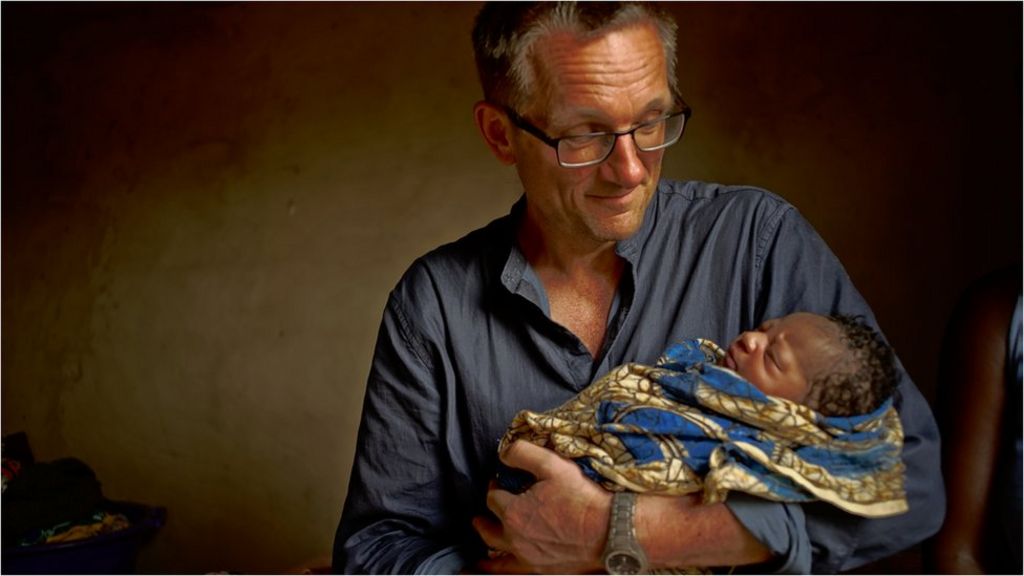
New research reveals the extraordinary impact that your mother's diet at the time of your conception has on the rest of your life, writes Michael Mosley.
A couple of months ago, I found myself in a small village in Keneba, in The Gambia, chatting to a perky 90-year-old, Karamo Touray, surrounded by his many children and grandchildren. Apart from a sore toe, he said he was in good shape and he attributed the fact he had enjoyed such a long and healthy life to the will of Allah.
Study urges intensive management of high blood pressure (CNN)
There's good news in a National Institutes of Health study for Americans over 50 suffering from high blood pressure — keep the pressure below 120 to reduce your risk of heart attack and stroke.
The NIH was so eager to get the news out that it decided to stop the study early, evaluate the preliminary results and make recommendations to doctors.
 Chronic Kidney Disease Can Be Dubious Diagnosis (NY Times)
Is it really possible that half of the population older than 70 has chronic kidney disease?
International guidelines adopted in 2012 make it seem that way. They define the disease in terms of how efficiently kidneys filter the waste from our blood, a measure called the glomerular filtration rate. Healthy young people commonly have G.F.R.s of about 120. A G.F.R. lower than 60 or another marker of kidney damage (such as protein in the urine) for more than three months means chronic kidney disease.
 Red Wine Ingredient and Alzheimer's Progression (WebMD)
High doses of resveratrol, a compound found in red wine and berries, may have some activity against Alzheimer's disease, a preliminary clinical trial suggests.
Resveratrol is an antioxidant that certain plants produce to shield against stress from the environment. People ingest small amounts when they eat red grapes, red wine, berries or dark chocolate.
Lab research has suggested that resveratrol might have some powers against the diseases of aging — including Alzheimer's disease. But evidence from human studies has been lacking.
Life on the Home Planet
 Fukushima dumps first batch of once-radioactive water in sea (Phys)
The operator of Japan's Fukushima on Monday began releasing previously radioactive groundwater from the crippled nuclear plant into the sea, saying a filtration process had made the discharge safe.
Tokyo Electric Power Co (TEPCO), which operates the plant in eastern Japan, said that on the first day it had released 850 tons of groundwater, which had become radioactive after flowing near the plant.
 A Home Built to Minimize Energy Use and Maximize Storm Protection (Popular Science)
In October of 2012 Hurricane Sandy wreaked havoc along the northeast coast of the United States.
In New Jersey alone there was an estimated 29.4 billion dollars in damages, with 346,000 homes affected and almost 2.5 million people left without power.

