


Financial Markets and Economy
 If oil is below $50 a barrel, $1.5 trillion worth of oil projects will lose money (Business Insider)
Oil drillers are deadlocked.
According to a report Monday from Wood Mackenzie, the energy and mining consultancy, the upstream oil and gas sector (involved in exploration and production) needs to find ways to spend less and hope that oil prices rebound soon.
Otherwise, a whole bunch of projects slated to be undertaken are going to be money losers.
Apple tops stock-buyback list even as repurchases shrink (Market Watch)
Apple Inc. AAPL, +1.55% topped the list of biggest buybacks in the second quarter, repurchasing $10 billion worth of shares. However, total buybacks by S&P 500 companies fell versus the first quarter, according to data from FactSet on Monday.

Asian Futures Pace U.S. Stock Rally on Fed Outlook as Bonds Sink (Bloomberg)
Asian stocks looked set to track a rebound in the U.S., fueled by a Federal Reserve campaign to soothe concerns over the U.S. economy and put a 2015 interest-rate increase back in play.

 It's a brutal market, but these 16 stocks look like great buys (Business Insider)
It's never easy to pick stocks in the stock market.
But in recent weeks, it's been particularly challenging with correlations, or the degree two stocks are moving in concert, surging to their highest levels in years.
In other words, it doesn't matter how good you are at picking stocks because the whole market is increasingly swinging in the same direction.
Volatility Sets in for Currencies as Fed Leaves Traders Hanging (Bloomberg)
Foreign-exchange volatility, already the highest in four years, looks set for an extended stay after the Federal Reserve rattled markets last week by not raising interest rates.

Ouch — RSA and Volkswagen both got blasted (Business Insider)
There are two huge stories in Europe today — RSA Insurance and Volkswagen.
Shares in RSA nosedived after Zurich called off plans to buy RSA in a £5.5 billion ($8.5 billion) deal. That's after Zurich suffered big losses from the huge Chinese factory explosion in August — it needs to sort out its own house.

Polish Pension Funds Buy Foreign Stock at Record Pace Amid Slump (Bloomberg)
Poland’s pension funds are snapping up foreign stocks at a record clip to shore up returns after a government overhaul left them more vulnerable to sell-offs in the local market.

'Developments abroad' are bad news for big US companies (Business Insider)
Last week the Federal Reserve kept its benchmark interest rate pegged at 0% to 0.25%, which is where they have been since December 2008.
There was also a slight change in the Fed's rhetoric.

China's Slowdown Doesn't Look So Bad in Data From Alibaba, Baidu (Bloomberg)
Data culled from China’s most-used search engine, biggest online outlet and main bank-card network are signaling stabilization in the nation’s economy.

HSBC Warns: The stock market 'is putting in a bigger top than eight years ago' (Business Insider)
One major analyst note sent out early on Monday is calling the top in US stocks — with a potentially colossal slump to follow.
Murray Gunn, the head of technical analysis at HSBC Bank, is out with the call, which says the Dow has put it a massive "head and shoulders" top.

Gold Futures Just Extended Losses After Trading Little Changed (Bloomberg)
Gold futures, which had been trading little changed most of the early morning in the U.S., just moved rapidly lower.

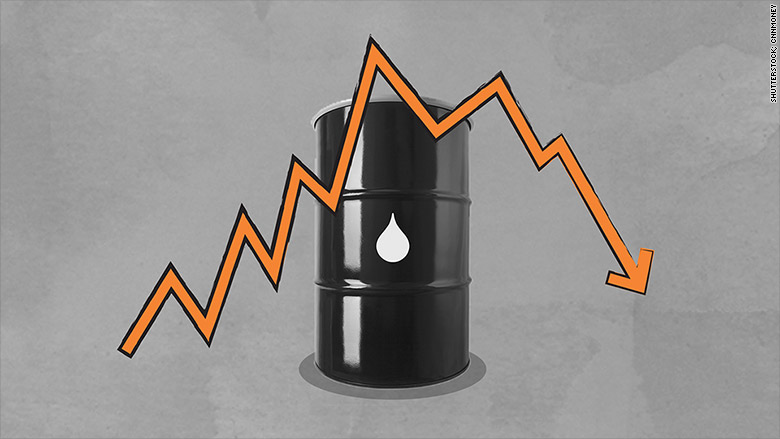 Low oil prices put $1.5 trillion worth of projects at risk (CNN)
New oil and gas production projects worth $1.5 trillion are at risk because of plunging prices.
Research firm Wood Mackenzie said the planned projects are unlikely to go ahead because they're uneconomic at current prices of less than $50 a barrel.
 There's a 'massive difference' between this tech bubble and the last one (Business Insider)
The chief operating officer of Goldman Sachs, one of the leading advisers to technology companies, has said the tech scene is "bubble-ish."
Goldman Sachs COO Gary Cohn fell short of describing the market as a fully developed bubble, however, saying that the heady valuations enjoyed by technology companies are different from those experienced in the first dot.com boom.
Politics
 Greek Election Triumph for Left Masks Gains for the Far Right (Bloomberg)
The decisive Greek election victory of Alexis Tsipras’s Coalition of the Radical Left masked an advance at the other end of the political spectrum that has implications for Europe as it confronts a refugee influx.
The anti-immigration Golden Dawn party surged in the Sept. 20 vote on Greek islands hit by a wave of asylum seekers from the war-torn Middle East. The support for the far-right group, whose insignia resembles a swastika and which is under investigation by prosecutors for links to organized crime, highlights the potential of the migrant crisis to stoke nationalist forces in Europe.
Technology
 Apple's Electric Car Could Ship By 2019 (Fast Company)
As expected, Apple is working on a car—but the first iteration won't be fully autonomous, contrary to previous reports.
Apple has set an ambitious ship date for its electric car: The Wall Street Journal reports thatApple is revving things up to deliver a car by 2019, and has the green light to triple its 600-person team. Though Apple is conducting research on fully autonomous vehicles, its first release will be an electric car—not a self-driving car, as previously rumored.
 Power Ingestible Gadgets With Batteries You Can Eat (Popular Science)
Today, implanted medical devices continuously monitor the body to give doctors and researchers more information than ever about the state of a patient's disease and the effects of certain treatments. Engineers have also been making devices that a patient can swallow, which lets doctors and patients avoid risky surgical and other invasive procedures when able. Ideally, these devices would continuously monitor conditions inside the body or release drugs, and, once they've done their job, they would pass through the body without harming it. While some devices are on the market today, one of the biggest technological impediments to these devices is finding a non-toxic power source. The best solution might be to create a battery that uses the unique chemical environment inside the body to function and to construct the battery using metals that the body already needs, according to a review published today in Trends in Biotechnology by Christopher Bettinger, a researcher from Carnegie Mellon University.
Health and Life Sciences
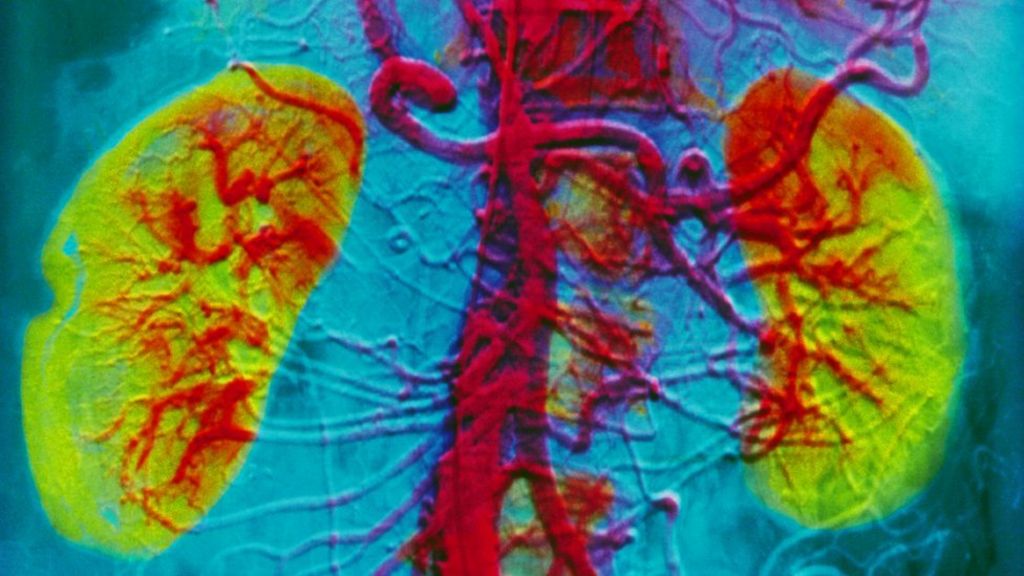 Lab-grown kidneys work in animals (BBC)
Scientists say they are a step closer to growing fully functioning replacement kidneys, after promising results in animals.
When transplanted into pigs and rats, the kidneys worked, passing urine just like natural ones.
Getting the urine out has been a problem for earlier prototypes, causing them to balloon under the pressure.
 Brain Cells From Stem Cells Train Machine To ID Neurotoxins (Forbes)
For obvious reasons, we need to know if chemicals we encounter are neurotoxic to us at any time of life. Also as obvious, testing that neurotoxicity through deliberate exposure of human brains would be the nadir of unethical scientific experimentation.
One way to solve the problem is to grow a reasonable facsimile of a brain in a dish. Of course, “reasonable” and “facsimile” can carry their own set of ethical questions, especially if you’re one who ascribes to the conceptualization of a human being as a “pack of neurons” acted on by and responding to its environment. No one’s developed anything like that yet.
Life on the Home Planet
 How Your Trash Is Contributing to Climate Change (Time)
Americans dumped twice as much trash into landfills in 2012 as previously estimated, according to new research, suggesting trash may be contributing to climate change more than scientists believed.
The new figures, published in the journal Nature Climate Change, show Americans disposed a total of 262 million tons of waste in 2012. The study’s lead author, Yale University researcher Jon T. Powell Prior, notes that previous research has used indirect information, like trade data, to measure trash levels in landfills, potentially leading to lower estimates. His study aims to provide a more accurate estimate by using data taken from individual landfills.

