


Financial Markets and Economy
The Oil Industry Has Been Put on Notice (Bloomberg)
Keystone rejected, Exxon investigatedthis doesnt end well for oil.
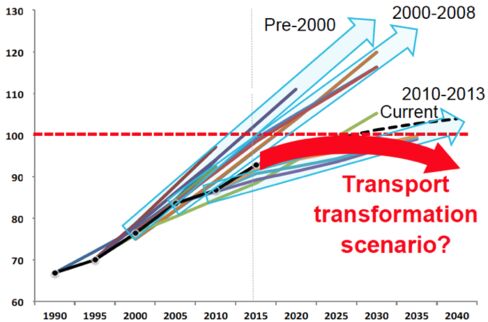
 Is the Economy Overheating? Here’s Why It’s So Hard to Say (NY Times)
Let me tell you a story of the battle between the “inflation targeters” and the “accelerationists.” You’ll want to hear this bit of economic history because you want to know whether the Fed might raise interest rates after the latest rosy employment report.
The Fed is struggling with what conclusions to draw from the recent uptick in wage growth, because despite that uptick, wage growth remains anemic…
Oil rig count drops for 10th straight week (Business Insider)
The US oil rig count dropped again this week, extending a renewed slump.

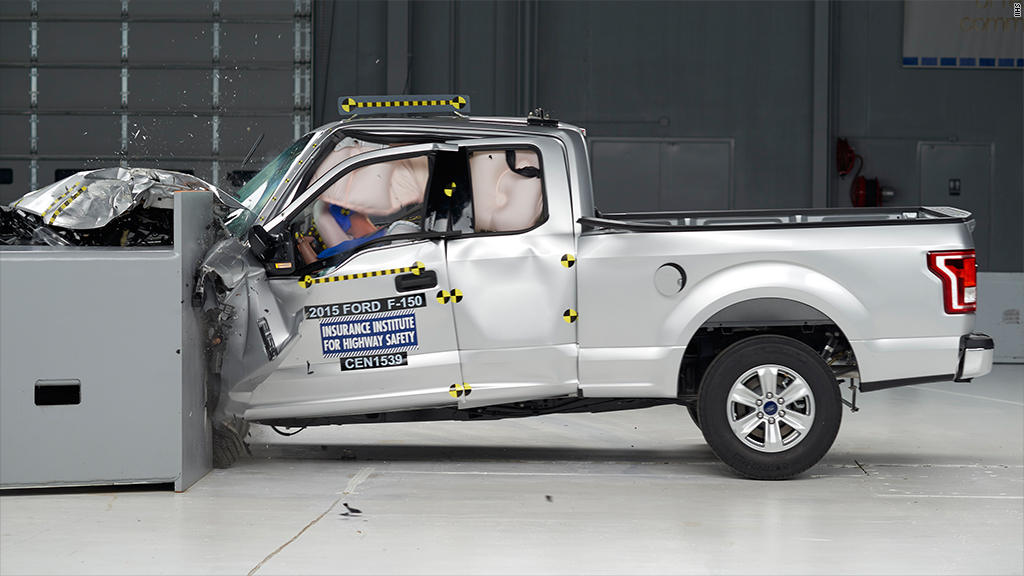 Ford reaches deal with auto workers (CNN)
The union describes deal, which covers more than 50,000 Ford workers, as "one of the richest agreements in the history of UAW-Ford."
Terms of the agreement were not yet available, but they are probably similar to those in the deal the union recently reached with Fiat Chrysler (FCAU) as well as the tentative deal UAW members are now ratifying atGeneral Motors (GM).
U.S. Natural Gas Bears Seeing No End to Rout Send Bets to Record (Bloomberg)
It’s going to take more than a 16-cent rally to spook the bears in the U.S. natural gas market.

 Gold sinks 7 sessions in a row, loses 4.7% on the week (Market Watch)
Gold futures on Friday extended their losing streak to a seventh straight session, settling at their lowest level in more than three months after a better-than-anticipated jobs report made a December interest-rate rise look more likely.
December gold GCZ5, -1.39% lost $16.50, or 1.5%, to settle at $1,087.70 an ounce. Prices logged their lowest settlement since Aug. 5. For the week, they lost about 4.7%, for a third straight week of declines.
Shares of the company that's building the Keystone pipeline got crushed (Business Insider)
Shares of TransCanada, the company behind the Keystone pipeline, slumped by as much as 6% on Friday.

U.S. Stocks Show Scant Signs of Tantrum as Rate Increase Looms (Bloomberg)
The specter of higher interest rates is losing its ability to spook U.S. equity investors.

A high-profile hedge fund has launched an attack on Alibaba shares (Quartz)
Jim Chanos, the famed short-selling hedge fund manager who has been bearish on the Chinese economy since 2009, has recommended betting against Alibaba.

Men's Wearhouse drops 43% (Business Insider)
Men's Wearhouse shares were trashed on Friday, closing down 43%.

Bond Traders Start to Buy Into Yellen's Path on Interest Rates (Bloomberg)
The bond market is beginning to warm up to Federal Reserve Chair Janet Yellen’s message on interest rates.

 Stock market is telling investors ‘good buy’ (Market Watch)
A strong October jobs report is likely to give Federal Reserve officials assurance as they weigh an interest-rate rise before year's end. WSJ Ahead of the Tape columnist Steven Russolillo discusses the economic picture and what's next for the Fed. Photo: Getty
“For years, I have been saying, ‘Be long stocks,’ but the reality is that’s what the market has said and I’m just passing that message along,” said Grimes, the author of “The Art and Science of Technical Analysis.” “That’s still what the market is saying.”
Is This The Green Light To Hike Rates? (Zero Hedge)
Today's euphoric unemployment print of 5.0% was based on a total employment number of 149.120 million, with 7.908 million workers unemployment (and another 94.5 million out of the labor force).

 Goldman Sachs is starting to cash in on its tech investments (Business Insider)
Goldman Sachs CEO Lloyd Blankfein has often referred to his firm as a "tech company."
Now we're starting to see what he means by that.
On Thursday, the banking behemoth announced a new initiative designed to make the lives of junior investment bankers easier — by letting technology do more of the work for them.
 Toyota is investing $1 billion into artificial intelligence research (Quartz)
What’s cooler than $50 million? $1 billion.
Today (Nov. 6), Toyota announced that it’s setting up a new company, Toyota Research Institute, that will focus on research into artificial intelligence and robotics. The company plans on investing $1 billion into the research arm over the next five years.
Politics
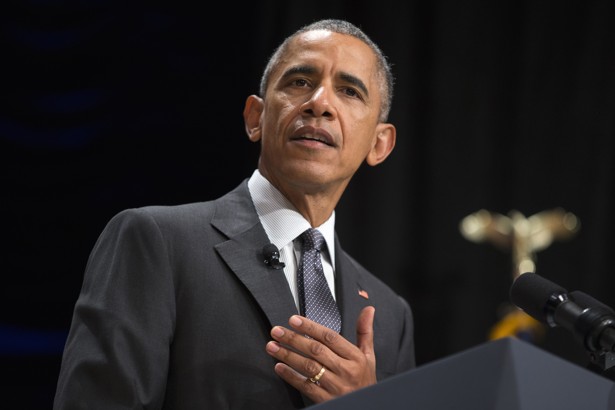 There Won’t Be a Keystone XL Pipeline (The Atlantic)
President Obama has rejected the Keystone XL pipeline, killing the long-stalled project to bring oil from the Canadian tar sands to Texas.
“The State Department has decided that the Keystone XL pipeline would not serve the national interests of the United States,” Obama said. “I agree.”
 Congress Proposes A Chilling Resolution On Social Security (Sovereign Man)
On August 14, 1935, President Franklin Roosevelt arrived at his desk to sign the Social Security Act into law.
It had been a contentious legislative process, something like the Obamacare of its day.
Fiscally conservative politicians derided the program for its obvious long-term costs, the massive bureaucracy that it would create, and the huge tax increase that it represented on workers.
Technology
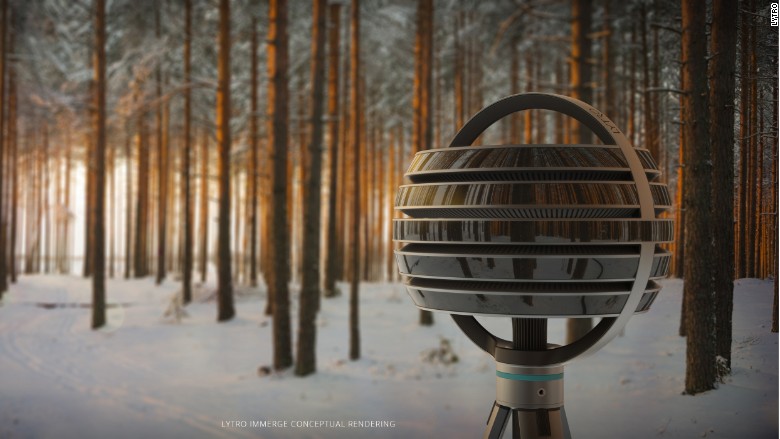 Will this camera revolutionize virtual reality? (CNN)
Lytro previously released two still cameras that failed to find mainstream success. The company was founded by Stanford researcher Ren Ng as a way to bring light-field technology to commercial products. It has received a lot of hype and raised $150 million, but is still trying to find its niche.
Virtual reality is a field ripe for new players, especially on the camera side, and could be Lytro's big break. Competitors include Google (GOOG) and GoPro (GPRO, Tech30), which have teamed up to make their own custom virtual reality camera rig.
 Relax: You Won't Be Replaced by a Robot (Bloomberg)
Don't think a robot could take your job? A study in the latest issue of McKinsey Quarterly says as many as 45 percent of the tasks that Americans get paid to do could be automated. The share rises to 58 percent if computers get as good as the median human being at speech recognition and understanding.
Health and Life Sciences
 How the pancreas knows when to get going (Futurity)
A new study pinpoints thousands of genetic pathways an internal body clock takes to dictate how and when the pancreas must produce insulin and control blood sugar.
The findings could eventually lead to new therapies for diabetes.
Regenerative Medicine: Could This Be Healthcare's Saving Grace? (Forbes)
Regenerative medicine is one of the fastest growing biomedical industries in the world because patients are being cured of diseases that were once incurable. Regenerative medicine represents a new paradigm in human health because the vast majority of treatments for chronic and life-threatening diseases focus on treating the symptoms, not curing the disease. In fact, there are few therapies in use today capable of curing or significantly changing the course of a disease. New regenerative medicine is changing this by engineering, growing, and regenerating tissues and organs using biological processes similar to those normally used in humans.
Life on the Home Planet
 Indoor Urban Gardening, with One Game-Changing Twist (PSFK)
Like many other startups in the indoor gardening space, Edn is merging organic growing processes with tech, making it possible for anyone to cultivate their own plants at home. What makes this particular venture special, however, is that it has taken the concept and put it up on a wall, turning the operation into a vertical shelf rather than a bulky piece of equipment that needs to be placed somewhere in a room.
 Extreme Heat Defines Climate Change (Scientific American)
The lasting legacy of climate change will be heat. The land, the oceans, all of it. It’s the tie that binds and while the global average temperature is the defining metric, the increasing incidence of heat waves and longer lasting extreme heat is how the world will experience it.
All eight papers dealing with extreme heat events in this year’s Bulletin of the American Meteorological Society’s attribution report show a clear climate change signal that made them more likely, more hot or both. In fact, of the 22 studies scientists have submitted to the annual review over the past four years, only one didn’t find that climate change increased the odds or severity of extreme heat.

