Prime Minister Shigeru Ishiba has dispatched a high-level delegation to Washington to negotiate tariff reductions.
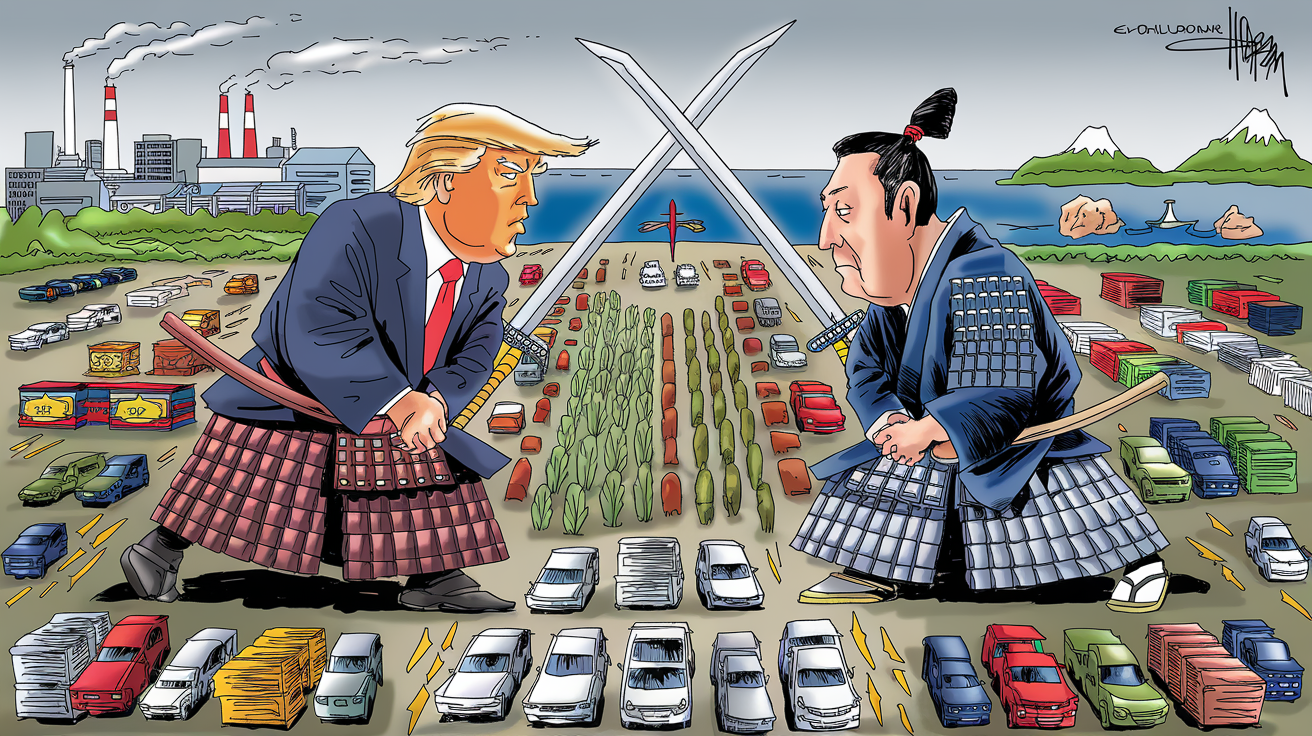
Ishiba emphasized Japan’s role as the largest Investor in the U.S. for five consecutive years and warned that the tariffs could jeopardize Japanese firms’ ability to sustain their investments in America. Trump, meanwhile, has expressed openness to “fair agreements” with countries willing to compromise but insists that many tariffs will remain permanent. Treasury Secretary Scott Bessent and U.S. Trade Representative Jamieson Greer have been assigned to lead negotiations with Japan, signaling the administration’s willingness to engage in talks.
Ishiba has proposed a comprehensive negotiation package covering sectors like automobiles, agriculture, liquefied natural gas (LNG), and national security. This broad approach may appeal to Trump’s focus on reciprocal trade benefits and U.S. energy exports – an industry that paid Trump $1Bn during his campaign – so it’s about time they started getting some payback, right? .
The Nikkei and US Futures are showing a tentative bounce this morning, fueled by flickering hopes for a trade war ceasefire. After the brutal sell-off triggered by Trump’s Tariff Offensive, the slightest HINT of POTENTIAL negotiations is enough to send risk assets higher (as we saw on yesterday’s rumor-driven action). However, we must remain extremely cautious. This could be a classic bear market rally – a fleeting moment of optimism in a larger downtrend.
Here’s a breakdown of what’s driving this morning’s whiplash:
- Futures Turn Green: S&P 500 futures are up 1.4%, Nasdaq 100 futures are up 1.3%, and Dow futures are leading the charge, up 2.1%. This reflects the market’s sensitivity to any news suggesting a potential easing of trade tensions.
Treasury Yields Ease: The 10-year Treasury yield is down slightly to 4.14%, and the 2-year yield is also down to 3.75%. This is a sign of continued safe-haven demand, but the extent of the decline is less severe than the previous days, indicating a slight decrease in fear.
- Lingering Volatility: As Deutsche Bank’s Henry Allen notes, the market remains highly volatile. This bounce doesn’t negate the underlying anxieties and the potential for further sharp swings.
The Trade War Tightrope:
- Trump’s “Openness“: President Trump stated on Monday that while tariffs are here to stay, he’s “open to discussing trade deals with other countries.” This is the key driver of the morning’s rally. The market is clinging to this “openness” as a lifeline, hoping for a path to de-escalation.
- EU Negotiations: Trump specifically called out the EU, demanding a commitment to buy $350 billion in U.S. energy for a “tariff reprieve“. This highlights the transactional nature of Trump’s approach and the potential for selective deals.
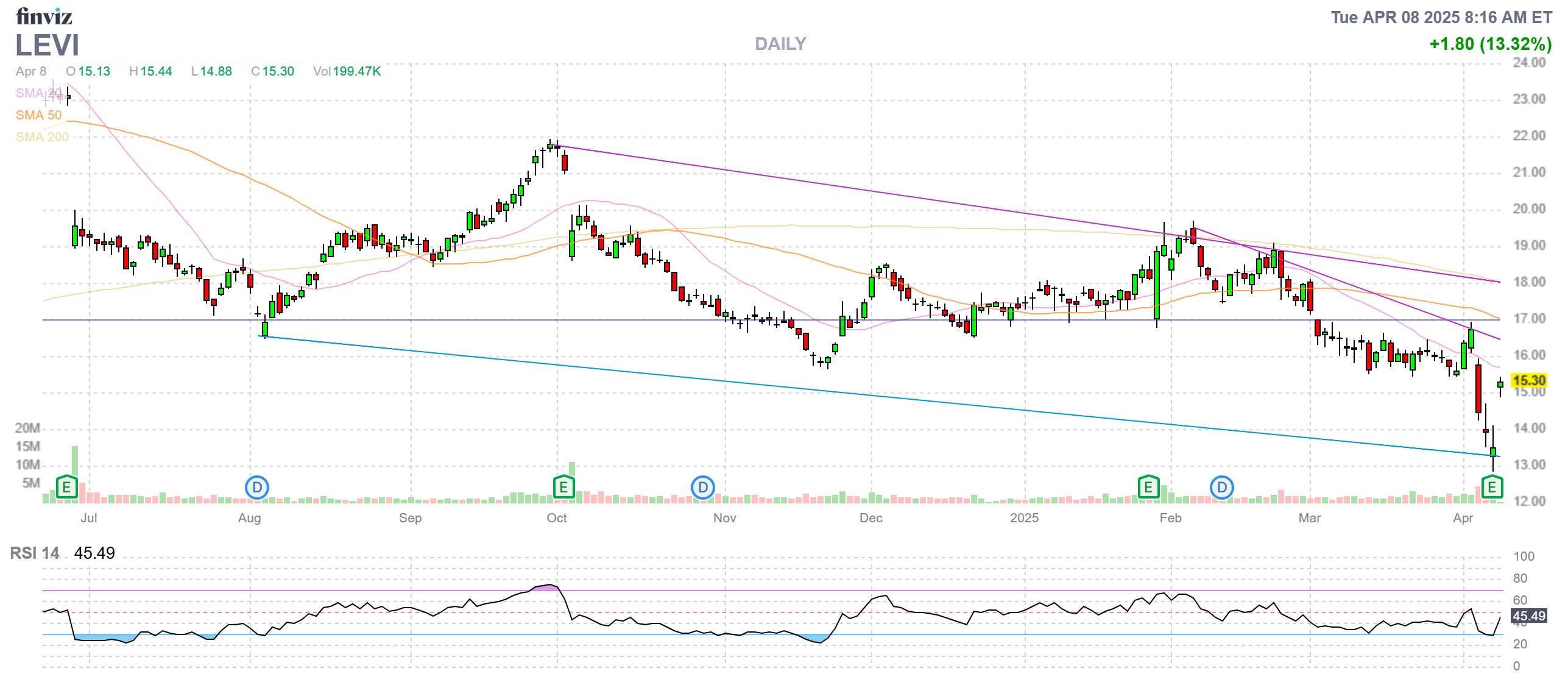
- Vietnam’s Overture: Vietnam’s offer to increase purchases of U.S. goods, including defense products, and its request for a delay in tariffs demonstrates the pressure other countries are under to appease the U.S.. Nike (NKE) is up 5% pre-market and Levi is popping 13% – both stocks we have in our Member Portfolios.
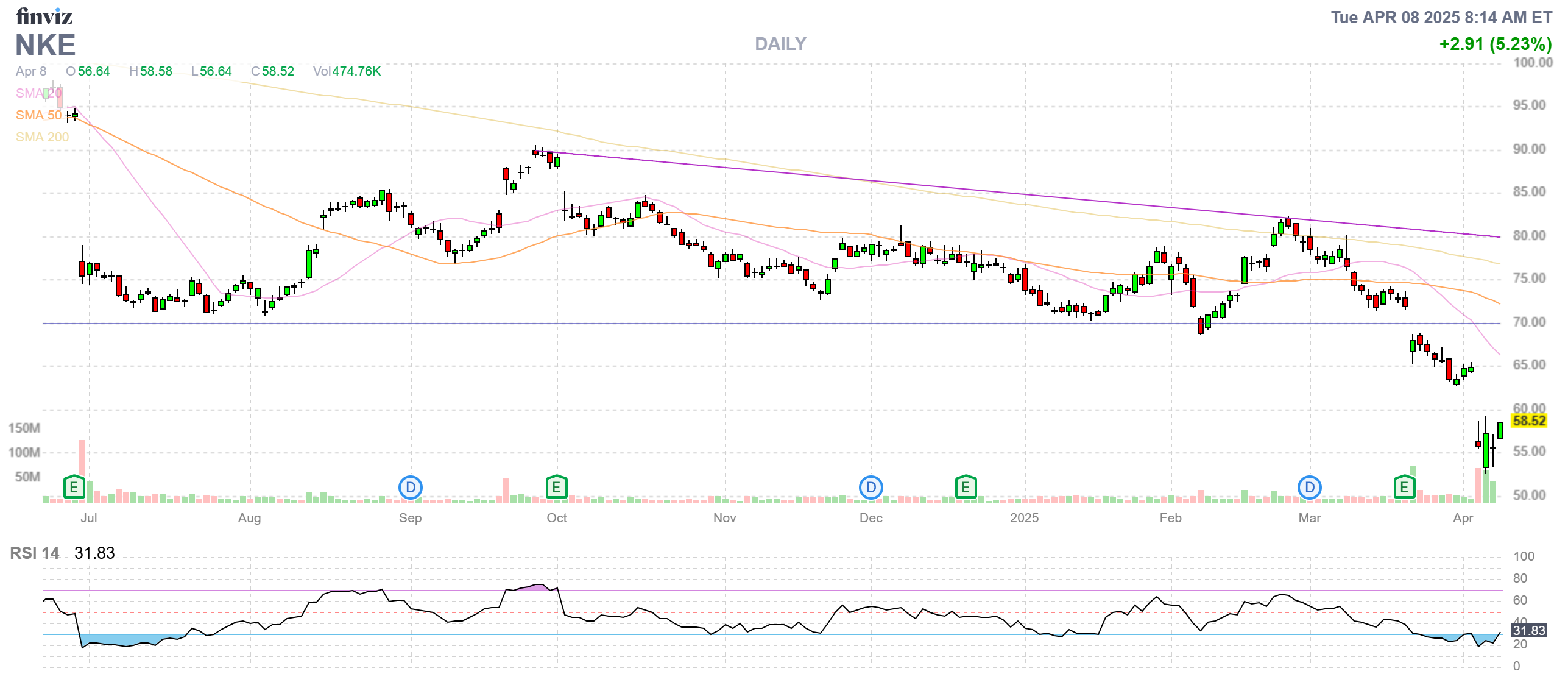
While a relief rally is a welcome break after 3 days of chaos, we must be wary of viewing this as a definitive turning point. Trump’s “openness” could be a tactical maneuver rather than a genuine desire for compromise. The underlying economic damage from the tariffs remains a significant threat to US Market Investors.
The potential for selective deals could create winners and losers, leading to increased sector-specific volatility and that’s fine with us – as we are value investors and are used to picking out the hidden gems in any situation but the situation remains ever-fluid and Trump could change his mind between sentences and it’s only day 80 out of 1,461 of his second term (and there might be a third!).
That means we need to remain, like the Fed, data-dependent – as Economic Reports will provide crucial clues about the real-world impact of the trade war and, of course, earnings will matter much more than usual in the upcoming Quarterly Reports. Levi, for example, may have reaffirmed guidance this morning in their report, but we don’t know how the consumers will respond at the retail level. Levi makes 60% of their profits from overseas and they are concerned about anti-American sentiment growing this year.
RH is another oversold Retail Favorite of ours. They reported on April 7th and the CEO was so surprised at the sell-off last week that he said “WTF?” during the conference call. $173 is about 12x earnings for a company I consider great (again):

Key Economic Data & Events:
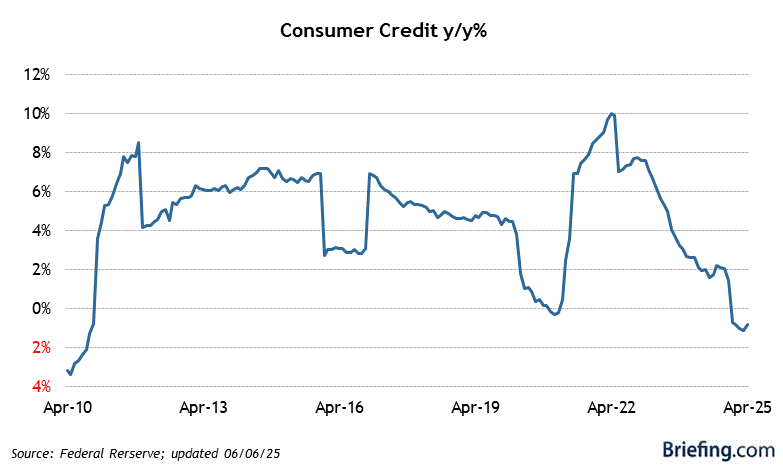
 NFIB Small Business Optimism Index: Today’s release showed us that small business sentiment, a crucial indicator of the economy’s health dropped from 100.7 in Feb to 97.4 in March. As UBS’s Paul Donovan points out, this index reveals that trade war concerns are rapidly breaking through the “partisan media bubble.” Yesterday’s Consumer Credit Report showed an $800M CONTRACTION in February and that’s back to recessionary lows:
Stocks to Watch:
- Coal Stocks: Keep an eye on coal stocks (BTU, ARLP, CNR, HCC, SXC, AMR) as President Trump is expected to sign an executive order promoting coal usage, particularly for AI data centers. This could provide a temporary boost to the sector while hastening the death of our planet – win/win!
- Health Insurers: Watch health insurers (HUM, ALHC, ELV, UNH, CLOV, CVS, CNC) following the CMS announcement of increased Medicare Advantage payments. This is a significant positive development for the industry.
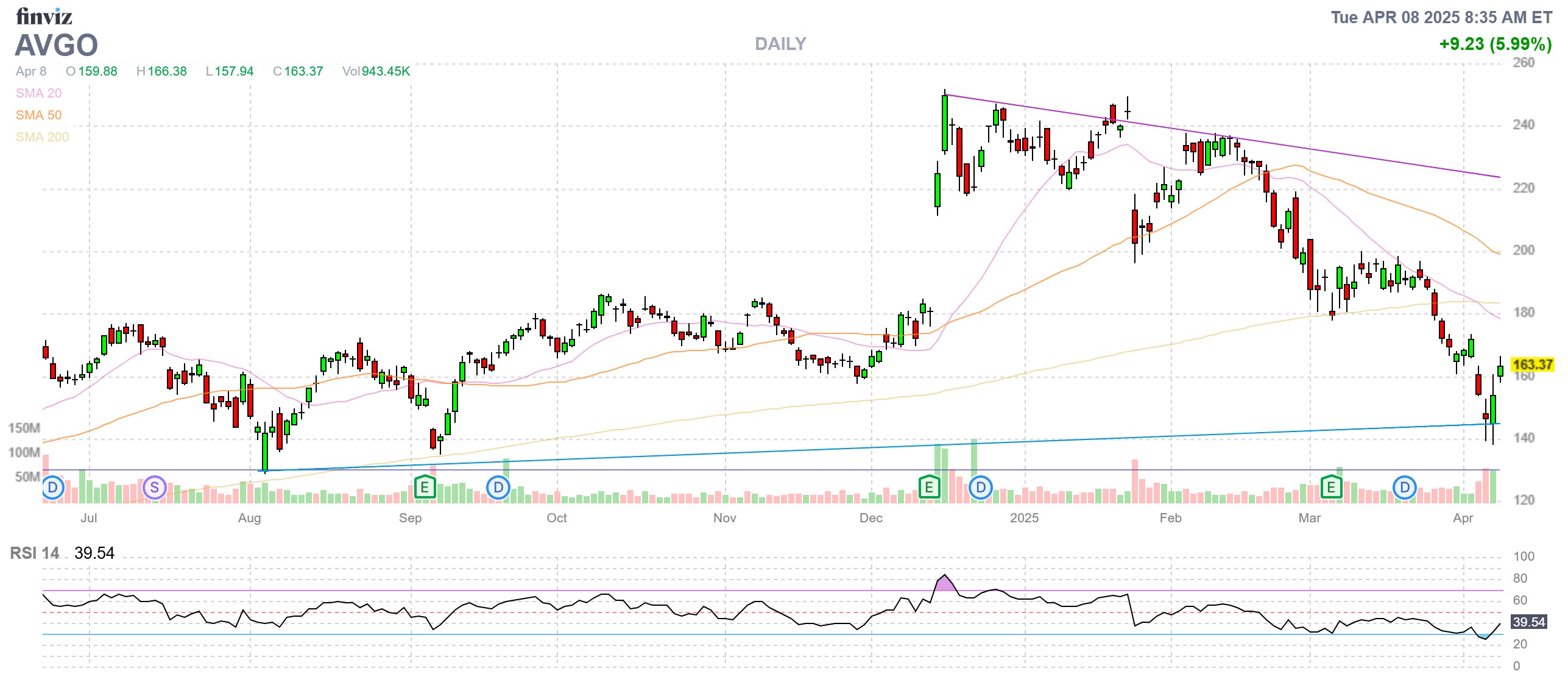
- Broadcom (AVGO): Broadcom’s share repurchase program could provide support for the stock, but overall tech sentiment will remain tied to trade war developments.
While the market is rallying on trade negotiation hopes, this sentiment is FRAGILE. ANY negative news or escalation of tariffs could quickly reverse these gains! Expect continued high volatility as the market reacts to every twist and turn in the trade war saga – yesterday’s wild swings were just a preview of what lies ahead but, hey – it’s better than straight down, right?
In this environment, it’s crucial to focus on the Fundamentals of individual companies and sectors, rather than getting swept up in short-term market swings. We reviewed our Short-Term Portfolio (STP) hedges and we feel we’re well-protected from a further drop and now we’ll have to review our longs to make sure we’re making enough money on a rebound to cover the losses in our hedges!
Our Strategy:
- Hedge with Caution: If you reduced hedges during the initial bounce, carefully re-establish them, recognizing the risk of further downside.
- Selective Opportunities: Look for selective opportunities in sectors that are less directly impacted by the trade war or that benefit from specific developments (e.g., healthcare).
- Stay Nimble: Be prepared to adjust your strategy quickly as the situation evolves. The trade war is highly unpredictable, and market sentiment can shift rapidly.
| Principle | Execution |
|---|---|
| Hedge to protect, not to win | Take gains at or near payoff levels |
| Re-deploy capital only when new risk emerges | Wait for breakdown confirmation |
| Don’t cling to expired narratives | Market always moves forward |
| Reset risk frequently | Keeps your positioning nimble |
| Use cash tactically | It’s your powder for the next setup |
This market is a tug-of-war between hope and fear. While the hope for trade negotiations is driving the current rally, the fear of further escalation and economic damage remains very real. Proceed with caution, prioritize risk management, and stay laser-focused on the evolving situation.