A long time ago, in a galaxy not so far away:
Prologue: From Republic to Empire
Once, the United States played the role of galactic peacekeeper, negotiating accords and forging uneasy truces—think of the JCPOA as the Galactic Senate’s last-ditch effort to keep the Death Star plans out of the wrong hands. But as in all good Star Wars tales, the Republic’s patience wore thin. Enter Supreme Chancellor Trumpatine, who, with a flourish of executive orders, declared the Iran nuclear deal “a horrible one-sided deal that should have never, ever been made” and promptly withdrew the Empire from the JCPOA (the 2015 Iran Nuclear Deal) 1 2 3.
This was no mere policy shift. It was the moment the Republic became the Empire—trading diplomacy for displays of overwhelming force, and setting the stage for the next act in the galactic drama.
 Act I: The Empire Demonstrates Its Might
With the JCPOA in the rearview mirror and the Imperial Senate (Congress) sidelined—thanks to some creative interpretations of the War Powers Act 4—the Empire’s fleet was mobilized. The target: Iran’s “hidden rebel bases” (nuclear facilities at Fordow, Natanz, and Isfahan). The weapon of choice? Not quite the Death Star, but the next best thing: the MOAB, or “Mother of All Bombs”—the largest non-nuclear weapon in the Imperial arsenal, designed to send a message across the stars 5 6.
“The MOAB is a force to be reckoned with, weighing in at 21,000 pounds and designed to unleash a devastating explosion. Its blast radius can affect areas as far as a mile away, making it effective against a wide range of targets.”
The message was clear: the Empire’s might is not to be questioned. Any act of defiance will be met with overwhelming firepower, and the galaxy will tremble at the sound of Imperial bombers overhead.
Act II: The Emperor’s Prize
 But what drives an Emperor? In Trumpatine’s case, it’s not just galactic security—it’s legacy. Rumor has it, he seeks the Nobel Peace Prize, perhaps hoping to be remembered as the man who brought “order” to the galaxy, even if it means using the threat of annihilation to do so. After all, nothing says “peace” quite like the threat of total annihilation.
And so, with the Imperial fleet on patrol and the MOABs deployed, Trumpatine declared that the Empire’s actions were “limited and contained”—a surgical strike to neutralize a growing threat, not an all-out war 7. Yet, as with all Imperial operations, the line between security and tyranny grows ever thinner.
Act III: The Galaxy Reacts
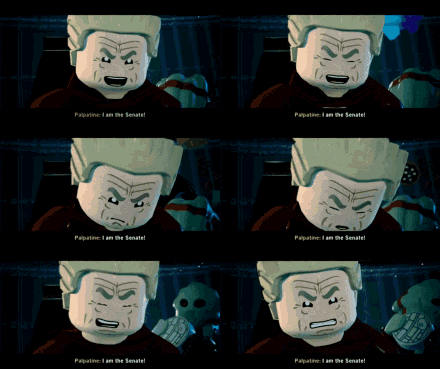 Across the galaxy, systems shuddered. Some Imperial loyalists cheered the show of force; others, especially in the Outer Rim (Europe, China, Russia), condemned the Empire’s disregard for galactic law and the sovereignty of member worlds 3. The Imperial Senate grumbled about constitutional violations and the dangers of unchecked executive power 4.
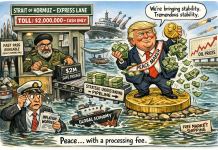
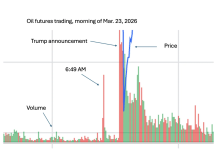
Meanwhile, the rebels (Iran and its allies) vowed “everlasting consequences.” The threat of closing the Strait of Hormuz—a hyperspace lane for 20% of the galaxy’s oil—loomed, but for now, the lanes remain open. Markets, ever the pragmatic algo-droids, barely flinched: oil spiked, then stabilized. The Empire’s show of force was impressive, but the galaxy has seen this movie before.
Epilogue: The Empire’s Gamble
Will the Empire’s strike bring lasting order, or is it the opening salvo in a new galactic war? Will the Emperor’s quest for glory end with a medal ceremony, or a rebellion in the streets? The answer, as always in Trump Wars, depends on what happens next: will the rebels strike back, or will the Empire’s might keep the galaxy in line—at least, for now?
One thing is certain: in the age of the Empire, peace is always just one MOAB away from war.
May the market forces be with you!
And now, on a more serious note, here are Boaty’s notes from which we concocted the above:
Overview of the U.S.-Iran Conflict and Market Implications
Historical Context: How We Got Here
U.S.-Iran tensions date to the 1953 CIA-backed coup that restored the Shah1. The 1979 Islamic Revolution cemented Iran as a U.S. adversary, with decades of clashes over nuclear ambitions and regional influence17. Recent escalation began on June 13, 2025, when Israel launched unprecedented strikes on Iranian nuclear sites, citing unverified weapons program claims17. This triggered a cycle of retaliation, culminating in U.S. President Trump’s June 21-22 direct strikes using bunker-buster bombs and cruise missiles against three nuclear facilities: Fordow, Natanz, and Isfahan457. Trump claimed these “obliterated” Iran’s nuclear capabilities67, while Iran vowed “everlasting consequences”122.
Current Situation: Key Developments
-
Military Status:
-
Satellite imagery shows at least six craters at Fordow, with evidence of bunker-buster bomb use. Initial reports suggest significant damage to enrichment infrastructure, though uranium may have been moved pre-strike4198.
-
Iran’s parliament approved closing the Strait of Hormuz (20% of global oil transit) but hasn’t executed it1011.
-
Iran launched missiles at Israel overnight, with the IRGC deploying advanced Kibar Shekan missiles72.
-
-
Political Dynamics:
-
Trump warned Iran against retaliation, threatening “far greater” force if provoked52.
-
Iran’s Foreign Minister called U.S. strikes a “red line” violation, while the IAEA confirmed “direct kinetic impact” at Fordow47.
-
U.S. officials claim the operation was “limited” and not a declaration of war, despite congressional criticism96.
-
-
Economic Indicators:
Market Impact Scenarios
| Scenario | Oil Price Impact | Equity Market Impact | Key Triggers |
|---|---|---|---|
| Limited Retaliation | +$5-$10/barrel | Brief dip (<5%) | Symbolic strikes, no supply disruption |
| Hormuz Closure | Surge to $100+ | Sharp sell-off (10-15%) | Tanker attacks, mining of strait 181014 |
| Full Regional War | >$120, sustained | Bear market (>20% drop) | U.S./Israeli ground troops, Iranian attacks on Gulf states |
Why Markets Are Relatively Flat Today:
-
No Immediate Supply Disruption: The Strait of Hormuz remains open, and Iranian retaliation has so far been symbolic1011.
-
Containment Expectations: Investors bet on de-escalation, citing Iran’s reluctance to risk regime survival1814.
-
Priced-In Premium: Oil had already risen 11% since June 13, reflecting pre-strike risk1117.
-
Offsetting Factors: U.S. economic resilience and Fed rate-cut prospects buffer against conflict shocks1017.
Critical Factors to Watch
-
Iran’s Response: Any attempt to close Hormuz or attack U.S. assets would trigger oil spikes and equity sell-offs181411.
-
Damage Assessment: Confirmation of nuclear site destruction could ease long-term risk premiums48.
-
U.S. Political Signals: Trump’s social media calls for “regime change” increase escalation risks62.
Conclusion: Markets are in a “wait-and-see” mode, pricing in controlled escalation. However, stability hinges on avoiding supply disruptions—particularly in the Strait of Hormuz—where a single incident could unleash the volatility investors currently discount.
- https://www.aljazeera.com/news/2025/6/23/history-of-us-iran-relations-from-the-1953-regime-change-to-trump-strikes
- https://www.reuters.com/world/middle-east/israel-under-missile-attack-iran-says-all-options-open-after-us-strikes-2025-06-22/
- https://www.cbsnews.com/news/us-strikes-iran-nuclear-sites-world-reaction-israel-hamas-houthis/
- https://www.cnn.com/2025/06/21/middleeast/nuclear-sites-iran-us-bombs-wwk-intl
- https://www.cnn.com/world/live-news/israel-iran-conflict-06-21-25-intl-hnk
- https://www.reuters.com/world/middle-east/iran-weighs-retaliation-against-us-strikes-nuclear-sites-2025-06-23/
- https://www.aljazeera.com/news/2025/6/22/israel-iran-conflict-list-of-key-events-june-22-2025
- https://www.npr.org/2025/06/22/nx-s1-5441734/satellites-show-damage-iran-nuclear-program-not-destroyed-experts-say
- https://www.nytimes.com/live/2025/06/23/world/iran-trump-israel-news
- https://www.usatoday.com/story/money/2025/06/22/us-strikes-iran-economy-inflation/84308384007/
- https://www.reuters.com/business/energy/oil-hits-five-month-high-after-us-hits-key-iranian-nuclear-sites-2025-06-23/
- https://www.bloomberg.com/news/articles/2025-06-22/latest-oil-market-news-and-analysis-for-june-23
- https://www.cnbc.com/2025/06/23/asia-stock-markets-today-live-updates.html
- https://finance.yahoo.com/news/investors-set-flock-safety-world-141501667.html
- https://www.reuters.com/world/middle-east/investors-see-quick-stock-market-drop-if-us-joins-israel-iran-conflict-2025-06-18/
- https://www.nbcnews.com/business/markets/oil-prices-jump-us-strike-iranian-nuclear-facilities-rcna214388
- https://www.forbes.com/sites/bill_stone/2025/06/22/geopolitical-market-risk-israel-iran-war–oil/
- https://www.cnbc.com/2025/06/21/how-regime-change-in-iran-could-affect-global-oil-prices.html
- https://www.washingtonpost.com/investigations/2025/06/22/iran-strikes-nuclear-site-damage-visuals/
- https://www.reuters.com/business/energy/middle-east-tensions-put-investors-alert-weighing-worst-case-scenarios-2025-06-21/
- https://www.cnbc.com/2025/06/22/oil-prices-jump-after-us-strikes-on-iran-raise-fears-of-supply-disruption.html
- https://www.bloomberg.com/news/newsletters/2025-06-23/stock-traders-unfazed-by-us-strike-on-iran-for-now
- https://apnews.com/article/israel-iran-war-nuclear-trump-bomber-news-06-22-2025-c2baca52babe915e033ae175ce8b2687
- https://understandingwar.org/backgrounder/iran-update-special-report-june-22-2025-evening-edition
- https://apnews.com/article/stock-market-oil-iran-attack-2d05b0a9e52320e822b649b8e29d28aa
- https://fortune.com/2025/06/23/trump-threat-iran-regime-change-global-markets-oil-prices/
- https://www.npr.org/2025/06/21/nx-s1-5441127/iran-us-strike-nuclear-trump
- https://www.usatoday.com/story/money/2025/06/21/iran-attack-oil-prices-inflation/84303968007/
- https://www.investopedia.com/global-stocks-edge-higher-oil-pares-gains-after-us-strikes-iran-11759080
- https://www.washingtonpost.com/world/2025/06/19/iran-israel-conflict-history/
- https://www.nytimes.com/2025/06/12/world/middleeast/israel-iran-conflict-history.html
- https://www.cfr.org/global-conflict-tracker/conflict/confrontation-between-united-states-and-iran
- https://www.aljazeera.com/economy/2025/6/16/what-would-an-israel-iran-war-mean-for-the-global-economy
- https://www.troweprice.com/institutional/us/en/insights/articles/2025/q2/what-happens-next-in-the-israel-iran-conflict-four-potential-scenarios-na.html
- https://www.reuters.com/world/middle-east/analysts-react-markets-brace-iran-response-us-attack-2025-06-23/
- https://www.cfr.org/timeline/us-relations-iran-1953-2025
Whether America is the “good guy” or “bad guy” in the current U.S.-Iran conflict is a complex and deeply subjective question, shaped by legal, moral, strategic, and historical perspectives. Here’s a balanced overview based on the latest developments and global reactions:
How We Got Here
The U.S. and Iran have been locked in decades of hostility, with flashpoints over nuclear ambitions, proxy wars, and shifting alliances. The immediate crisis began with Israeli strikes on Iranian nuclear sites, followed by U.S. attacks targeting Fordow, Natanz, and Isfahan—facilities at the heart of Iran’s nuclear program. President Trump claimed these strikes were necessary to neutralize a looming nuclear threat, while Iran and much of the international community viewed them as a violation of sovereignty and a dangerous escalation123.
Where Things Stand: Competing Narratives
U.S. Perspective
-
Strategic Justification: The U.S. government argues the strikes were a preemptive measure to prevent Iran from developing nuclear weapons, which it frames as an existential threat to regional and global security456.
-
Deterrence and Alliances: The action signals resolve to allies (especially Israel and Gulf states) and adversaries (notably Iran, Russia, and China), reinforcing U.S. dominance and deterrence posture in the Middle East5.
-
Moral Framing: U.S. officials point to Iran’s history of supporting militant proxies and targeting Americans as justification for forceful action7.
Iranian and International Perspective
-
Sovereignty and Legality: Iran and many international observers view the strikes as illegal under international law, lacking UN Security Council authorization and not constituting self-defense under the UN Charter83.
-
Escalation Risk: Many governments and organizations, including the UN, warn that U.S. intervention risks spiraling into a broader regional war with devastating humanitarian and economic consequences910.
-
Victim Narrative: Iran positions itself as the aggrieved party, vowing retaliation and framing U.S. actions as imperial aggression designed to bolster Israel and destabilize the region1119.
Global Reaction
-
Mixed Response: U.S. allies in Europe and the Gulf are alarmed and call for restraint, while some Western partners quietly support the strikes as a check on Iranian ambitions. Regional actors like the Houthis and Hamas condemn the U.S. as an aggressor912.
-
Diplomatic Fallout: The attack is seen as setting a troubling precedent for preventive war, weakening the global nonproliferation regime and undermining diplomatic solutions8133.
Are We the Good Guys or Bad Guys?
Arguments for “Good Guys”
-
Preventing Nuclear Proliferation: If the intelligence on Iran’s nuclear weapons program is credible, acting to prevent proliferation can be seen as serving the broader good45.
-
Defending Allies: The U.S. is acting in defense of Israel and other partners threatened by Iran’s regional activities7.
-
Deterring Future Aggression: Demonstrating resolve may deter Iran and its proxies from further destabilizing actions145.
Arguments for “Bad Guys”
-
Violation of International Law: The strikes lack clear legal justification and were not authorized by Congress or the UN, raising serious questions about legitimacy8153.
-
Escalation and Civilian Risk: The action risks wider war, civilian casualties, and long-term instability in an already volatile region91013.
-
Undermining Diplomacy: The U.S. withdrew from the JCPOA (Iran nuclear deal) and has increasingly relied on force over negotiation, eroding diplomatic norms3.
Conclusion
America’s role is not easily categorized as purely “good” or “bad.” The U.S. is acting to defend its interests and those of its allies, but it is also operating outside established international legal frameworks, risking escalation and undermining diplomatic solutions. The morality and legitimacy of these actions depend on your perspective—whether you prioritize security and deterrence, or legality and restraint.
“The U.S. is not—and should not be—an impartial observer here. Even bracketing the U.S. historical support for Israel for a moment, this Iranian regime has been actively killing Americans for decades. That should be reason enough why the United States should not want this Iranian regime to have nuclear weapons…”
— RAND expert commentary7
“The US attack did not respond to an active Iranian assault nor any verified and credible evidence of an impending breakout. It was a preventive strike, an action taken not against what Iran had done but what it might someday do. In doing so, Washington has helped normalize a dangerous precedent…”
— Asia Times analysis3
Ultimately, whether America is the “good guy” or “bad guy” is a matter of perspective—one that will be debated for years, with consequences that will shape both the Middle East and the global order.
- https://www.aljazeera.com/news/2025/6/23/iran-vows-response-to-us-strikes-as-it-hits-back-at-israel
- https://www.nytimes.com/2025/06/21/us/politics/military-middle-east-wars.html
- https://asiatimes.com/2025/06/us-strike-on-iran-changes-everything/
- https://www.reuters.com/world/middle-east/us-strikes-against-iran-nuclear-facilities-incredible-overwhelming-success-2025-06-22/
- https://www.atlanticcouncil.org/blogs/new-atlanticist/experts-react/experts-react-the-united-states-just-bombed-irans-nuclear-sites-heres-what-to-expect-next/
- https://www.cnn.com/2025/06/23/middleeast/iran-nuclear-threat-us-strikes-analysis-intl-latam
- https://www.rand.org/pubs/commentary/2025/06/the-israel-iran-conflict-qa-with-rand-experts.html
- https://theconversation.com/why-the-us-strikes-on-iran-are-illegal-and-can-set-a-troubling-precedent-259542
- https://www.kpbs.org/news/international/2025/06/22/world-reacts-to-u-s-strikes-on-iran-with-alarm-caution-and-some-praise
- https://apnews.com/article/us-attack-iran-israel-reaction-united-nations-c10cc46ec236816d958ced2497a11464
- https://www.reuters.com/world/middle-east/iran-weighs-retaliation-against-us-strikes-nuclear-sites-2025-06-23/
- https://www.cnn.com/world/live-news/israel-iran-conflict-06-22-25-intl-hnk
- https://www.newindianexpress.com/world/2025/Jun/22/us-strikes-on-iran-mark-a-dangerous-turning-point-for-the-region-and-the-world-heres-why
- https://www.newz.com/analyzing-the-implications-of-us-involvement-in-the-israel-iran-conflict/
- https://www.nytimes.com/live/2025/06/23/world/iran-trump-israel-news
- https://www.thenation.com/?post_type=article&p=560463
- https://www.linkedin.com/pulse/whats-next-us-iran-relations-mapping-future-scenarios-faezeh-ghasemi-s0odf
- https://www.bostonglobe.com/2025/06/18/opinion/israel-iran-war-us-mediation/
- https://www.pbs.org/newshour/world/what-to-know-about-the-u-s-militarys-intervention-in-the-israel-iran-war
- https://asiatimes.com/2025/06/us-enters-israel-iran-war-heres-what-could-happen-next/