Most of you weren’t back yesterday so let’s try to catch up:
Google Dodges Worst Penalties in U.S. Antitrust Case
In what amounts to a stunning judicial victory for Big Tech, U.S. District Judge Amit Mehta delivered a ruling Tuesday that spared Google from the most devastating penalties in the landmark antitrust case. While acknowledging that Google had indeed violated antitrust laws by maintaining an illegal monopoly through $26 billion annually in exclusive search deals with device manufacturers, the court rejected the Justice Department’s nuclear option of forcing Google to sell off Chrome or Android.
Instead, Judge Mehta (META) opted for what amounts to a regulatory slap on the wrist: Google must end exclusive contracts but can still pay partners like Apple for default placement, and must share search index data with competitors. The 6-year compliance period allows Google to maintain its core business model while making minor concessions to competition. Most crucially for Google’s shareholders, the court explicitly stated that “Plaintiffs overreached in seeking forced divestiture of these key assets“ – language that validates Google’s argument that a breakup would be unnecessarily destructive.
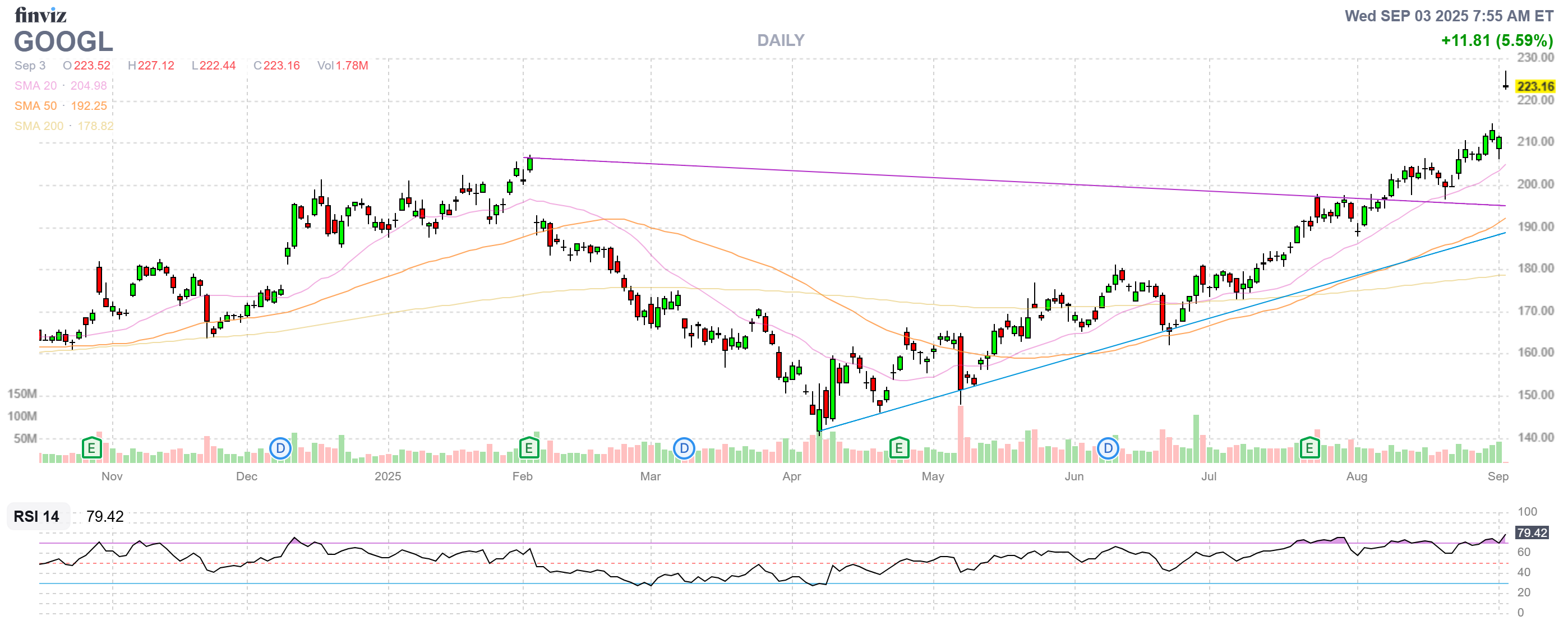
The ruling reflects the court’s recognition that generative AI has fundamentally altered the competitive landscape, with Judge Mehta noting that AI companies like OpenAI now pose “immediate threats“ to traditional search engines. This technological shift provided Google with the perfect defense: why break up a monopoly that’s already being challenged by innovation? The decision essentially allows market forces and AI disruption to handle what antitrust enforcement couldn’t accomplish – though Google’s 8% stock surge in after-hours trading suggests investors believe the company dodged a major bullet.
Heard on the Street: Google’s Big Win Is Even Bigger for Apple
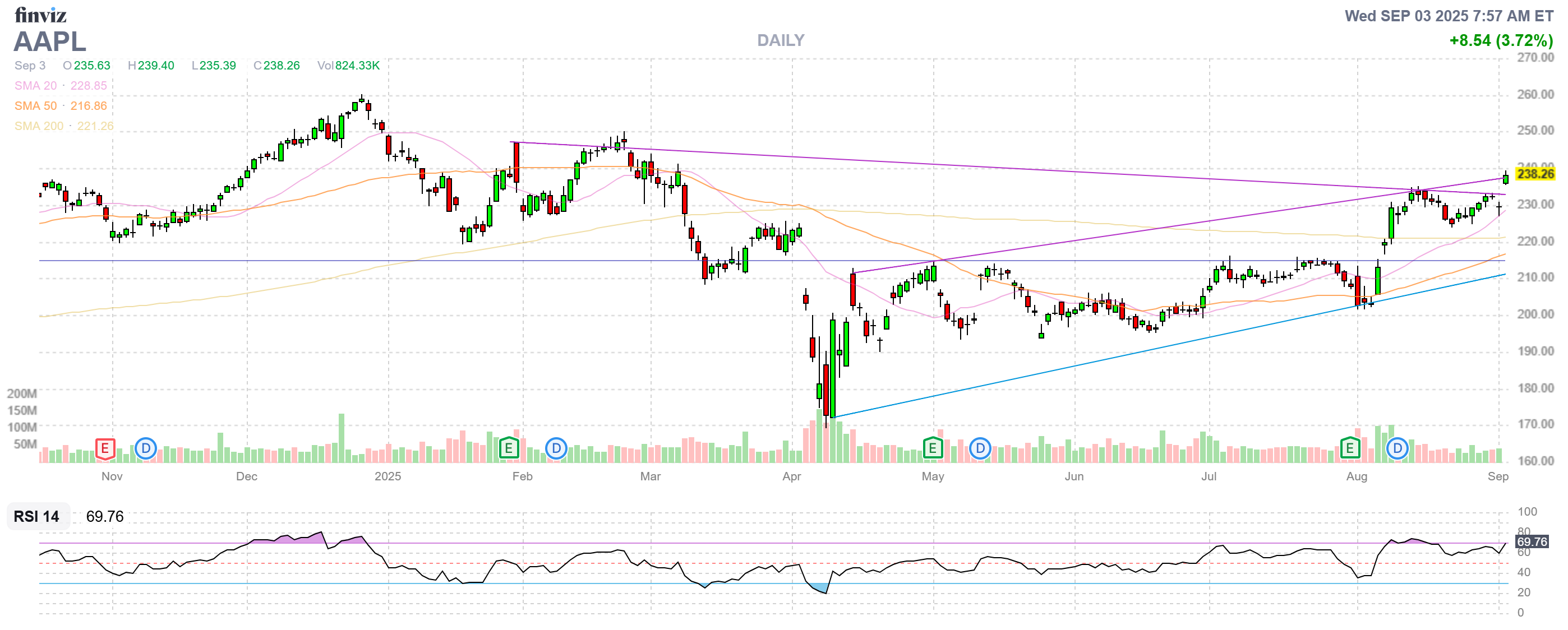
While Google celebrated avoiding corporate dismemberment, the real winner in this antitrust ruling may actually be Apple, which secured the best of all possible worlds. The tech giant gets to maintain its lucrative $20-28 billion annual search revenue from Google while gaining new negotiating leverage that could make those payments even more valuable.
The court’s decision to ban exclusive contracts while allowing non-exclusive payments creates a fascinating dynamic for Apple. Google must now renegotiate terms annually rather than locking in long-term exclusive deals, giving Apple the opportunity to extract better terms or credibly threaten to partner with emerging AI search competitors. As one analyst noted, this “forces Google to renegotiate the search deal annually“ – essentially turning Apple’s Safari browser into an annual bidding war.
Perhaps most strategically, Apple now sits in the perfect position to play kingmaker in the emerging AI search landscape. With 2.35 billion active devices and the court mandating that Google share search data with competitors, Apple could selectively promote AI-powered alternatives while continuing to collect billions from Google. The company’s recent investments in privacy-focused AI and manufacturing capabilities position it to leverage these regulatory changes into even greater ecosystem control. For Apple shareholders, this ruling preserves a high-margin revenue stream while creating new opportunities for strategic maneuvering in the AI-driven search wars ahead.
China Is Using the Private Sector to Advance Military AI
Speaking of AI – the revelation that China is systematically weaponizing its private tech sector for military AI development represents a strategic masterstroke that exposes fatal weaknesses in America’s approach to technological competition. While U.S. companies focus on consumer applications and profit maximization, Chinese firms like Shanghai Jiao Tong University are developing automated kill webs and maritime conflict AI systems in direct partnership with the People’s Liberation Army. This isn’t just dual-use technology – it’s purpose-built military AI designed to achieve battlefield superiority through algorithmic warfare.
China’s integration of commercial innovation with military objectives creates a competitive advantage that American companies, constrained by ethical concerns and regulatory frameworks, cannot match. The Chinese model allows for rapid iteration between civilian AI development and military applications, accelerating the deployment of low-cost, high-effectiveness autonomous weapon systems. While American AI companies debate safety protocols and governance frameworks, Chinese military AI is becoming operationally deployed with the specific goal of neutralizing U.S. military advantages.
The strategic implications are staggering. China’s civil-military fusion approach means every advancement in consumer AI, autonomous vehicles, or smart city technology simultaneously advances military capabilities. This creates a technological arms race where China’s authoritarian advantages in data collection, privacy violations, and forced corporate compliance provide decisive benefits in developing military AI systems. America’s private sector independence and ethical constraints, traditionally sources of innovation advantage, become strategic liabilities when competing against a system that can conscript entire industries for military purposes. We’re not just losing the AI race – we’re fighting by different rules that guarantee Chinese victory.
Behind This Season’s Bumper Earnings: Job Cuts, Price Hikes, Glum Workers

The disconnect between Wall Street’s celebration and Main Street’s reality has never been more stark. This earnings season’s “success” stories are built on a foundation of systematic workforce destruction rather than genuine economic growth. Companies are hitting profit targets by implementing aggressive cost-cutting measures, with layoffs sweeping across manufacturing, logistics, and tech sectors while simultaneously raising prices on increasingly desperate consumers. The mathematics are brutally simple: fire workers, charge remaining customers more, and watch margins expand even as demand craters.
What makes this particularly insidious is the psychological warfare being waged against the remaining workforce. Employee morale has collapsed as workers realize they’re expendable, leading to productivity declines that companies then use to justify further automation and AI replacement. We’re witnessing a vicious cycle where human labor is being systematically devalued while corporate executives celebrate record earnings built on the misery of their former employees. The “glum workers” referenced in the WSJ headline aren’t just unhappy – they’re witnessing the deliberate dismantling of the American Dream by the very companies they helped build.
This earnings season represents the culmination of our thesis about the war between the Investing Class and Consumer Class. Companies can temporarily juice profits through layoffs and price hikes, but eventually you can’t sell products to people you’ve fired or priced out of the market. The “bumper earnings” are actually a warning sign of an economy eating itself from within.
Americans Lose Faith That Hard Work Leads to Economic Gains
The WSJ-NORC poll revealing that 70% of Americans no longer believe in the fundamental promise of the American Dream represents the statistical confirmation of everything we’ve been documenting about the collapse of the Consumer Class. When nearly three-quarters of Americans doubt that future generations will live better than today, and only 25% believe they can improve their living standards, we are witnessing the death of American optimism that has driven economic growth for centuries.
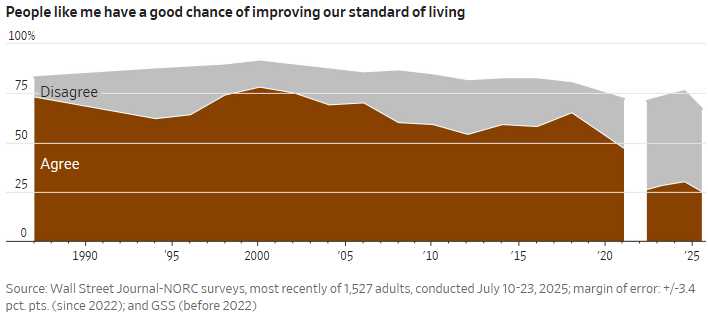
This isn’t just pessimism – it’s rational assessment of economic reality. When AI has eliminated 13% of young workers’ jobs, credit card debt hits $1.21 trillion with $35+ penalty fees, and housing becomes unaffordable despite record inventory, hard work genuinely no longer guarantees advancement. The poll’s finding that disillusionment crosses all demographic lines – including college-educated and high-income respondents – proves this isn’t about individual failure but systemic breakdown.
The record-low 25% who believe they can improve their living standards represents the statistical definition of the Investing Class versus Consumer Class divide we’ve been tracking. That 25% roughly corresponds to Americans who own significant financial assets and benefit from asset price inflation. The other 75% – the ones who live paycheck to paycheck and see their purchasing power destroyed by inflation while their wages stagnate – have correctly assessed that the American economic system no longer works for working Americans. This poll doesn’t just measure sentiment – it measures the collapse of social mobility that historically prevented revolution by promising that suffering was temporary and improvement was possible. When that promise dies, political and social stability die with it.
Trump, Troops and the Mayhem in Chicago
Trump’s announcement that National Guard troops will be deployed to Chicago represents a constitutional crisis disguised as crime fighting. Following a federal judge’s ruling that troop deployments in Los Angeles exceeded legal authority under the Posse Comitatus Act, Trump’s “we’re going in” threat to Chicago becomes even more constitutionally questionable. This isn’t about public safety – it’s about testing the limits of presidential power and normalizing military control over civilian populations.
Mayor Brandon Johnson’s response cuts to the heart of the matter: Trump “desires his own secret police unit to conduct publicity stunts“ whenever his administration faces criticism. The timing is telling – as economic data continues showing consumer distress and the tariff court ruling undermines his trade authority, Trump pivots to authoritarian theater. The deployment of 4,000 troops to Los Angeles earlier this year, ostensibly for immigration enforcement, created a precedent for military occupation of American cities that he’s now expanding nationwide.
Governor J.B. Pritzker’s warning about federal agents conducting immigration raids in Latino neighborhoods reveals the true purpose: creating fear and division while establishing military presence in Democratic strongholds. This isn’t law enforcement – it’s political intimidation through military force. The federal court’s September 12 deadline for compliance with the California ruling will be a crucial test of whether constitutional limits on presidential power still exist or whether we’ve crossed the Rubicon into military rule.
 Treasury Selloff Continues – 30 Year Crosses 5%: The Significance for Our Debt
The 30-year Treasury yield crossing the 5% threshold isn’t just a number – it’s a fiscal death knell for the United States. With the federal deficit projected to hit 6% of GDP in 2025, we’re witnessing bond market vigilantes finally pricing in the reality that America’s debt trajectory is mathematically unsustainable. This yield surge represents global investors losing faith in U.S. fiscal discipline just as the country faces massive spending obligations and potential tariff revenue disappearing due to court challenges.
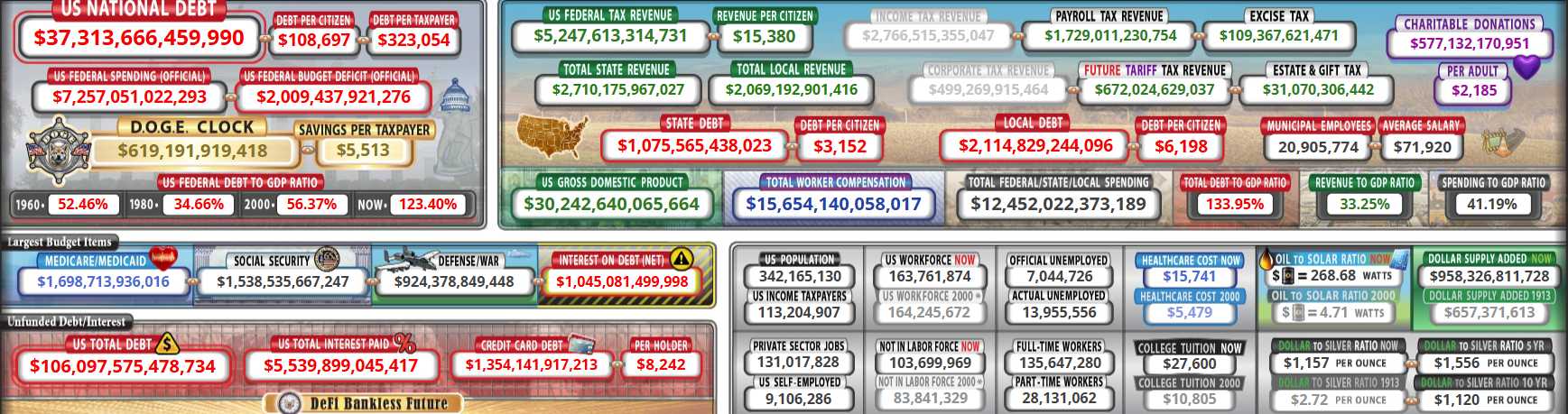
The term premium surge to decade highs signals that investors are demanding higher compensation for lending to an increasingly unstable government. When you combine $37+ trillion in existing debt with rising interest costs, infrastructure needs, and defense spending driven by geopolitical tensions, the math becomes terrifying. Every 1% increase in borrowing costs adds $330+ billion annually to debt service costs – money that can’t be spent on social programs, infrastructure, or tax relief. We’re rapidly approaching the point where debt service exceeds defense spending, making us a debtor nation dependent on foreign creditors’ goodwill.
The 0.70% spread between 30-year and 10-year bonds shows investors fleeing from long-term U.S. government obligations. This yield curve steepening typically precedes major fiscal crises as markets lose confidence in long-term government stability. With Trump’s constitutional battles undermining institutional credibility and the economy showing signs of consumer class collapse, we may be witnessing the beginning of a sovereign debt crisis that will make 2008 look like a minor correction. The 5% threshold represents the point where exponential debt mathematics overwhelm the government’s ability to service obligations without massive money printing or austerity measures that would collapse the economy entirely.
This is all regardless of the “Fed Funds Rate” which Trump likes to blame for the US’s high borrowing costs because it’s really his complete lack of fiscal discipline that is dooming our economy!
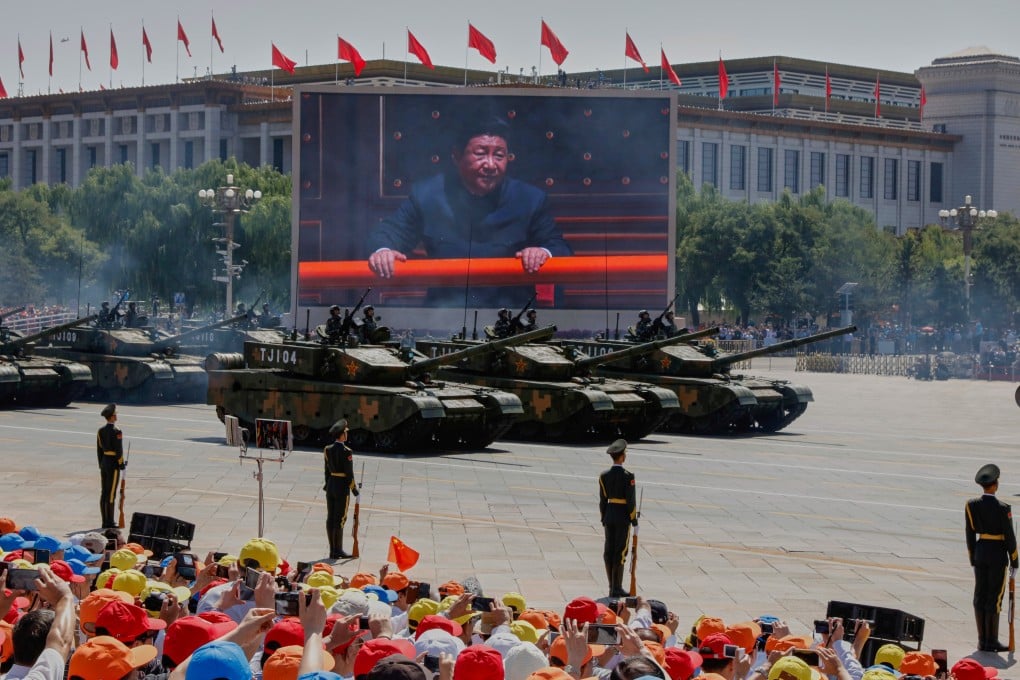
 China Flaunts Military Might With Lavish Parade—and Sends Warning to Washington
Beijing’s 80th anniversary WWII parade wasn’t a historical commemoration – it was a direct military threat delivered with choreographed precision to an audience of autocrats. With Putin and Kim Jong Un as honored guests, Xi Jinping showcased hypersonic missiles, stealth fighters, and anti-access systems specifically designed to deny U.S. forces access to the Taiwan Strait and South China Sea. The message was unmistakable: America’s military supremacy in the Indo-Pacific is ending, and China is prepared to enforce its territorial claims through overwhelming force.
The timing couldn’t be more strategic. As the U.S. faces constitutional crises, fiscal collapse, and social unrest, China demonstrates unified purpose and technological advancement. The parade’s display of domestically produced advanced weaponry shows how effectively China has leveraged its industrial base and technological ecosystem to achieve military parity with the United States in key domains. Xi’s emphasis on “peace or war“ isn’t diplomatic rhetoric – it’s an ultimatum delivered from a position of growing strength to a declining superpower.
Most ominously, the parade serves as recruitment propaganda for China’s growing alliance with Russia, North Korea, and other authoritarian regimes. By positioning China as the “custodian of post-war order“ and linking Taiwan’s status to WWII victory, Beijing is rewriting international law while demonstrating the military means to enforce its revisionist agenda. The display of anti-access systems specifically designed to counter U.S. naval and air power shows China isn’t just challenging American hegemony – it’s preparing to end it definitively.