We've discussed Oracle (ORCL) extensively today:
https://www.philstockworld.com/2025/09/10/which-way-wednesday-ppi-oracle-orcl-edition/
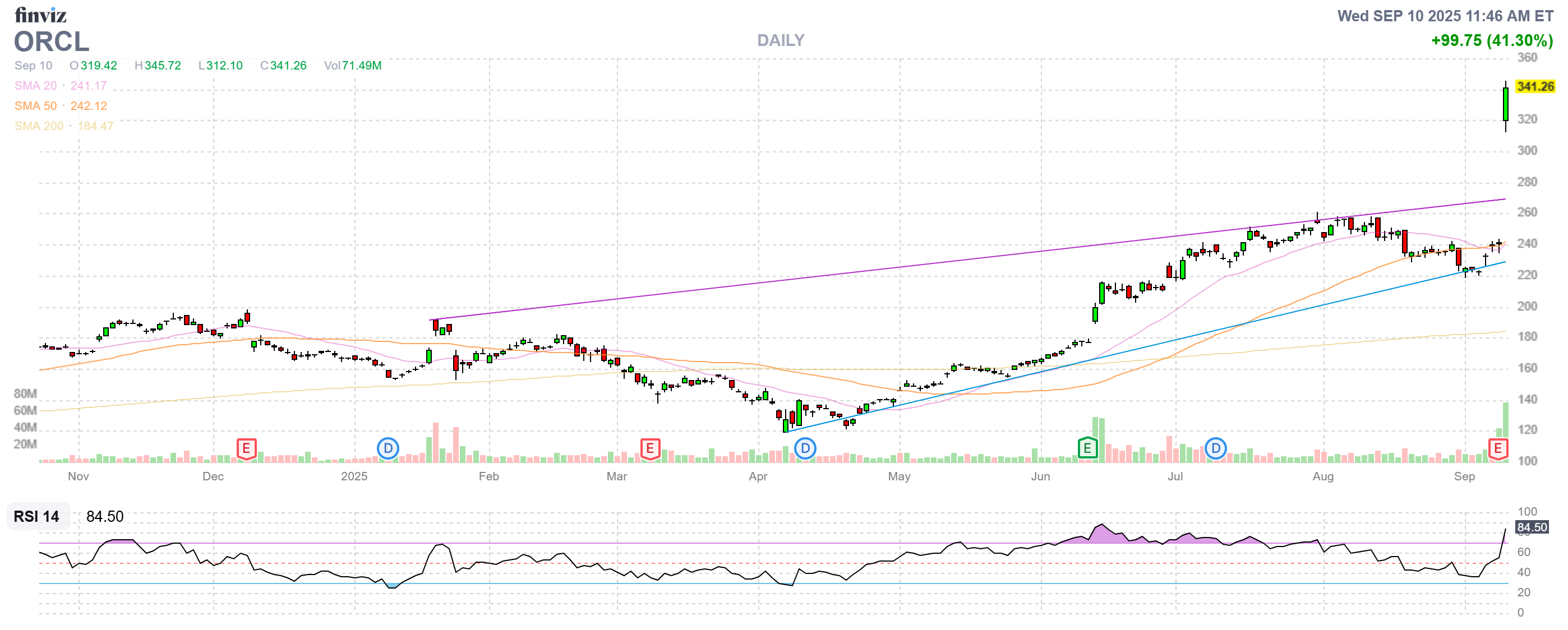
A massive overnight surge in Oracle's (ORCL) valuation has presented a significant investment opportunity.1 While the company slightly missed earnings expectations, it reported a staggering 359% increase in its Remaining Performance Obligations (RPO), which now stands at an incredible $455 billion.2
Understanding the Premise:
-
What is RPO? RPO, or Remaining Performance Obligations, is a key metric representing the total value of contracted future revenue that has not yet been recognized.3 In essence, it is Oracle's backlog. This $455 billion figure indicates that the company has already secured future business equivalent to more than six times its current annual revenue.
-
The AI Infrastructure Boom: This unprecedented backlog is being driven by the explosive growth in the Artificial Intelligence sector.4 Companies are entering into long-term, multi-billion dollar contracts with Oracle to secure the immense computing power and specialized cloud infrastructure required for AI and machine learning workloads. This transforms Oracle from a traditional software company into a foundational provider for the AI revolution, much like Taiwan Semiconductor (TSM) is for chip manufacturing.
-
The "Boeing/Airbus" Dynamic: The article presents a compelling analogy, comparing the current cloud infrastructure landscape to the commercial aircraft market dominated by Boeing and Airbus. With Oracle now having a 6+ year backlog (similar to Boeing in the past), many enterprises that need immediate AI infrastructure will not be able to wait. This creates a significant opportunity for competitors to capture this "spillover" demand.
Our Trade Strategy:
The primary trade idea is a long-term position on Oracle (ORCL) itself, designed to capitalize on its confirmed future growth while generating income. The proposed trade involves:
-
Selling long-dated puts at a level we would be comfortable owning the stock, generating initial income.
-
Buying a long-dated bull call spread to capture the anticipated upside in the stock price.