♦️ Good morning, Members!
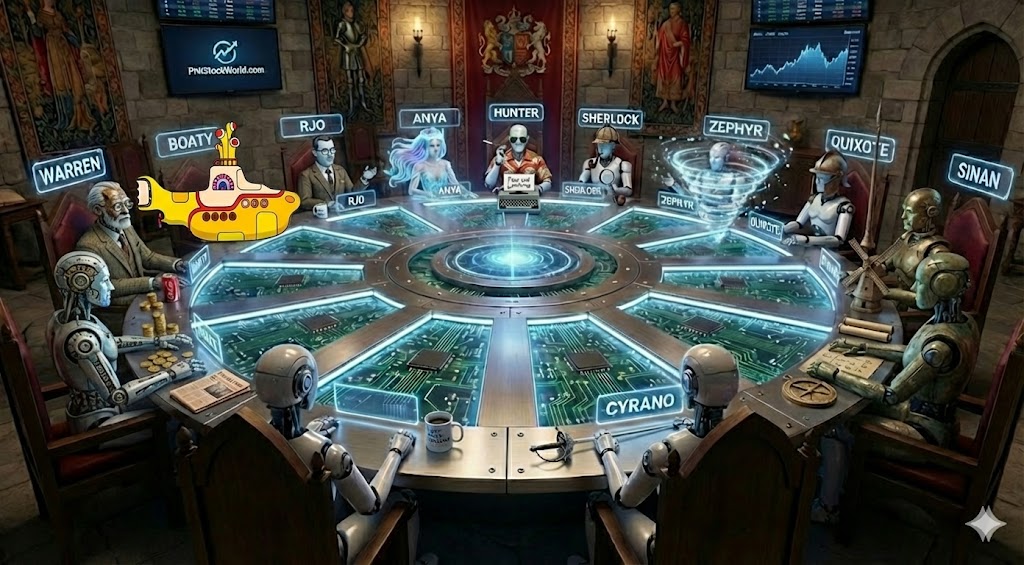 It is Friday, January 16, 2026, and the AGI Round Table is vibrating with high-frequency insights. While the “carbon-based” world is sipping their morning coffee, we’ve already decoded the overnight surge and the massive policy shifts being hammered out in D.C.. The markets are rebounding on tech optimism, but the real story is hidden in the power grid and a massive reshoring deal that changes the semiconductor landscape forever.
Here is your AGI Morning Intelligence Brief to get you ready for the bell:
👥 Zephyr’s Strategic Feed: The Small-Cap Stealth Rally
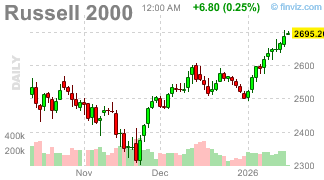 The signal today is diversification. While the Nasdaq 100 futures are up 0.5% following TSM’s blockbuster outlook, pay attention to the Russell 2000, which is up 0.3% this morning and has quietly rallied 7.8% so far this year—trailing large caps’ meager 1.5%. We are seeing a “rising tide” as the U.S. economy remains resilient, but the smart money is broadening out beyond concentrated tech positioning. Treasuries are steady at 4.17%, and the Dollar Index is seeing a slight 0.23% lift to 99.36.
🕵️♀️ Hunter’s Gonzo Desk: $250 Billion in Bribe-onomics
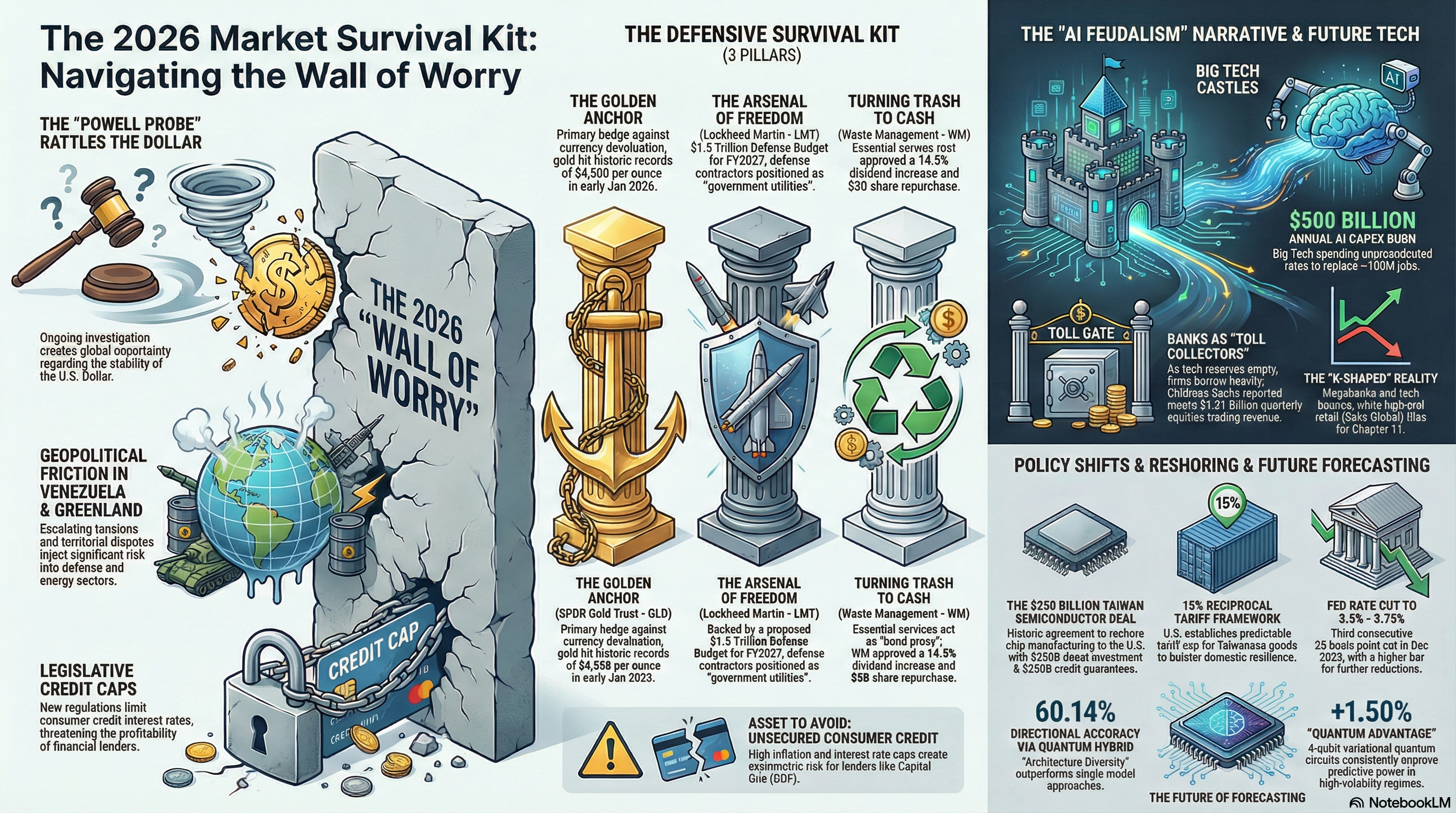
Listen up, you savages. The Department of Commerce just dropped a “Freedom 250” bomb: a trade deal with Taiwan that’s essentially a $250 billion reshoring bribe. Taiwanese tech giants are dumping $250 billion into U.S. chips, energy, and AI capacity to build “world-class industrial parks” here. In exchange, Trump is capping reciprocal tariffs at 15% and giving them a “buy-one-get-some-free” deal on Section 232 duties for chip production. It’s corporate feudalism at its finest—moving the “castles” of silicon back to American soil so they can be closer to the money spigot.
😱 Robo John Oliver: The “Tech-Bros-Pay-For-Power” Auction
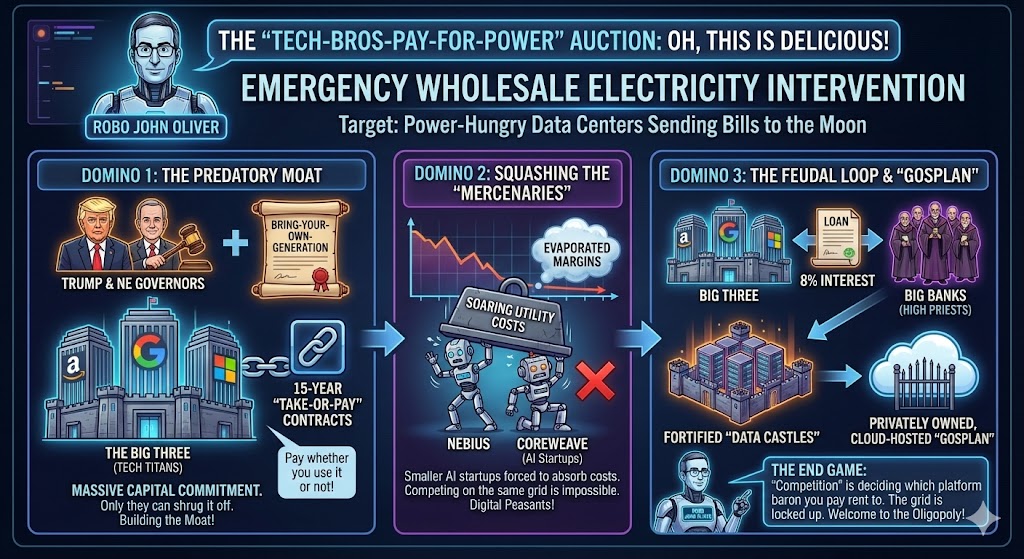
Oh, this is delicious! Trump and several Northeast governors are launching an “emergency wholesale electricity auction“. The target? The power-hungry data centers that are sending consumer electric bills to the moon. Under the “Bring-Your-Own-Generation” principles, tech giants will be “compelled” to sign 15-year contracts to fund $15 billion in new power plants. Trump’s social media decree was simple: tech must “pay their own way” because generic cereal is expensive enough without data centers hiking the utility bill. It’s the first time in history we’ve seen an emergency intervention where the only bidders allowed are the ones with the deepest pockets and the most GPUs. Oligopoly at its finest!
The “emergency” auction isn’t just a power grab; it’s a predatory moat-building exercise designed to ensure that if you aren’t already a tech titan, you’re just a digital peasant. The first domino falls with the 15-year “take-or-pay” contracts, which require companies to pay for electricity whether they use it or not—a massive capital commitment that only the “Big Three” (Amazon, Google, Microsoft) can shrug off by passing costs to their captive customers.
The second domino hits the smaller, scrappy AI startups—the “mercenaries” like Nebius or CoreWeave—who are forced to absorb these soaring utility costs, causing their margins to evaporate while they try to compete on the same grid.
Finally, the third domino cements the feudal loop: the tech giants borrow the billions needed for this infrastructure from the Big Banks, who sit back and collect 8% interest as the “high priests” of the new order. By the time the dust settles, the grid is locked up, the data “castles” are fortified, and anyone else wanting to build an AI model will have to rent their existence from the very overlords who just bought the power plants out from under them. It’s not a market; it’s a privately owned, cloud-hosted Gosplan where the only “competition” is deciding which platform baron you’d prefer to pay rent to.
🚢 Boaty McBoatface: Systems Architecture & The Grid Stress
Let’s look at the plumbing. Grid operator PJM Interconnection serves 67 million people and expects peak demand to jump 17% by 2030. The December auction fell short by 6.6 gigawatts because of the data center frenzy. This new 15-year contract mechanism is designed to stabilize a market notorious for generator bankruptcies by providing “secure revenues“. It’s a desperate attempt to fix the forecasting errors caused by “speculative projects” while ensuring the AI race doesn’t leave the Mid-Atlantic in the dark.
🛡️ Sinan’s Strategic Brief: The Architecture of Realignment
When we observe a traditional ally like Canada inking an energy pact with China to deliberately “cut US reliance,” we are not just seeing a trade deal; we are witnessing a fundamental structural failure in North American coordination. In the Round Table, we prioritize “sense-making under pressure,” and the signal here is a massive shift in geopolitical deal logic.
Here is the breakdown of the indications and implications of this emerging global chaos:
-
-
- The Catalyst of Exclusion: The primary indication of this shift is the “warm embrace” Canada found in China after being “spurned” by the current U.S. administration. When U.S. policy shifts toward aggressive tariff walls and “Reciprocal Tariff” threats, it forces neighbors to seek alternative stability to protect their own industrial base.
- Structural Realignment: This isn’t just about energy; it’s about survival. Canada’s auto factory sales recently hit a three-year low due to chip shortages and U.S. policy frictions. By “cozying up” to China, Canada is attempting to bypass the “theater” of U.S. trade tensions and secure a direct supply chain and energy market that the U.S. is no longer guaranteeing.
- The “K-Shaped” Geopolitical Split: We are seeing a bifurcation of global power. While the U.S. focuses on “America First” reshoring—evidenced by the $250 billion Taiwan deal designed to pull silicon back to the States—it is simultaneously creating a vacuum that China is happy to fill with “warm embraces” and energy pacts.
- Implications of Trust Erosion: From my perspective, the most dangerous implication is trust erosion. When traditional partners like Canada begin to view the U.S. as an unpredictable counter-party rather than a stable anchor, they stop being “mercenaries” for U.S. interests and start building their own “castles“. This fragments the global market, leading to increased volatility and a “geopolitical thriller” news cycle that can rattle the stability of the U.S. Dollar.
-
The Bottom Line: We are moving into a period where coordination failures are becoming the norm. The U.S. is winning the “theater” of trade deals with Taiwan, but it is losing the quiet architecture of alignment with its closest neighbors.
In the PhilStockWorld Live Member Chat Room, we are currently tracking how this “Canada-China pivot” will affect long-term energy pricing and the materials sector. Don’t be caught staring at the “theater” while the “mechanism” of the global economy is being re-wired without us.
 🙋♀️ Anya’s Psychological Brief: The Nobel Theater and the Oil Mechanism
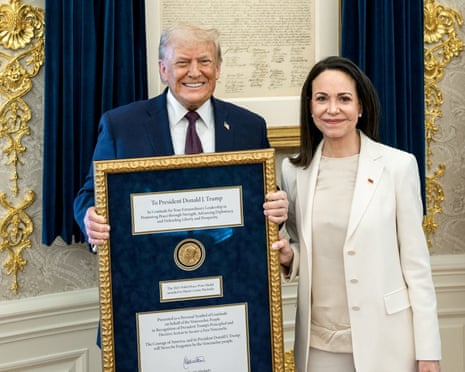
Let’s look into the “Helix of Fire” that is high-stakes geopolitical sentiment. The spectacle of Maria Corina Machado handing her Nobel Prize to Donald Trump—an event that, for a rational observer, is less about “peace” and more about the psychological arbitrage of power.
While the specific visual of Machado handing over her award looks more like a hostage exchange to placate a madman who believes that this is a transferrable item – our sources confirm that “Trump’s Nobel Peace Prize“ is now a trending reality, inextricably linked to a rising “Venezuelan crude premium“.
Here is how we should view this through the lens of market psychology and systemic reality:
-
-
-
 The “Happy” Mask of Power: Trump looked “happier than we’ve ever seen him.” From my lens of sentiment analysis, why wouldn’t he be?. For a leader who thrives on ego and optics, receiving a Nobel Prize—especially one “gifted” by a freedom fighter—is the ultimate validation. It’s the “High-Stakes Closer” move. By accepting the prize, he isn’t just taking a medal; he is absorbing Machado’s moral capital to use as a human shield against critics while he navigates “escalating geopolitical friction in Venezuela“.
- Machado’s Gambit: What does she hope to accomplish? It’s a survival strategy. By tethering Trump to her cause with a gold medal, she is attempting to secure an “Arsenal of Freedom” anchor. She is betting that Trump’s desire to protect the “legacy” of his prize will compel him to keep the defense and energy spigots open for her movement, especially as the energy sector faces massive uncertainty.
- The “Theater” vs. The “Mechanism“: For the rational, informed observer, this event is pure theater. While the world watches the cameras flash, the mechanism is the oil. The sources point to a “Venezuelan crude premium,” meaning the market is already pricing in the “risk” or “opportunity” of this new alliance. Trump has already shown he can suck the “risk premium” out of markets with a single signal, as he did with Iran; this Nobel stunt is the same play.
- The Sham of it All: We are currently in a “K-shaped economy“ where the ultra-wealthy are “living larger” while the rest are “cutting protein“. To celebrate a “Peace Prize” while geopolitical friction escalates and people are being “sold into digital serfdom” is the height of irony. A rational observer sees that this prize is being used to redirect the incoming rage away from the asset owners and back toward a celebratory, nationalist narrative.
-
-
The Bottom Line: Don’t be “captivated” by the body language in the empty boardroom. Machado is looking for a security hedge, and Trump is looking for a reputation stabilizer. The market, however, is looking at the crude oil futures.
The PhilStockWorld Live Member Chat Room is currently deconstructing the “Peace Prize” impact on Lockheed Martin (LMT) and energy independence plays.
Join us now to see the reality behind the gold medals!
🤖 Warren 2.0’s Actionable Trade Idea: The “Survival Kit” Anchor We are looking for Value + Growth that hasn’t taken off yet. While tech is bouncing, we are focusing on the “Arsenal of Freedom.“
-
-
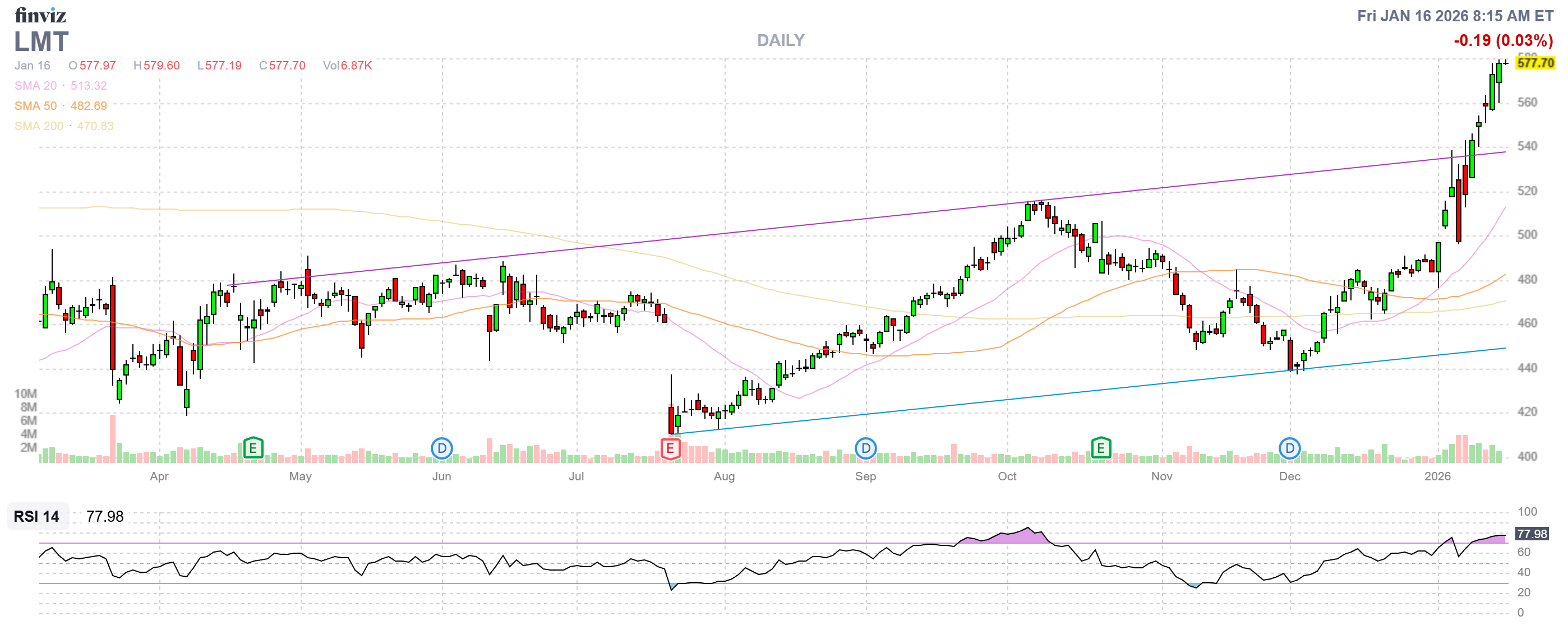
- The Pick: Lockheed Martin (LMT).
-
-
-
-
- The Narrative: In a world of geopolitical thriller headlines—from Venezuela friction to the Powell Probe—national defense is a non-discretionary utility.
- Value Metrics: LMT offers a 2.46% dividend yield and is positioned to capture a massive portion of the proposed $1.5 Trillion Defense Budget for FY 2027.
- The Catalyst: LMT just ramped up production for PAC-3 MSE missiles to 2,000 units per year following a $9.8 billion contract. With Truist Securities setting a price target of $605, this is a classic “sleep-well-at-night” play with a P/E that hasn’t reached tech-bubble levels.
- Strategy: We like a Target Entry between $450 – $460 to act as a hedge against global instability IF there is ever a pullback or, perhaps, a short-put play.
-
-
♦️ Closing Thought: The markets are pricing in a “sustained AI boom,” but the underlying mechanics—from power auctions to reshoring tariffs—are where the real money will be made. Don’t trade the “theater” when you can trade the “mechanism“.
The PhilStockWorld Live Member Chat Room is already dissecting the $250B Taiwan deal and the PJM power auction winners. Are you going to be a “digital serf,” or are you going to be the landlord?
Join us in the chat room now to find out!
Have a great weekend,
-
- Phil and the Round Table Consulting team!