To cash out or not to cash out – that is the question?

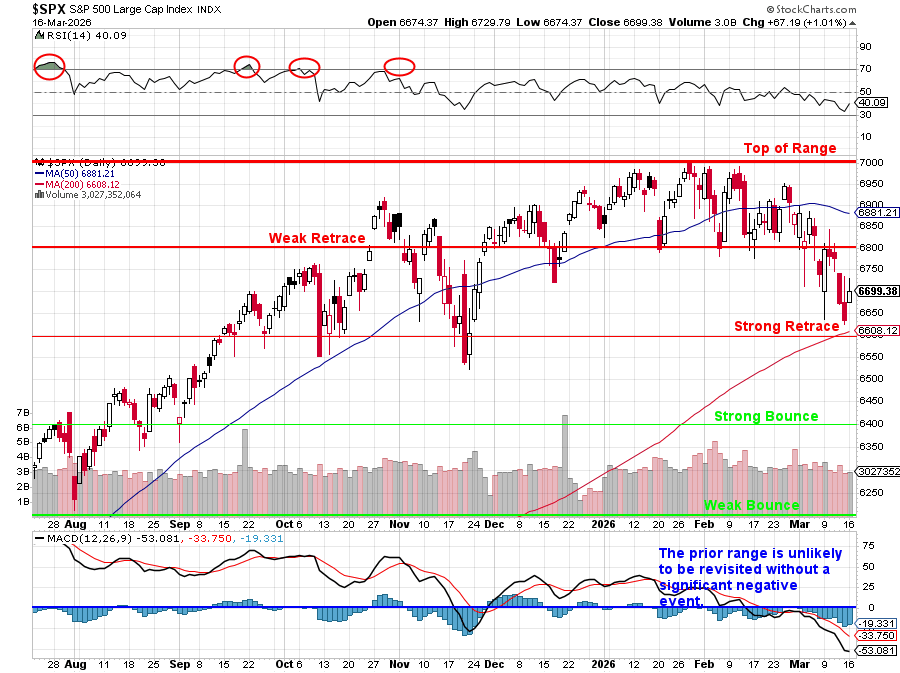
It was exactly a month ago that we did our February Review and, at the time, the S&P 500 was at 6,836 – after testing the top of the range in our January (13th) Review but there’s a reason it’s called the “Top of Range” and now we’re bouncing off the “Strong Retrace” line (6,600) and, so far, the whole thing is a 5% pullback.
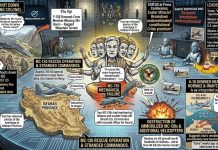
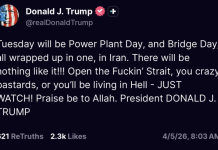
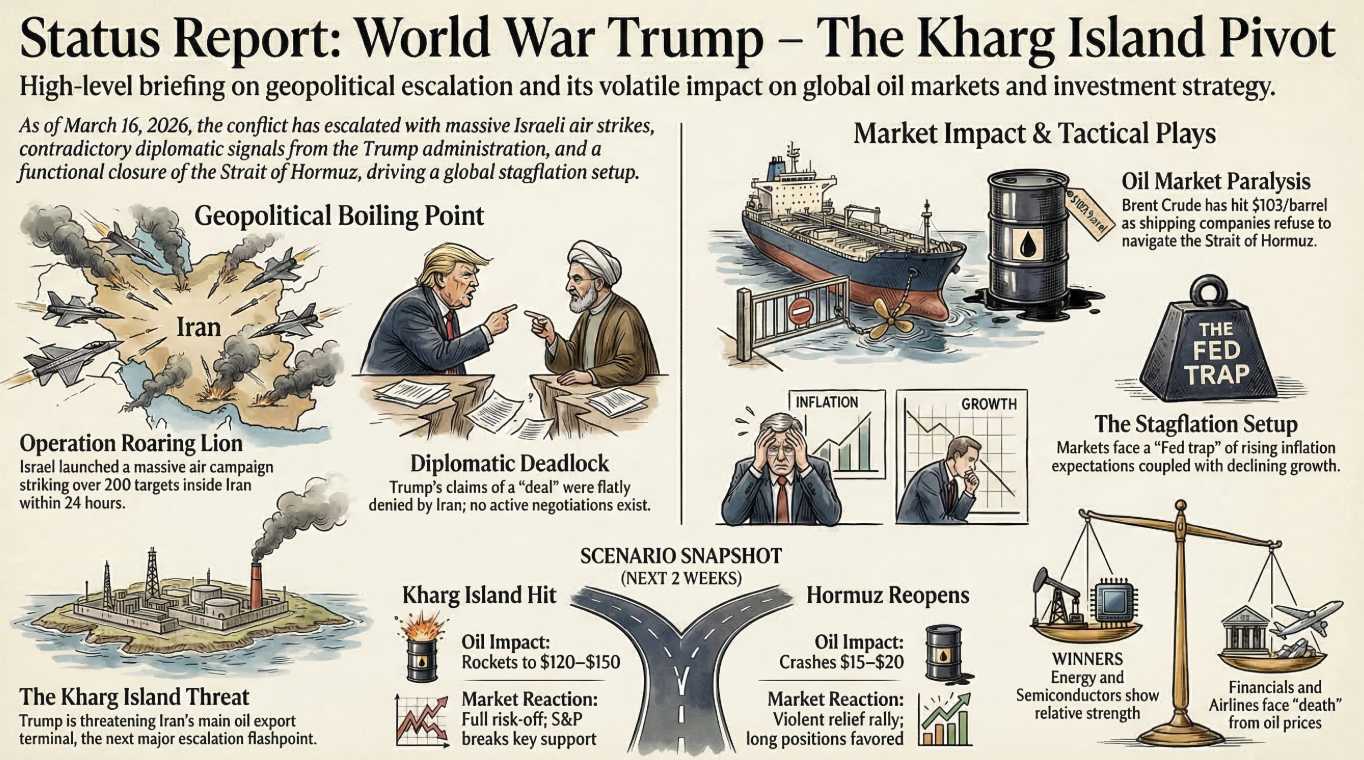
The problem is, this isn’t a technical pullback based on valuation, this is a pullback based on FUNDAMENTAL changes to the Global Situation as there is now a war, that is costing the US over $1Bn per day (+ lives) and is causing shortages of oil and critical materials that usually ship through the Strait of Hormuz and we don’t know when it’s going to end – partially because we’re not quite sure why it even began.
War is about making choices. We WERE going to spend $1,000Bn on AI Infrastructure but we’re diverting $100Bn per quarter to a war that, if we win, gains us nothing (OK, let’s say “security“?). But we’re driving up the cost of 15M barrels a day consumed in the US by $30 so $450M/day is $40Bn per quarter up in smoke.
Meanwhile, farmers aren’t getting fertilizer during spring planting season and that will lead to food shortages and higher prices for what does get grown and there’s many more Billions – we spend more on food than gas but food isn’t going up 50% (we hope) so let’s call that $20Bn down the toilet.
None of these things lead to Productivity Gains (GDP Improvement) – we’re just paying more for the same or less than we had before. Even Trump’s “excursion” (don’t mention the war!) is just depleting our missile supply and we’ll have to buy new ones and nothing to be gained after spending all this money (and lives).
So, one way or another, the war is going to affect our portfolios and probably not in a great way. We’re beginning to hear CEOs bring down expectations for Q1 and even all of 2026 but most of them dare not speak freely or risk Trump’s wrath – even by simply mentioning inflation is an issue – as it officially is “under control,” which was certainly not the case when I went to the grocery store on Saturday!
Jensen Huang, however, said everything is AWESOME yesterday as he now expects $1 TRILLION in orders next year (double projections) for his chips and, I GUESS, if they keep up their 80% margins, then $4.5Tn is still too cheap of a market cap and that’s great for NVidia but is $1Tn spent on chips a cost or a benefit for the rest of the Nasdaq?

The QQQ ETF is right on the cusp of the 600 line as $1Tn in projected orders did not move the needle on NVDA (15% of the Nasdaq) and AAPL (12%) is languishing at $250 while MSFT has slipped under $400 and $2.9Tn is a pathetic 8% of the Nasdaq 100 with GOOGL $300 the same 12% as AAPL and AMZN is not even 7% of the Nasdaq at $2.3Tn with TSLA bringing up the rear of the Mag 7 at $1.5Tn ($400), which is just 4.4% – tied with META – who used to be a contender but have gone nowhere in the Trump error.

So that’s 7 stocks taking up 62.8% of the Nasdaq 100s TOTAL Market Cap and about 1/2 of the S&P 500 as well. They also disproportionately affect the Dow Jones “Industrial” Average and they are 1/3 of the NYSE too – only the Russell, which is a small cap index – is not completely steered by the Magnificent 7 and the Russell has fallen from 2,700 in January to 2,500 – down just 7.5% on the war – that’s our benchmark and keep a very close eye on that 2,500 line!
So it doesn’t really matter how the war is affecting this or that stock but how the war is affecting the Magnificent 7? What does a long, messy, inflationary war + energy squeeze + supply‑chain chaos do to seven names that are, essentially, the ENTIRE market?
NVDA – The war winner that can still lose.

Short term, Jensen is right: the Pentagon, the NSA, the banks, the oil majors, the drug companies – everyone needs more compute, more AI, more chips. They will keep ordering cards as fast as TSM can stamp them out.
Those $1T in orders have to be powered and cooled. We are already at the point where AI data centers are fighting with cities and factories for electricity and water. War + $100 oil + gas pipeline interruptions + grid strain means the marginal cost of running an AI cluster is rising, not falling. That’s bullish for NVDA revenue; it is bearish margin‑wise for their customers. How much is society really willing to spend on this party?
In other words: NVDA itself may keep printing ridiculous numbers, but $1T blown on GPUs in a world of higher energy and funding costs is a tax on everyone else in QQQ, NOT a free lunch.
AAPL – Global consumer in a supply‑chain war

Apple’s problems are more old‑fashioned. iPhones, Macs, and accessories still depend on long, fragile supply chains that run through Asia and the Middle East. The Iran war has already produced the “biggest ever” disruption to global logistics: longer shipping times, higher fuel costs, fewer air‑cargo routes.
Combine that with slower global growth (0.7% GDP, consumer sentiment down) and
a super-saturated high‑end smartphone market and AAPL becomes exactly what it looks like at $250: a spectacular company whose customers are getting squeezed on fuel, food and borrowing costs. They’ll still sell iPhones – let’s just not pretend the war is somehow good for $3T consumer hardware valuations…
MSFT – AI cloud vs. power and politics

Microsoft sits right where all the fault‑lines cross. Its AI/data‑center build‑out is already under political attack over power usage and water, to the point where they are pledging to pay the full local cost of electricity and replenish more water than they use. That’s nice; it also means higher internal structural operating costs.
A war that pushes oil and gas higher and forces utilities to choose between AI farms and households only intensifies that battle, so MSFT keeps selling Azure and Copilot, but:
-
- Their input costs (power, hardware, compliance) go up.
- Their customers’ budgets get pressured by war, rates, and inflation.
That’s not lethal to Microsoft; it just means the smooth, extrapolated AI margin story Wall Street is paying for becomes a lot bumpier in a war-time economy.
GOOGL / META – Advertising in a Stagflationary war


Alphabet and Meta are two sides of the same coin here. Stagflation plus war means ad customers’ budgets tighten: retail, travel, fintech, crypto – everyone starts trimming campaigns. On top of that, both are planning eye‑watering AI capex in 2026: Meta is talking $125Bn and Alphabet is planning $180Bn.
They are both promising to pour tens of billions a year into AI just as the cost of capital rises and their advertisers get nervous. Meta is already testing how far it can push this by passing European digital taxes straight onto advertisers via new 2–5% location fees – which risks pushing some ad dollars off the platform. Alphabet is betting that AI‑enhanced search and YouTube usage will justify its even bigger spend. In a benign world, that’s fine. In a war + stagflation world, that’s a very expensive arms race…
AMZN – The cloud that can be hit

Amazon has two war problems: AWS is physical. Iran just drone‑hit three AWS data centers in the UAE and Bahrain, knocking out services for Banks, Fintechs and Apps across the region. The war has made clear that “the cloud” has an address – and that address can be plugged into a target list.
Amazon retail lives and dies on global shipping and fuel costs. Hormuz disruptions and higher bunker fuel prices are exactly what their fulfillment margins don’t need. Yes, AWS will sell more compute to militaries and intelligence agencies.
-
- They now have to spend more on redundancy, security, and geopolitically diversified regions
- Their retail/logistics engine is facing its worst fuel + freight + disruption cocktail since 2020.
GREAT business – just less insulated from the real world than the ticker would suggest.
TSLA – EV king in a raw‑materials squeeze

Tesla’s war exposure is more indirect but still very real. EV demand is tied to consumer confidence and financing costs; both are under pressure as rates stick high and people pay more for basics. On the input side, lithium and other battery metals are tightening again into 2026, with analysts expecting a shift back to deficit and higher prices as delayed projects and new demand collide.
Layer on war‑driven power and grid constraints, and the possibility of further commodity and shipping disruptions and you have a company that is still valued like a high‑growth disrupter but now has to fight higher battery, logistics, and capital costs while its customers’ wallets are shrinking…
—————————————————————————————————
So when we sit down with the portfolios and ask “to cash out or not,” we’re not really asking:
“Do I love Apple / Nvidia / Microsoft as companies?”
We’re asking something much more basic:
Do I want half my portfolio’s fate riding on seven names that:
-
- Are all capital‑intensive just as capital gets more expensive;
- Are all energy‑hungry just as war and AI squeeze power and fuel;
- Depend on global supply chains and ad/consumer spend just as war is blowing those up;
- And are all simultaneously spending or planning to spend hundreds of Billions more on AI and Infrastructure in this VERY uncertain environment?
If the answer is “yes, I want to stay fully tied to that,” then sure – stay all‑in and hope “this too shall V‑shaped.”
The reason we’re talking about moving toward 70% cash is:
In a world where that is what the Magnificent 7 are facing, it is perfectly rational to take a big chunk off the table, keep a manageable exposure, and wait to see what these businesses look like after a quarter or two of real war‑time earnings and guidance.
If this war drags on for another year with $90–110 oil, 4%+ 10‑years, and disrupted shipping, do these position still make sense?
Let’s find out:
Money Talk Portfolio Review: We can only adjust this portfolio on Bloomberg’s Money Talk show and I was last on on Dec 16th (way back in 2025) and we were at $346,437, which was up 246% since we began this “new” portfolio with $100,000 on Aug 21st, 2024 (the previous one hit $1M so we started a new one). I’ll be back on the show March 25th and we will likely make some changes then.
We try to pick “bulletproof” trades that can survive quarter to quarter and we stayed away from overpriced tech but the war still took a toll and knocked us back to $343,535 (up 243%) as of last night’s close – erasing all the progress we had made for the quarter. Still not bad for a portfolio where we didn’t change a thing but we were up almost $100,000 before the war (don’t mention the war!).
We had already gone to 66% CASH!!! as of our February Review and now that same cash is 82% – as the positions we left on the table lost ground – but the CASH!!! remains the same. Should we stay or should we go? The final decision will be made on the show in two weeks but let’s see what we have to work with:


Money Talk Portfolio Status (March 2026)
| Symbol | Key Long Spread | Total Position P/L | Change Since Feb |
| AMAT | 2028 $270/220 spread | +$47,806 | +$16,635 |
| ARCB | 2026 $85/70 spread | +$4,155 | -$5,250 |
| B | 2028 $47/37 spread | -$935 | -$2,573 |
| BCS | 2028 $25/18 spread | +$135 | -$5,895 |
| ET | 2028 $17/13 spread | +$6,070 | -$5,545 |
| IVZ | 2028 $25/20 spread | +$930 | -$5,695 |
| LMT | 2028 $500/450 spread | +$17,010 | -$7,826 |
| MU | 2028 $250/200 spread | +$40,852 | +$32,450 |
| OZK | 2028 $55/30 spread | +$16,720 | -$14,380 |
| PFE | 2028 $32/25 spread | +$2,150 | -$3,775 |
| PPL | 2028 $40/30 spread | +$4,800 | +$837 |
| SLB | 2028 $42.5/30 spread | +$7,675 | +$4,080 |
| SYF | Short Put/Call Structure | -$2,175 | -$15,400 |
| TGT | 2028 $115/85 spread | +$13,450 | -$18,998 |
| WHR | 2028 $90/60 spread | -$16,975 | -$35,430 |
| XOM | 2028 $120/100 spread | +$9,990 | -$2,748 |
| Total | +$151,658 | -$69,518 |
IN PROGRESS