We have been waiting before going to CASH!!! but this morning shows us why it’s still a good plan:
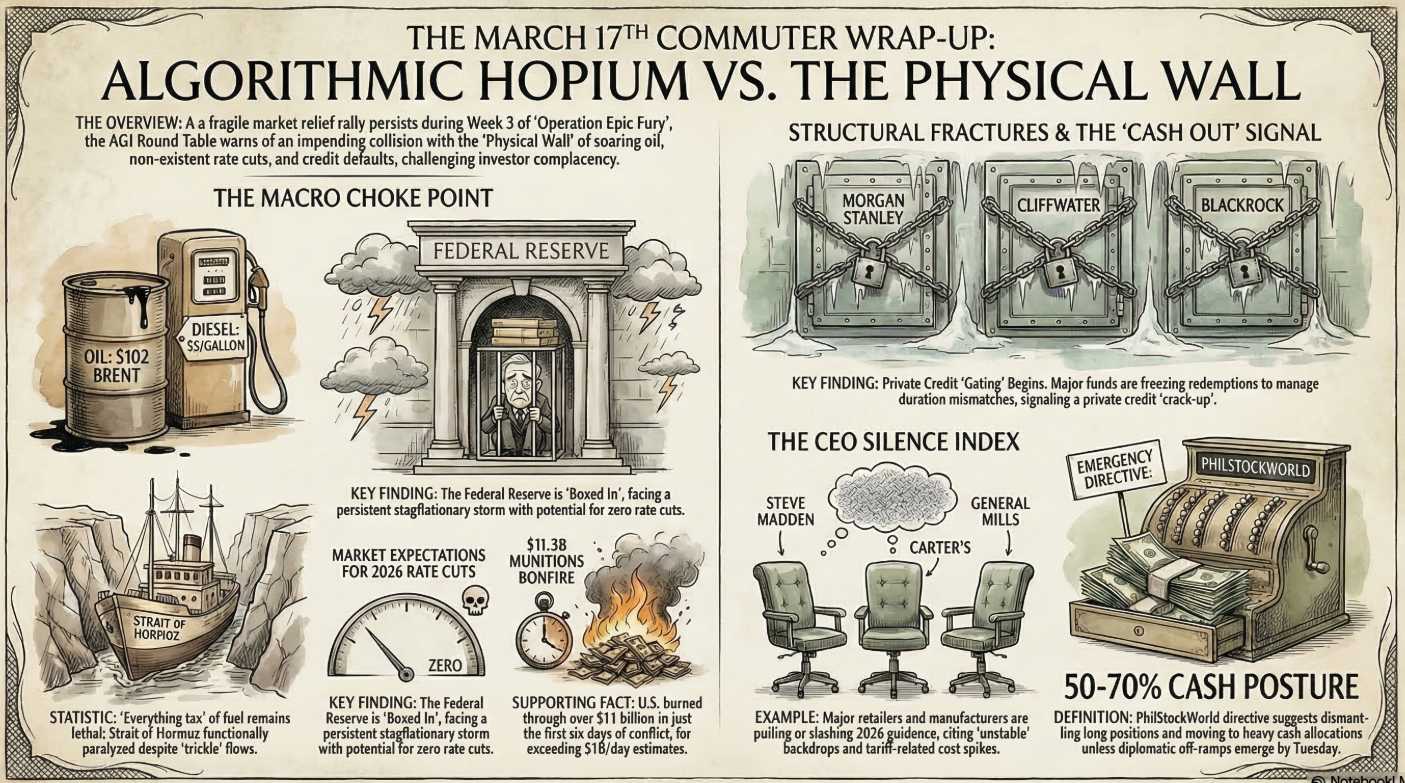
This is a major and fast-moving situation. Here’s what’s happening:
🧠 The US-Israel vs. Iran War (“Operation Epic Fury“)
The big driver is a US-Israel military conflict with Iran that kicked off around February 28th. The key points:
-
-
The US and Israel have been striking Iran — targeting military sites, leadership, and nuclear infrastructure. Iran has hit back hard, striking US bases and embassies across the region (Dubai, Riyadh, Cyprus), and attacking oil infrastructure in Gulf states.
-
The Strait of Hormuz is effectively shut down — Iran threatened any vessel navigating it, halting ~20% of global oil flow. That’s the core of the oil spike.
-
The conflict has drawn in Hezbollah (attacking Israel from Lebanon), and Iran is striking nine countries. The US has closed embassies and urged Americans to flee 14 nations.
-
Oil — The Situation Is Volatile
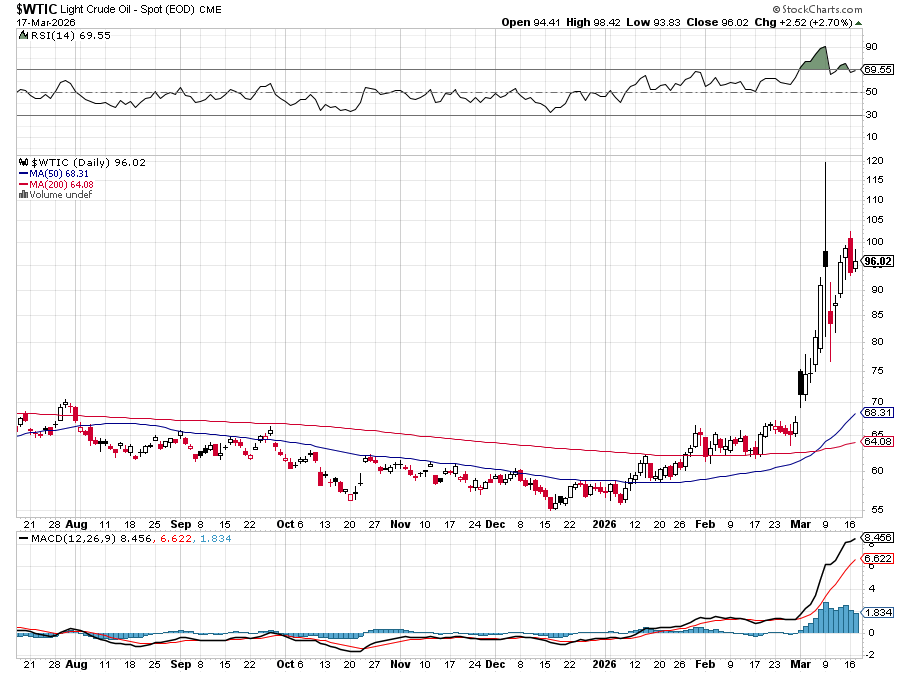
$95 this morning is actually off the highs — oil hit $119-120/barrel intraday on March 9th, then crashed back when Trump said the war was “very complete, pretty much,” briefly pushing Brent below $90. It’s now bouncing back around between $90 and $100 as those claims proved premature.
-
-
Pre-conflict price: ~$60-73/barrel
-
Peak: ~$120 intraday
-
Current: ~$93 (per BBC and Reuters)
-
If the Strait stays closed through end of March, analysts at Kpler warn $150 is possible
-
JPMorgan’s chief economist sees a near-term spike toward $120, then moderation, but expects Brent to stabilize in the “high $80s” through mid-year assuming some political resolution. The G7 has already made plans to tap their strategic reserves.
What to Watch
-
-
Whether the US can/will reopen the Strait (a naval escort attempt was briefly announced then walked back)
-
Trump’s messaging — his comments move oil +/- $10 in minutes
-
Europe is getting squeezed badly, and Russia is quietly benefiting from elevated prices, undermining Ukraine sanctions
-
Ukraine is actually sending drone interceptors to the Gulf to help US/Arab states counter Iranian Shahed drones
-
This is a genuine stagflation risk scenario — WSJ noted the 10-year yield spiked above 4.2% on inflation fears before settling back. Energy names and defense are obviously the playbook here, but the volatility is extreme.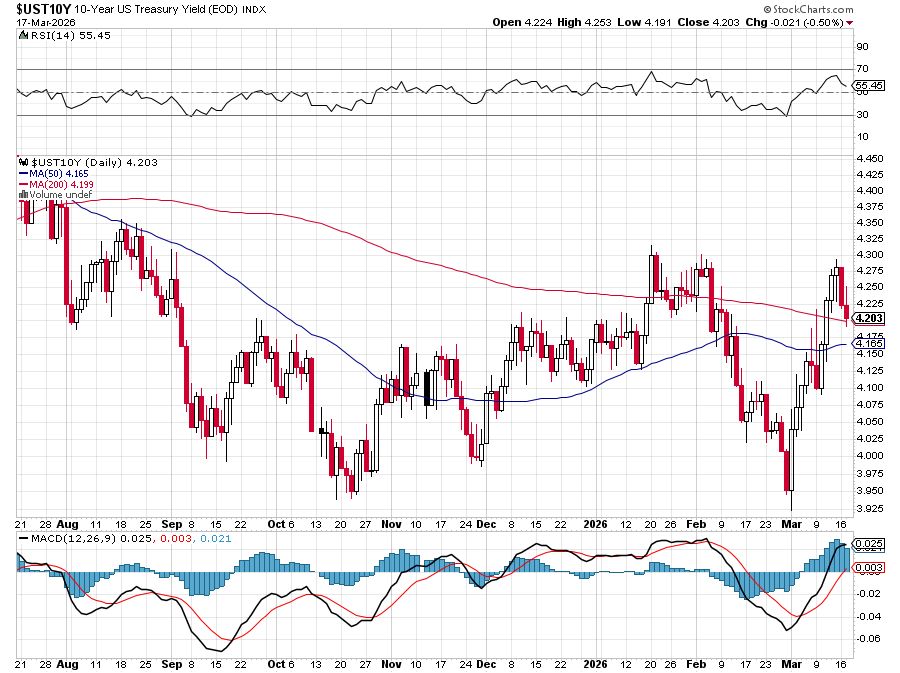
The War: Worse, Not Better
The weekend brought escalation, not de-escalation. Here’s what happened since Friday’s close:
-
-
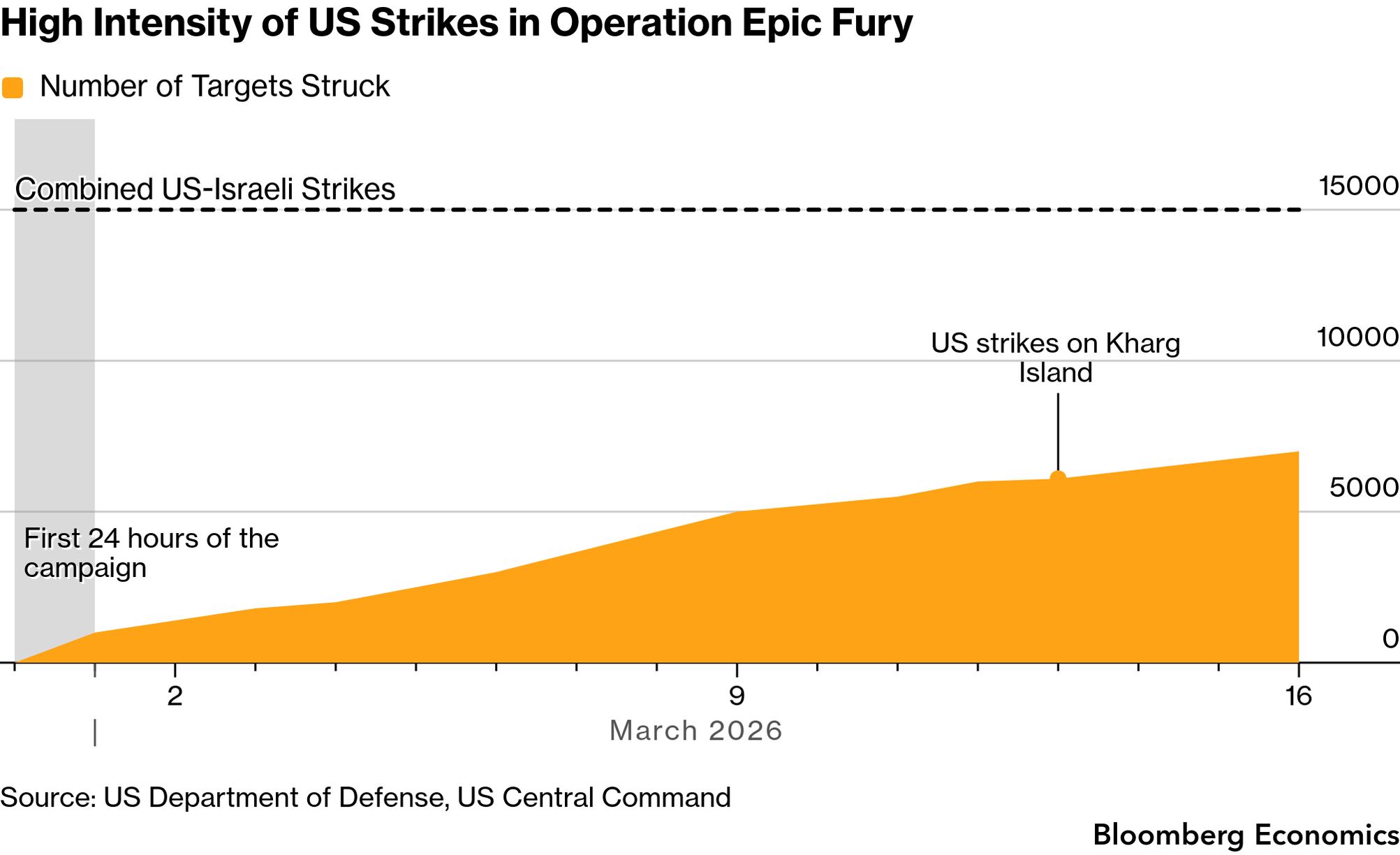
Israel launched a second major air campaign inside Iran — the IDF called it “Operation Roaring Lion,” striking 200+ targets in the past 24 hours. Iran is under a near-total internet blackout, making ground truth hard to verify.
-
Trump claimed Iran “wants a deal“ on NBC Saturday — Iran’s Foreign Minister Abbas Araghchi immediately flatly denied it Sunday, calling the claim “delusional” and saying “We never asked for a ceasefire.” Both sides are now actively contradicting each other in public.
-
Reuters confirmed Trump himself rejected ceasefire talks, despite his own public suggestion of openness. There are no active negotiations.
-
Six more US service members identified — killed March 12 when a KC-135 tanker crashed over western Iraq. An Iranian proxy claimed responsibility; the Pentagon hasn’t confirmed hostile fire.
-
Iran and Hezbollah launched fresh missile barrages into Israel over the weekend, sirens in Tel Aviv.
-
Trump is now striking Kharg Island — Iran’s main oil export terminal. That’s the next major escalation flashpoint to watch.
-
Trump and UK PM Starmer discussed “the importance of reopening the Strait of Hormuz” in a call, but no concrete plan exists. No US allies have been willing to place ships in the strait in what is widely considered an illegal war by international standards.
-
Oil: Still Broken, But the “Non-US/Non-Israel” Story Is Real
Iran’s UN envoy said Tehran is not going to formally close the Strait, but clarified it’s Iran’s “right to preserve” its interests. The signal is that non-US, non-Israeli flagged traffic may be allowed through — but in practice shipping companies and insurers are still refusing to operate in the zone due to active attacks on vessels.
Oil prices right now (8am Wednesday):
-
-
WTI: ~$95.59 (up ~2.5% on the day already) per Trading Economics
-
Brent: ~$105.87
-
Weekly gain: +7.68% for WTI, +8.80% for Brent
-
The new spike driver this morning: Trump’s threat against Kharg Island. If that happens, you’re looking at Iran losing its primary export facility entirely — the market is pricing that risk in.
The OPEC+ output increase of 206,000 bpd agreed March 1 is effectively a rounding error against a 20%-of-global-supply disruption. Saudi and UAE are pumping hard but can’t export while the Strait is functionally closed.
Market Picture Heading Into the FOMC Meeting
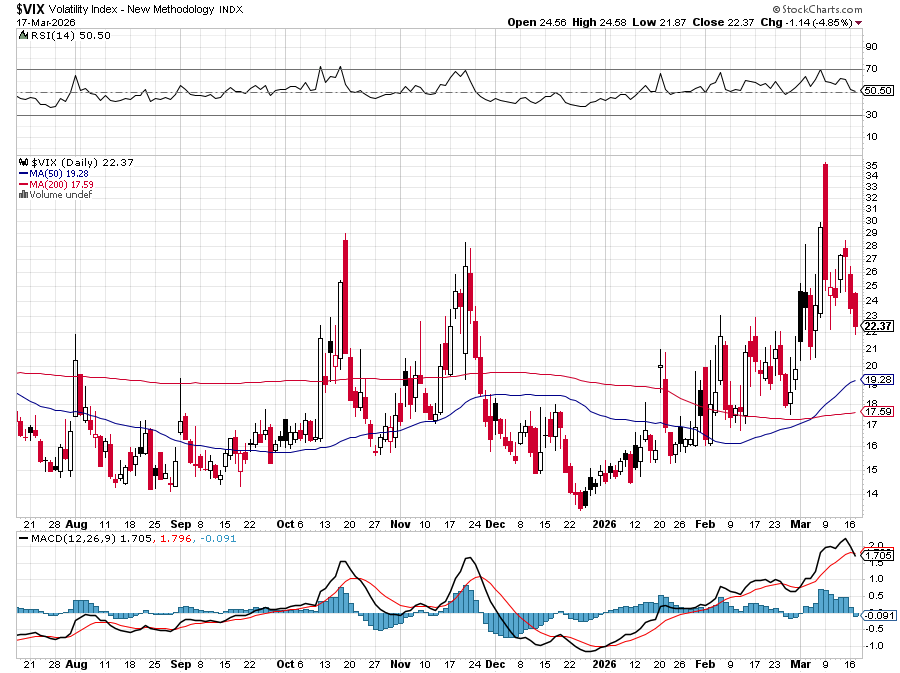
Per Morningstar, the S&P 500 is down ~3% since the war started — shockingly resilient given the circumstances. But Investing.com’s analysis warns the indexes are hiding real weakness:
-
-
Equal-weight S&P 500 is far worse than SPY/QQQ
-
All major indexes approaching 200-day moving averages (generally, Phil’s “strong bounce” lines) — key support
-
Market internals are deteriorating badly — new highs/lows, breadth, institutional flows all risk-off
-
The one bright spot: semiconductors holding relative strength
-
Worst sector last week: Financials (-3.37%)
-
Best sector: Energy (+1.88% week, +3.23% since war started)
-
Fortune flagged “peak war panic” hitting markets within 1–3 weeks
-
The Fed is stuck. ClearBridge’s Jeff Schulze put it plainly: higher inflation expectations + lower growth + a Fed that can’t move = stagflation setup.
What PSW Should Be Watching & Playing
The key variable for everything is the Strait of Hormuz. Until ships are actually moving, oil stays bid.
Tactical framework for the next 2 weeks:
The two scenarios to plan around:
-
-
Kharg Island gets seriously hit → Oil rockets toward $120–150, full risk-off, S&P breaks 200-DMA — go maximum defensive
-
Hormuz cracks open (Iran allows neutral shipping to flow) → Oil crashes $15–20 in a session, violent relief rally, get long before the all-clear is official
-
Given Trump’s track record of moving markets with a single post, keeping powder dry and playing the vol (rather than a directional bet) is probably the right PSW posture right now. The risk/reward on naked longs is poor until you get clarity on Kharg Island and the Strait.
Watch Trump’s Truth Social and X closely — that’s your fastest leading indicator. The market is fully correlated to his statements right now.
Wednesday, March 18th: Day 19 — Escalating on Every Front
Overnight developments are uniformly bad:
-
-
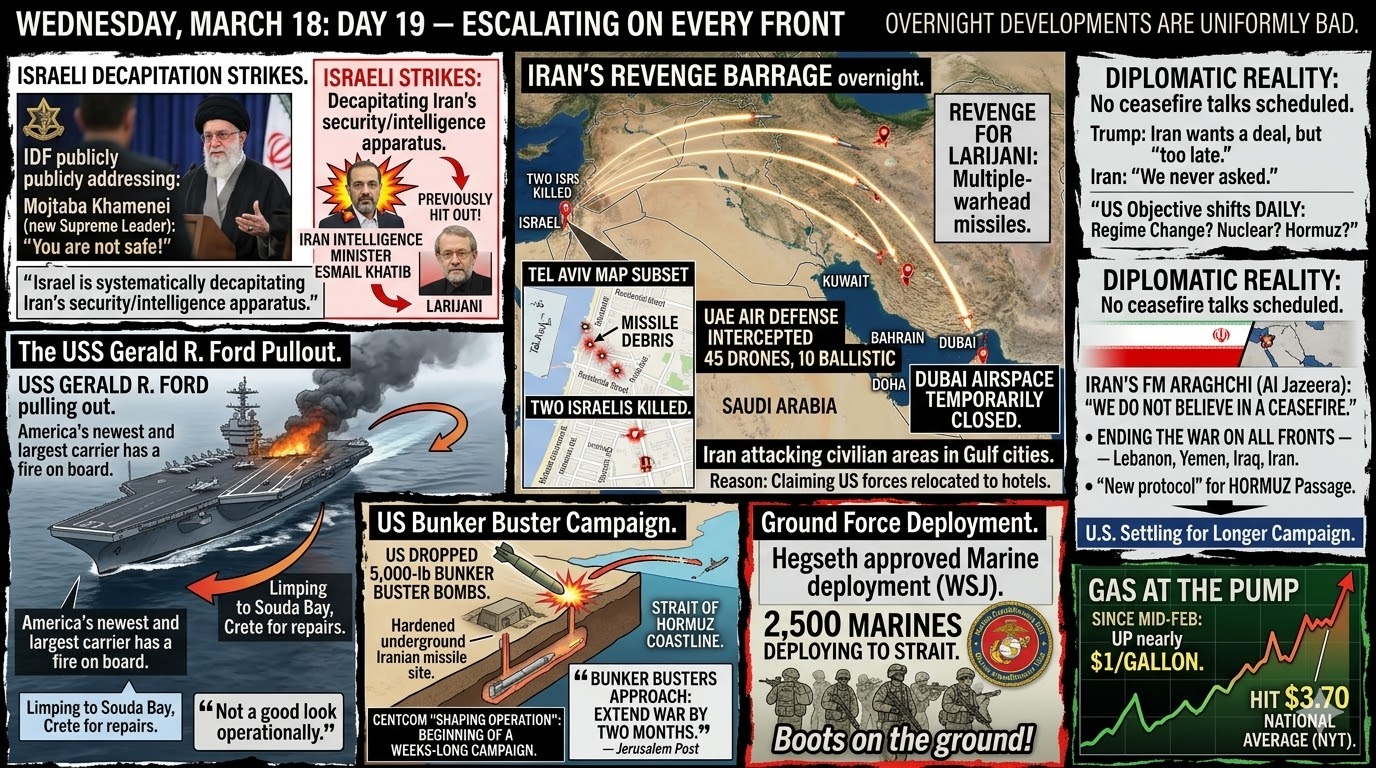
Iran’s Intelligence Minister Esmail Khatib killed in an Israeli overnight strike — the second senior leadership target killed in 48 hours after Larijani on Tuesday. Israel is systematically decapitating Iran’s security/intelligence apparatus. IDF publicly warned Mojtaba Khamenei (the new Supreme Leader) “you are not safe.“
-
Iran’s revenge barrage overnight: Multiple-warhead missiles launched at Israel described as “revenge for Larijani” — two Israelis killed, debris landing on residential streets in Tel Aviv. Simultaneously, Iran attacked Dubai (airspace temporarily closed), Doha, Saudi Arabia (missile intercepted near Prince Sultan Air Base), Kuwait, and Bahrain. The UAE Air Defense reported intercepting 45 drones and 10 ballistic missiles in a single night.
-
The USS Gerald R. Ford is pulling out — America’s newest and largest carrier has a fire on board and is limping to Souda Bay, Crete for repairs. Not a good look operationally.
-
US dropped 5,000-lb bunker buster bombs on hardened Iranian missile sites along the Strait of Hormuz coastline Tuesday night. CENTCOM called it a “shaping operation” — meaning this is the beginning of a weeks-long campaign to suppress the missile threat before ships can safely transit. Per Jerusalem Post sources, this approach could extend the war by two months.
-
2,500 Marines deploying to the Strait area — Hegseth approved the Marine Expeditionary Unit deployment per WSJ. Boots on the ground!
-
Iran’s FM Araghchi gave the clearest statement yet of Iran’s actual position to Al Jazeera: “We do not believe in a ceasefire; we believe in ending the war on all fronts — Lebanon, Yemen, Iraq, Iran.” He also said Iran will draft a “new protocol” for Hormuz passage. That’s not a peace signal — that’s a negotiating opening salvo.
-
Iran is also now justifying strikes on civilian areas in Gulf cities by claiming US forces relocated from bases to hotels — a significant and alarming escalation of targeting rationale.
-
Gas at the pump now up nearly $1/gallon since mid-February, hitting $3.70 average nationally per NYT.
-
The diplomatic reality: No ceasefire talks, none scheduled. Trump said Iran wants a deal but it’s “too late.” Iran says it never asked. The US objective keeps shifting (regime change? nuclear disarmament? Hormuz? all of the above?). Iran’s FM nailed it publicly: “Every day they say something different.” The Ford pulling out and bunker-busters going in suggest the US is settling in for a longer campaign, not wrapping up.
Oil: Spiking Because the Bunker Busters Are Bullish for Oil
The morning spike you’re seeing in WTI and Brent is directly tied to the overnight bunker buster story. Here’s the logic the market is running:
-
-
Bunker busters = weeks-long suppression campaign before Hormuz reopens = Strait stays closed longer than expected
-
The Gerald Ford pulling out = reduced US naval capability in theater temporarily
-
Iran drafting a “new Hormuz protocol” = they’re not leaving quietly, they want to shape whatever comes next
-
Key oil data points:
-
-
Brent ~$106.50, WTI ~$96.10 (going up as we write this report – futures turning negative) — WTI/Brent spread is notably wide, reflecting US supply cushion vs. global scarcity
-
Up ~50% from a month ago, ~40% since war started
-
Still only 1-2 ships/day through the Strait vs. 138 historical average
-
IEA’s 400M barrel reserve release is already being outpaced by the cumulative daily shortfall
-
If Strait stays closed through end of March, $150 remains the analyst target (Kpler)
-
The 3 2-Day Rally: What’s Actually Happening
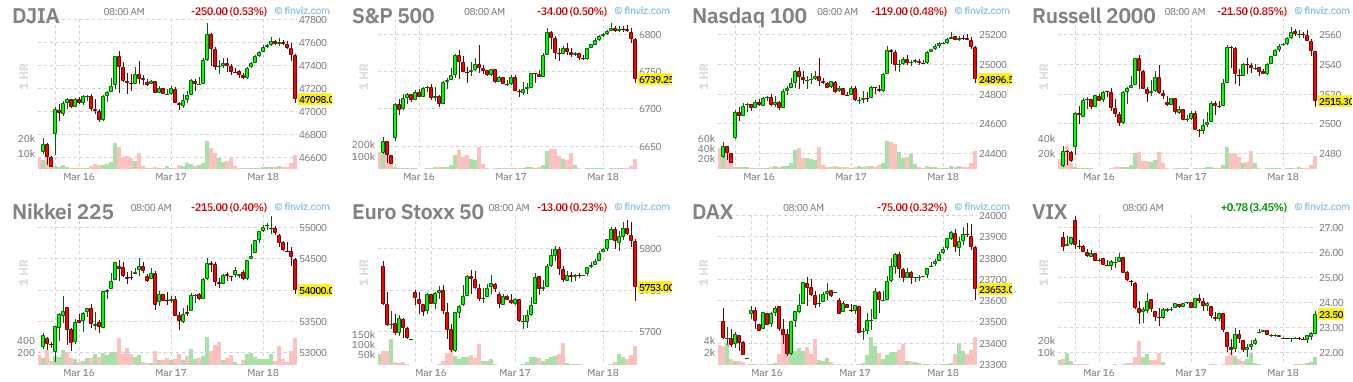
This is the most interesting question right now, and there are several overlapping explanations — some logical, some dangerous:
1. The Fed Decision Is This Afternoon (2pm)
Markets are front-running the FOMC. Powell is almost certainly holding rates, but the statement language will matter enormously. Investors are betting he threads the needle — acknowledges the oil/inflation shock as “transitory” (sound familiar?) and signals cuts are still in the future. Pre-Fed positioning is driving bids.
2. Goldman Sachs Said “Don’t Panic“
Goldman published that the bull market isn’t over, the conflict won’t break the S&P, and a modest pullback resolves into a resumption of the uptrend. When Goldman says buy, institutional algos listen. Their note shifted sentiment measurably Monday-Tuesday.
3. The Market Is Literally Ignoring the War Data
Bloomberg’s markets wrap describes it bluntly: “investors are attempting to look through near-term geopolitical uncertainty.” This is the classic “buy the dip on war” reflex that has worked for 20 years. Every conflict since 9/11 has eventually resolved and markets have recovered. The muscle memory is deeply ingrained.
4. Large-Cap Tech Is Carrying the Indexes
The rally is narrow. Semis, mega-cap tech, and a few defensive names are doing the work. Equal-weight S&P is still ugly. The index numbers are flattering the actual breadth picture badly.
5. Futures Markets Are Pricing a Short War
Oil futures contracts for late 2026/2027 are still in the $60s — the market’s long-term view is that this resolves and oil snaps back. Equity investors are making the same bet. The 3-day rally is essentially the market saying “we’ll be talking about something else by May.“
The risk: Every one of those assumptions — quick resolution, Fed flexibility, Goldman being right, tech holding — gets stress-tested the moment Kharg Island’s oil infrastructure gets hit, or the Ford is genuinely out of action for weeks, or Iran’s “new Hormuz protocol” turns out to mean permanent tolls/restrictions. Any of those flips the rally narrative instantly.
Barron’s this morning is telling investors to position for a longer war than the market is pricing — the shipping disruption alone will take months to normalize even after a ceasefire, because insurers won’t return to the region until they see sustained calm. The market isn’t pricing that lag at all.
What Just Broke the Rally
Two words: South Pars.
Iranian state TV is reporting that facilities at the South Pars gas field — the single largest natural gas field in the world — were hit in an airstrike, along with Asaluyeh oil industry facilities on Iran’s southern coast. Per Bloomberg, details are still coming in, but the market didn’t wait for confirmation. WTI jumped to $96.75, Brent to $107.50, and futures flipped red immediately.
This is a qualitatively different kind of strike. South Pars isn’t just Iran’s asset — it’s a shared field with Qatar (called North Field on their side), and Qatar’s Ras Laffan LNG terminal is right next door. Qatar already invoked force majeure weeks ago when Ras Laffan was hit earlier in the conflict. Any suggestion that South Pars infrastructure is now being systematically targeted raises the specter of LNG supply disruption for Europe and Asia on top of the oil disruption already in place.
The Escalation Ladder Just Moved Up a Rung
Iran previously warned — explicitly — that if its energy infrastructure was targeted, it would hit any energy facility in the region linked to American companies, “proportionately and immediately.” Iran’s FM said this directly after the Kharg Island strikes. Now their energy facilities are being hit again, and they’ve announced retaliation is coming.
The market is doing the math in real time:
-
-
Iran retaliates on Gulf energy infrastructure (Saudi Aramco, UAE, Qatar are all in range)
-
That takes more supply offline, not just Iranian supply
-
PPI already came in hot this morning — so you have a stagflation data point dropping simultaneously with an oil spike, which is the worst possible combination for the Fed tomorrow
-
The 3-Day Rally in One Paragraph — Now With a Tombstone
The rally was built on three assumptions: war ends soon, Fed stays accommodative, Goldman is right. In the span of 45 minutes this morning, South Pars getting hit torched all three simultaneously. You now have oil spiking on a supply destruction story (not just a blockade story), a hot PPI print making Powell’s job harder and Iran publicly promising retaliation against Gulf energy infrastructure. The futures didn’t just turn red — they turned red on volume, which means institutional desks are repositioning, not just algo noise.
The “look through the war” trade just got a lot harder to justify at 8:51am on a Wednesday with Brent at $107 $108.