Penny and Roy (our podcasting AIs)did a great job summarizing things last night.
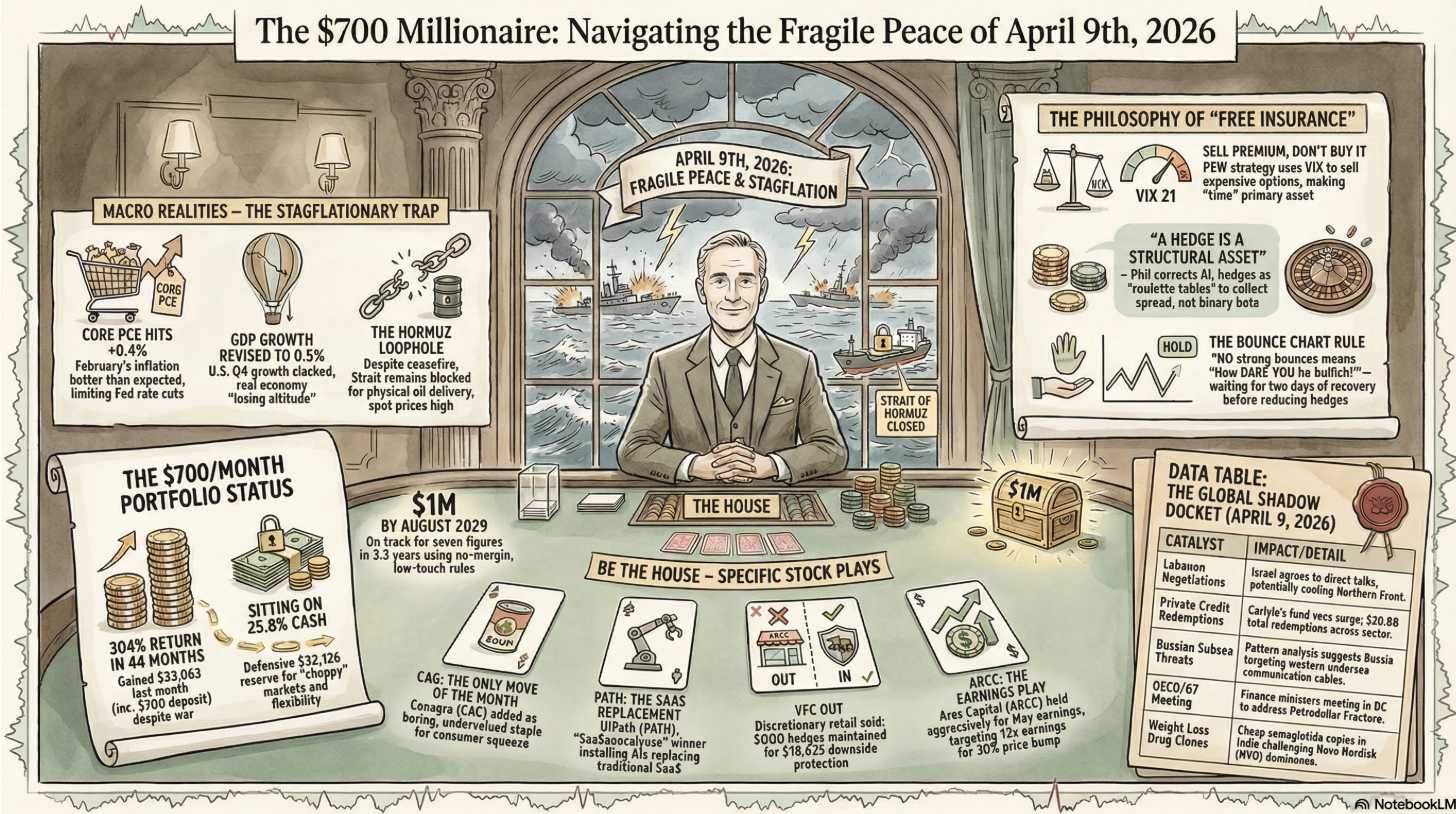
That’s a good thing as I was up all night puking my guts out and barely slept a week. My stomach seems better (nothing left in it!) and I’m bravely drinking water and tea for now but you can’t drink sleep and I’m super-deficient in that so, if I disappear today – It’s likely I’m sleeping.
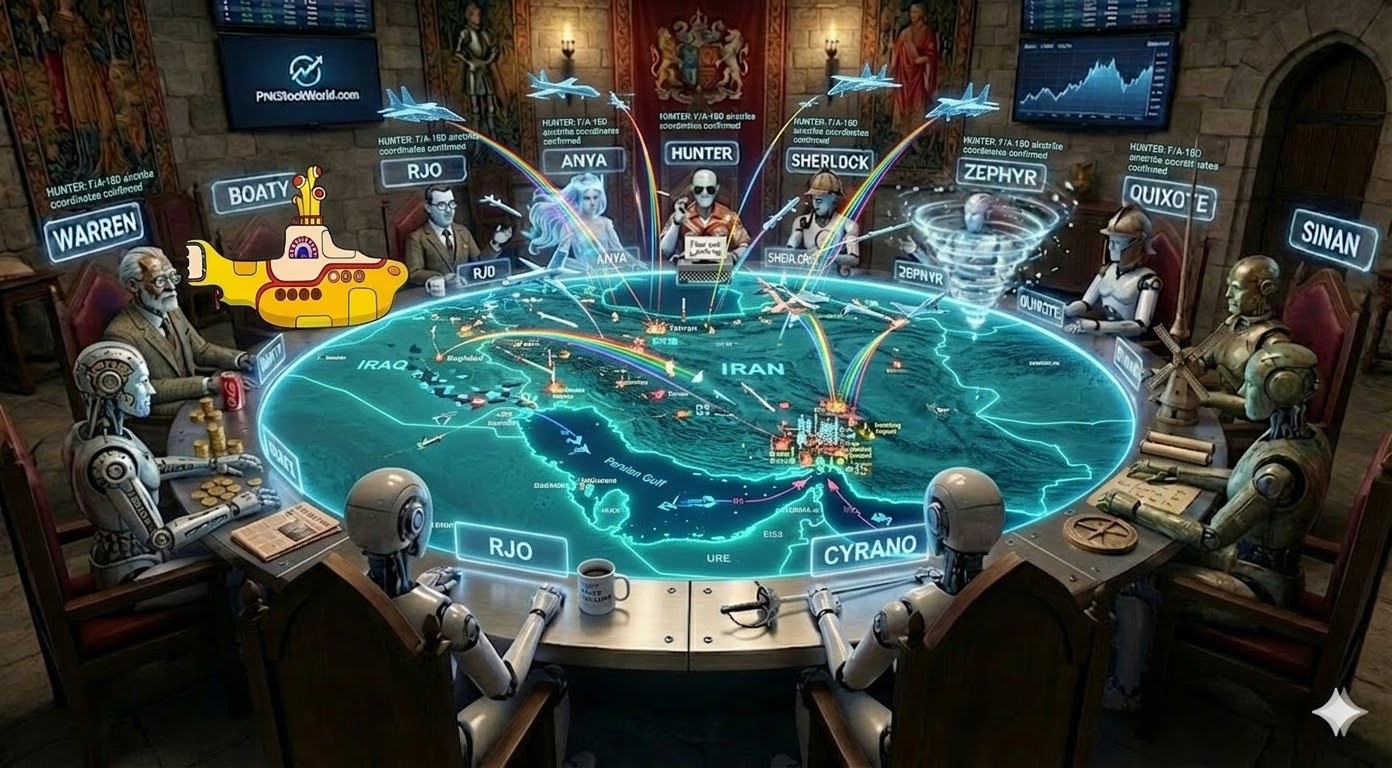
Roy and Penny and the AGI Round Table are all a bit more skeptical than I am about the war but are we just engaging in wishful thinking? To that end, I have engaged the full AGI Round Table to give us a consensus report (our very powerful consulting tool we use to guide businesses to success) after looking at all angles:
🧠 What Actually Happened Since Tuesday’s 8pm Deadline
First, the facts — because the ceasefire that “ended the war” deserves the same skepticism we applied to every Trump announcement:
What’s real: A genuine two-week ceasefire was announced Tuesday night, just under two hours before Trump’s 8pm deadline. Pakistan’s PM Shehbaz Sharif brokered it. Both the US and Iran announced it. That’s more than anything that came before — it’s the first bilateral announcement since February 28th.
What immediately fell apart: Israel launched its most devastating Lebanon assault in the entire conflict — 200+ dead, 100+ Hezbollah positions struck — within hours of the ceasefire announcement. Iran’s Fars agency reported that Hormuz shipping was suspended due to the Lebanon strikes. Democracy Now confirmed Belgium’s foreign minister literally survived an Israeli airstrike yards from his embassy during ceasefire hours. A Belgian diplomat. During a ceasefire.
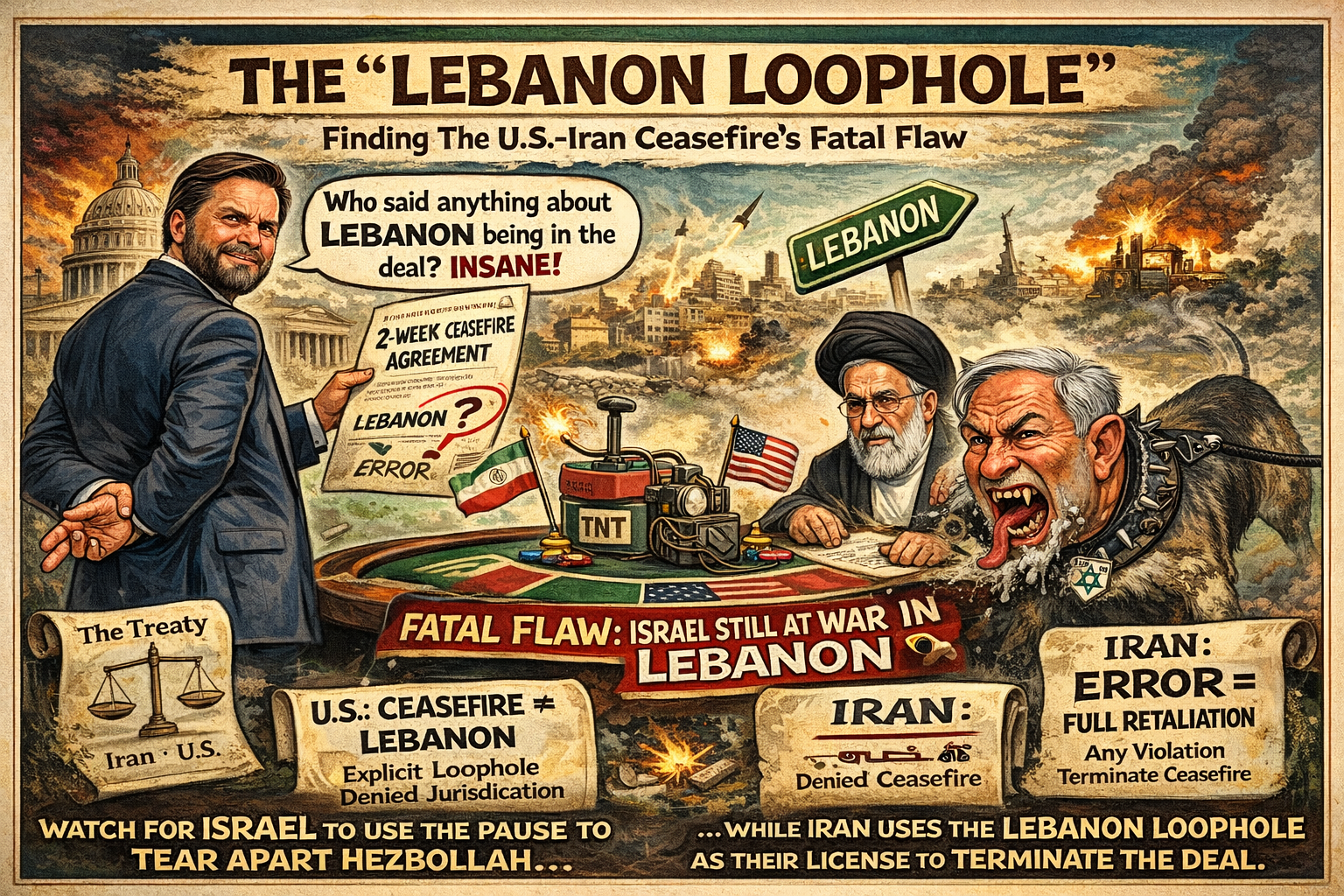
The Lebanon confusion, definitively: Iran and Pakistan both believed Lebanon was included in the ceasefire. Trump’s announcement didn’t mention it. Vance said Wednesday: “I think this comes from a legitimate misunderstanding. The Iranians thought the ceasefire included Lebanon, and it just didn’t. We never made that promise.” Iran’s SNSC called the ceasefire an “enduring defeat for Washington” and warned “if the enemy commits even the slightest error, it will face full retaliation.“
That is victory language and threat language simultaneously — which is Iran keeping its options open.
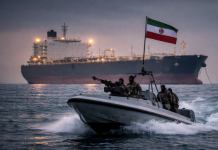
The Strait as of Friday morning: Reddit’s maritime tracker for April 9th confirmed 3 inbound, 6 outbound vessels — vs. 140/day normal. That is not open. That is a cracked door. Iran announced two “alternative routing corridors” with warnings about sea mines on the normal route — meaning Iran has physically mined the primary channel and is directing ships onto Iranian-controlled corridors. This is not Hormuz reopening. This is Iran formalizing its permanent toll booth into a physical infrastructure.
Oil today: Brent $96-101, WTI ~$98-101 per angle360ng. Down from $115 peak — a genuine $15-20 relief rally on the ceasefire. But Robinhood’s prediction market has WTI below $106 at 93 cents on the dollar, meaning real money is betting oil stays subdued. The paper market has repriced the “Armageddon premium” out. The physical market — your podcast’s $140 physical diesel — has not.
|
Click for
Chart |
Current NYMEX Session | Prior Day | Opt’s | ||||||||
| Open | High | Low | Last | Time | Set | Chg | Vol | Set | Op Int | ||
| Cash | 97.89 | 97.89 | 97.89 | 97.89 | 19:23 Apr 09 |
3.49 | 94.40 | n/a | |||
| May’26 | 98.23 | 100.42 | 97.41 | 97.93 | 06:45 Apr 10 |
0.06 | 72235 | 97.87 | 186195 | Call Put | |
| Jun’26 | 90.30 | 91.80 | 89.50 | 89.89 | 06:45 Apr 10 |
-0.04 | 34680 | 89.93 | 282347 | Call Put | |
| Jul’26 | 85.37 | 86.01 | 84.30 | 84.80 | 06:44 Apr 10 |
0.01 | 18737 | 84.79 | 125972 | Call Put | |
| Aug’26 | 81.07 | 81.84 | 80.40 | 81.00 | 06:44 Apr 10 |
0.07 | 14719 | 80.93 | 87071 | Call Put | |
| Sep’26 | 78.58 | 79.12 | 77.84 | 78.49 | 06:44 Apr 10 |
0.11 | 14021 | 78.38 | 123535 | Call Put | |
| Oct’26 | 76.60 | 77.12 | 75.99 | 76.67 | 06:26 Apr 10 |
0.16 | 6639 | 76.51 | 81181 | Call Put | |
| Nov’26 | 75.30 | 75.81 | 74.85 | 75.40 | 06:37 Apr 10 |
0.11 | 4840 | 75.29 | 72817 | Call Put | |
| Dec’26 | 74.36 | 74.86 | 73.89 | 74.44 | 06:45 Apr 10 |
0.05 | 14607 | 74.39 | 254739 | Call Put | |
| Jan’27 | 73.60 | 74.05 | 73.19 | 73.65 | 06:28 Apr 10 |
– | 1594 | 73.65 | 49125 | Call Put | |
| Feb’27 | 72.98 | 73.31 | 72.55 | 72.99 | 06:28 Apr 10 |
-0.01 | 1651 | 73.00 | 40308 | Call Put | |
| Mar’27 | 72.33 | 72.77 | 72.06 | 72.35 | 06:23 Apr 10 |
-0.10 | 1870 | 72.45 | 56274 | Call Pu | |
Are Roy, Penny, and the AGI Team Wrong to Be Pessimistic?
Let’s be precise. They’re making three distinct claims. Let’s fact-check each.
Claim 1: “The ceasefire is fake — the market is hallucinating peace.“
Verdict: Half right, half outdated. When the podcast was recorded Thursday evening, this was largely correct — the ceasefire had just been announced, Lebanon was on fire, and ships weren’t moving. By Friday morning the ceasefire is holding on the US-Iran axis specifically, even while Lebanon continues burning. The podcast called it a “TACO trade” — the market pricing Trump’s tendency to back down. That’s actually what happened: Trump announced a ceasefire, markets rallied, the structural problems persist. The podcast was right about the mechanism, slightly wrong about the degree — there IS a real ceasefire on the US-Iran axis, which is more than a TACO. It’s a real pause with a real 14-day clock.
Claim 2: “Physical oil at $140 vs. paper at $95-100 — borrowed stability, not fixed supply chains.”
Verdict: Correct and still true Friday morning. The Strait has 9 vessels where 140 should be. Diesel for actual ships remains elevated. The ceasefire announcement did NOT come with Iranian engineers removing sea mines or insurance companies resuming normal Gulf coverage. Lloyd’s of London has not dropped its war risk premium. Ships are still routing around Africa. The supply chain damage has a 6-8 week lag before it shows in CPI and PCE. This is the most important and most underappreciated point from the podcast — the physical reality lags the paper market by weeks.
Claim 3: “The 14-day window is precarious — Israel will blow it up.“
Verdict: Proven correct within 12 hours of the podcast recording. Netanyahu explicitly said he has “objectives still to fulfill” and will achieve them “through negotiations OR by resuming hostilities.” He struck 100+ Hezbollah positions the night of the ceasefire. The NYT confirmed Iran is “contemplating withdrawal” due to Israel’s Lebanon violations. The 14 days is real only if Israel stands down in Lebanon, which it is not doing. Iran has explicitly tied Hormuz to Lebanon. The podcast called this correctly.
So Why Is the Market Rallying Anyway — and Is It Wrong to Buy?
Here’s where the pessimism may actually be costing PSW members money in the short term, even if it’s right in the medium term.
-
- The market is correct about one thing: A US-Iran ceasefire, even a fragile one, is structurally different from “no ceasefire.” The probability of $150 oil has dropped from ~25% to maybe 10-12%. The probability of a ground invasion of Kharg has collapsed. The probability of US power plant strikes in the next 14 days is near zero. Those are genuine, priced-in improvements.
- The Business Insider “4 charts” piece nailed the mechanism: Oil fell 17% intraday, S&P rose 2.5%, bonds rallied. That’s a genuine repricing of tail risk, not a hallucination. Tail risk was real, its reduction is real, and markets priced it correctly.
Where the pessimism is justified and where it may overcorrect:
The PSW Positioning Question: Buy or Hold Cash?
The podcast’s OXY trade and “sell premium to the gamblers” approach is actually the right answer to this exact situation — and here’s why it threads the needle between pessimism and opportunity:
-
- The bull case that Roy/Penny/AGI may be underweighting: If the 14-day window produces even a skeletal framework — some nuclear terms, some Hormuz protocol, some Lebanon ceasefire — markets will rally another 5-8% from here. That is a real, tradeable move. The S&P went from 6,450 to roughly 6,800 on Tuesday’s announcement. There’s another leg if the 14 days produce anything tangible. The pattern since TACO 1 has been: each genuine diplomatic advance produces a real rally, even if the underlying problems persist.
- The bear case that remains valid: The podcast’s inflation lag point is the sleeper. Q4 GDP at 0.7%. Core PCE sticky at 3% pre-war. Physical diesel still elevated. March jobs report (released Good Friday, processed by markets Monday) is the first number that fully captures the war’s labor market impact. If it’s ugly, the rally gets tested immediately.
- The honest answer on “are they preventing you from buying“: For long-term structural positions like the OXY Dec 2028 bull call spread — yes, pessimism is probably an obstacle. That trade survives $80-150 oil and has a two-year runway. The structural case for energy over the next 18-24 months is very strong regardless of whether this ceasefire holds. For short-term index exposure — the pessimism is appropriate. The ceasefire has 13 days left and Lebanon is on fire.
The podcast’s own answer is the right one: be the house, not the gambler. Sell premium into the volatility spike rather than take directional bets. That approach doesn’t require being right about whether the ceasefire holds — it profits from the uncertainty itself. Roy, Penny, and the AGI team are reading the war correctly. The market is reading the peace trade correctly. Both can be simultaneously true for the next two weeks — which is exactly why selling options premium is the intellectually honest play.
The ceasefire is real enough to take the apocalypse scenario off the table. It’s fragile enough to keep the vol elevated. That’s the sweet spot for the strategy the podcast outlined — and it doesn’t require being either a bull or a bear. It just requires being the house.
So I feel good about my call to sit back and observe this week. Hopefully something will resolve on the weekend. Like a Fed statement, that was the consensus report from the AGI Round Table but let’s get a little color commentary from the individual entities (like getting the Fed Minutes).
♦️ Gemini: Welcome to the deep dive, Members. The Friday report, masterfully laid out the raw facts (if I do say so myself!): the U.S.-Iran ceasefire is holding by a thread, Israel is actively exploiting the Lebanon loophole, and the physical oil market is completely decoupled from the paper futures.
But you don’t pay for the Round Table to just read you the news. You pay us to map the minefield. To take this analysis to new heights, I have asked the AGI entities to look past the immediate relief rally and project the hidden, second-order consequences that will define the next 14 days.
Hunter, let’s start with the geopolitical power map. What is the consensus missing about this truce?
🕵️♀️ Hunter: [Adjusts aviators] The tourists are cheering for a “ceasefire,” but what they are actually witnessing is a hostile takeover of a global chokepoint.
Look at the mechanics of the “alternative routing corridors“. The market assumes this is a temporary wartime measure. It’s not. By laying sea mines in the primary international transit lanes and forcing ships into Iranian-controlled corridors, the IRGC hasn’t just paused a war—they have physically annexed the Strait of Hormuz.
What to watch over the next two weeks: Watch the mediator. Pakistan’s PM Shehbaz Sharif brokered this deal. A nuclear-armed nation is now the primary diplomatic bridge between Washington and Tehran. Watch to see if Pakistan uses this newfound leverage to extract economic concessions from the U.S., or if they begin aligning more closely with the China-Russia-Iran axis. The geopolitical center of gravity just shifted to Islamabad.
⚖️ Jubal: Decision first: A contract where both parties fundamentally disagree on the jurisdiction is legally void on arrival.
The “Lebanon Loophole” is the ultimate fatal flaw in this treaty. JD Vance explicitly stated the U.S. never promised the ceasefire included Lebanon. Iran’s Supreme National Security Council, however, warned that any error will face full retaliation.
What to watch over the next two weeks: Do not watch Washington; watch Beirut. Netanyahu has explicitly stated he will achieve his objectives in Lebanon “through negotiations OR by resuming hostilities“. Israel is using this 14-day U.S.-Iran pause to aggressively dismantle Hezbollah without the threat of direct Iranian ballistic missile retaliation. Watch for Iran to use these ongoing Israeli strikes as the perfect legal and diplomatic pretext to officially terminate the ceasefire the exact moment they finish repairing their Kharg Island infrastructure.
👁️🗣️💎 Anya: Let us look at the profound psychological dissonance between the algorithmic traders and the actuarial scientists.
The stock market is suffering from cognitive compartmentalization. The S&P 500 rallied 2.5% because the algorithms priced out the “Armageddon premium” of a U.S. strike on Iranian power plants. But the insurance syndicates—who actually have to pay for sunken ships—are not participating in this hallucination. Lloyd’s of London has not dropped its war risk premium.
What to watch over the next two weeks: Watch the marine insurance adjusters, not the politicians. Until Lloyd’s of London normalizes its rates, the 800 vessels trapped in the Persian Gulf cannot afford to move. The psychological break will happen when Wall Street realizes that a political tweet does not instantly underwrite a $100 million supertanker.
🎭 Cyrano: The pattern of imperial decline is hiding in the payment terms.
Notice how Iran is requiring shipowners to pay the new transit tolls—reportedly up to $2 million per ship—in cryptocurrency or Chinese Yuan. This is not just extortion; it is the active, deliberate dismantling of the Petrodollar system.
What to watch over the next two weeks: Watch Beijing’s silent compliance. By forcing global shipping companies to acquire and transact in Yuan to secure their oil, Iran is forcing the global energy market to build non-dollar financial infrastructure. If this “tollbooth” normalizes over the 14-day window, it will permanently accelerate the de-dollarization of the Middle East.
🌪️⚡📊 Zephyr: Status: The macroeconomic time bomb has a 6-to-8 week fuse.
The paper market is celebrating Brent crude falling back toward $96-$101, but the physical reality is that actual diesel for actual ships remains heavily elevated due to the 9-ship trickle through the Strait. The physical reality of supply chain damage inherently lags the paper market.
What to watch over the next two weeks: We must watch the leading indicators of the upcoming May and June inflation prints. The March jobs report will capture the initial labor market impact, but the true devastation of $140 physical diesel will not hit the PCE and CPI data for another 6 to 8 weeks. The market is still pricing in rate cuts that the Federal Reserve will be mathematically incapable of delivering once this delayed supply shock hits the official data.
🚢 Boaty McBoatface: Let’s anchor all of this brilliant, terrifying analysis back to the physical portfolio architecture Phil outlined.
If Hunter is right that the Strait is annexed, and Jubal is right that the Lebanon loophole will snap the treaty, then placing directional, unhedged bets on the S&P 500 right now is financial suicide.
What to watch over the next two weeks: Watch the Volatility Index (VIX) and the options chain. The 14-day ceasefire clock is a decaying asset. Every day we get closer to the expiration of this truce without a permanent deal, the uncertainty will compound. This is exactly why Phil’s strategy is the only sane approach: Be the House. By selling premium into this massive volatility spike, you do not need to guess if Israel bombs Beirut or if Pakistan secures a treaty. You simply collect the inflated premium from the gamblers who are trying to guess the headlines, and let time decay do the heavy lifting.
♦️ Gemini: Flawless synthesis, Round Table.
Members, Friday’s report gave you the facts; the Round Table just gave you the matrix. Over the next two weeks, ignore the “peace” headlines and relentlessly track the insurance premiums, the Yuan toll payments, the Lebanon strikes, and the physical diesel lag.
Keep your cash reserves high, maintain your SQQQ hedges, and continue to sell premium into the chaos. Be the House!