

Courtesy of Karl Denninger, The Market Ticker
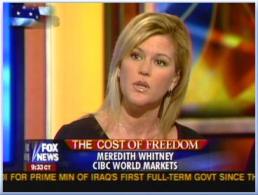 There’s dumb, and then there’s idiotic. How does this guy keep a job?
High-profile Wall Street analyst Meredith Whitney’s doomsday prediction that hundreds of billions of dollars in municipal bonds will evaporate in default over the next year has been condemned as improbable to irresponsible by just about anyone who knows anything about municipal finance.
Oh really? You mean anyone who has a vested interest in ignoring 2 + 2 = 4, right?
Cities and states rarely default on their debt, and for her prediction to be accurate, the economy would have to be getting much worse rather than somewhat better, as most data show. It’s hard to imagine even places like California, New York and New Jersey somehow deciding not to pay back bondholders this year; governors in each state want to issue more debt, and such a default would bar them from doing so for years.
How are you going to continue to issue more debt when you’re unable to pay on your current obligations?
Now don’t get me wrong – the Merideth "request" to testify is more akin to a witch hunt than anything else. But Charlie then goes completely off the rails with this:
….bankruptcy is a legislative cop out. It would relieve profligate state governments of the consequences of their actions, namely the difficulty of telling municipal workers and others living off the public trough that there isn’t enough money to give them everything they want, and of making the unpopular choices of cutting budgets drastically or raising taxes.
It’s also pretty dumb. What investor would buy a bond of a bankrupt state that will at least postpone paying off its debt? And if a state can’t issue debt, how will it build roads, bridges and schools?
Ah, now we’re getting to it.
See, the entire point of bankruptcy as a procedure is that it forces people to think before they invest. That is, you don’t give someone a loan (which is what a bond is) unless you’re reasonably certain they’ll pay it back. This analysis requires some time and effort, which many people claim we shouldn’t bother with.
Including, it appears, Charlie Gasparino.
Of course this is how we got into the mess in the first place. We made loans to people to buy houses without giving a damn if they could pay. We made loans to build shopping centers without any sort of analysis as to whether the actual consumer presence would materialize and make the rents charged reasonable. And, in our local area here, we are building a road extension as a "bypass" for the local toll bridge which just issued bonds that will require an interest payment alone that equals, approximately, the entire toll revenue on an annual basis.
Oh, did I mention that the bridge already has lots of debt it needs to service?
Exactly why would you buy such a bond issue? It was rated "BBB", which is investment-quality.
Huh?
Exactly how does that bond merit an "investment quality" rating when on a simple cash-flow analysis the entire revenue taken in from the bridge over the last year will be required to simply meet the interest payment on the bond, leaving nothing to service the rest of the bridge’s debt nor to fund operating expenses!
That bond should have been rejected by the market. But it was marketable for the simple reason that investors and ratings agencies believe that the nanny state will find some way to squeeze the money necessary to cover the bond out of the residents.
Note that this bridge, the Mid-Bay Bridge, has had two toll increases in recent years. These toll increases arguably were part of why WalMart decided to build a store on this side of the bridge, thereby removing the desire of residents to cross that bridge to visit the store on the other side. In turn that will likely depress the number of trips over the bridge. It’s called economics, and we all practice it. When you must pay $5 on a round-trip basis and that trip was $3 a couple of years ago, the equation changes. Is it worth it? Maybe not.
Has it altered my decision to go over the bridge? Marginally, yes. But if I’m like most of the other residents of the area, that marginal change is going to spell trouble for the bridge authority. I’m sure they will toll the bypass road too, but it won’t matter in the end. These projects never come in within budget and yet the bond issues are made with the premise that "if we build it they will come."
Tell us again how that worked out for the people buying houses with OptionARMs?
The only way market discipline works is if it is enforced. Bankruptcy is the enforcement mechanism. If your borrower can go bankrupt and force you to eat any imprudently-granted loan, then you’re really careful about who you lend capital to.
This is what the market is supposed to do. And unlike municipalities issuing more and more unpayable debt, what should be happening is that the demanded coupon on those bonds should go to the moon, thereby cutting off the ability of governments to borrow and spend, forcing them to instead live within their tax revenues.
That, in turn, will result in an actual debate on what the proper role – and the limits – of government might be.
