


Courtesy of Pam Martens.
 U.S. Treasury Secretary Tim Geithner is now three for three in the book world: the quintessential poster boy for regulatory capture who ended up as Citigroup’s bitch. In Ron Suskind’s Confidence Men, Geithner ignores a directive from the President of the United States to wind down Citigroup. In Neil Barofsky’s Bailout, Geithner is the evil genius using the Home Affordable Modification Program (HAMP) to “foam the runways” for the banks, slowing down the foreclosure stream so the banks could stay afloat, with no genuine goal to help struggling families stay in their homes.
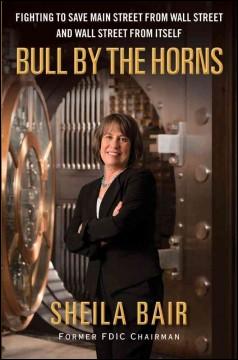
Now Sheila Bair, the ultimate insider as former head of the FDIC during the crisis, has completed the microscopic job on Geithner in Bull by the Horns. The image that emerges is a two-headed monster: a regulator functioning as a Citigroup messenger boy and an insanely mismanaged bank that was somehow able to shield from public scrutiny that it had a measly $125 billion in U.S. insured deposits while turning government on its head and raking in over $2.5 trillion in taxpayer capital, guarantees and loans.
When I came to the part about the $125 billion in insured deposits, I thought my Kindle had malfunctioned. What! It was well publicized that Citigroup had over $2 trillion in assets; how could it have only $125 billion in U.S. insured deposits?
Sheila Bair may not have realized it, but she was filling in the missing piece of a puzzle that has captivated much of Wall Street since 2008: why was every regulator jumping through hoops to save Citigroup, a serial predator that constantly promised to change but never did.
As it turns out, the bulk of Citigroup’s deposits were foreign and much of those deposits were not insured or had low insurance amounts. Had this foreign money decided to run for the exits on fear of a Citigroup collapse, FDIC might have been looking at just a $125 billion problem but the rest of the financial system was looking at $2 trillion on the books, $1 trillion off the books and God knows what kind of counterparty agreements in the closets.
Bair indicates her belief that Citigroup’s two main regulators, John Dugan (a former bank lobbyist) at the Office of the Comptroller of the Currency (OCC) and Tim Geithner, then President of the Federal Reserve Bank of New York, were not being forthright on Citigroup’s real condition. Bair explains Citigroup’s situation in 2008 as follows:
…

