


By Coco Ballantyne, Scientific American
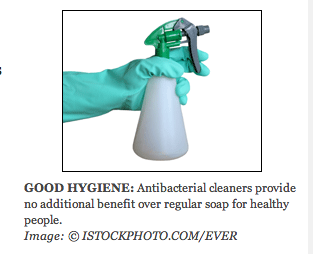 Tuberculosis, food poisoning, cholera, pneumonia, strep throat and meningitis: these are just a few of the unsavory diseases caused by bacteria. Hygiene—keeping both home and body clean—is one of the best ways to curb the spread of bacterial infections, but lately consumers are getting the message that washing with regular soap is insufficient. Antibacterial products have never been so popular. Body soaps, household cleaners, sponges, even mattresses and lip glosses are now packing bacteria-killing ingredients, and scientists question what place, if any, these chemicals have in the daily routines of healthy people.
Traditionally, people washed bacteria from their bodies and homes using soap and hot water, alcohol, chlorine bleach or hydrogen peroxide. These substances act nonspecifically, meaning they wipe out almost every type of microbe in sight—fungi, bacteria and some viruses—rather than singling out a particular variety.
Soap works by loosening and lifting dirt, oil and microbes from surfaces so they can be easily rinsed away with water, whereas general cleaners such as alcohol inflict sweeping damage to cells by demolishing key structures, then evaporate. "They do their job and are quickly dissipated into the environment," explains microbiologist Stuart Levy of Tufts University School of Medicine.
Keep reading: Strange but True: Antibacterial Products May Do More Harm Than Good: Scientific American.

