


Courtesy of Mish.
From hamburgers to sushi to noodles, food robots replace workers in the US, Japan, and China.
Today’s spotlight is on China where Restaurant Owners Praise Robot Noodle Makers for Doing “A Good Job!”
Noodle peelers should probably start looking for other things to do around the kitchen – there’s just no competing with these robots.
Runguan’s robots peel noodle strips from a firm piece of dough and tosses them directly into boiling water “before diners’ eyes can follow the whole process.” While a cook doing the same job would make about 40,000 yuan ($6,400) per year, the robot cost just 10,000 yuan ($1,600). And no human chef can work so tirelessly.
Price is already down from $2,000 this past August, which is no doubt a big reason why more than 3,000 restaurants that have already relegated their noodle-making to the robot.
That humans can be replaced by robots that do the job faster and cheaper is an idea that now pervades Chinese employers. “Chinese companies usually start considering robots when the payment for a skilled worker exceeds 50,000 yuan ($8,060) a year.”
In Japan robots are already being used to make sushi, and a robot in San Francisco can serve up 340 hamburgers an hour. But while robotic cooks provide restaurants a novelty for customers and savings for owners, other robots are invading China’s workplace on a much grander scale. Most notably is Foxconn who, last November, began replacing 1 million jobs performed by humans with robotic automation. The metamorphosis is advancing quickly. In late February the company announced it put a freeze on hiring new entry-level workers. This was due in part to a high worker retention rate following pay increases, but it’s also a conscious decision to accelerate the automation of their factories.
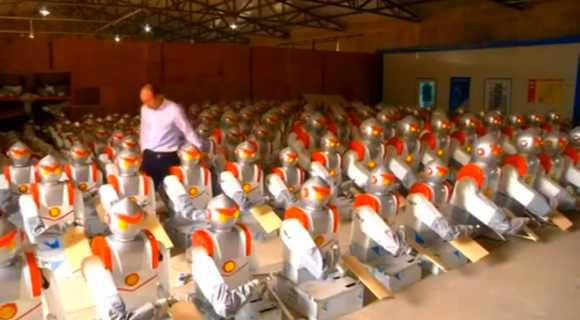
Robot Chefs Take Over
Who to Blame for “Robotic Outsourcing”
It’s easy to see what is happening. But who is to blame, and what can be done about it?
The simple fact of the matter is technology marches on and we all eventually benefit from it. To the extent it appears we do not, let me point out a six facts….

