


Courtesy of Pam Martens.
 There is one thing that sets apart all traders on Wall Street: those who sat behind computer terminals on Wall Street on October 19, 1987 and those who didn’t. On that day, a stock market bubble that had been building for years popped in one trading day, shaving 508 points off the Dow for a decline of 22 percent.
On Wall Street they call this a “capitulation,” when market perception hits a wall of reality on high volume and big price declines.
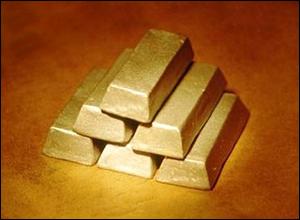
Big volume and big price declines occurred in the price of gold this month on April 12 and April 15, marking the biggest two day decline in gold in 30 years, but failing to erase enough of the price run up since 2007 to be considered the capitulation stage. During the two day span, gold lost $203 an ounce. Gold has made up some lost ground since then but the price action of gold on those two days is part of a much larger story – actually a debate.
The debate goes like this: will the Fed’s money pumping machinery deliver the ravages of inflation or will the ravages of debt deleveraging deliver deflation. Gold is declining because those in the latter camp are winning the debate right now. Gold is considered a hedge against inflation; when the inflation premise loses its luster, so does gold.
A few moments ago, the Commerce Department announced that the U.S. GDP grew by a less than expected 2.5 percent in the first quarter. Averaged with last quarter’s .4 percent increase, the U.S. racked up an anemic 1.45 percent GDP in the last six months; hardly enough to fuel inflationary pressures.
Adding weight to the deflation camp is a report that came out of the Federal Reserve Bank of New York this month. Called “The Financial Crisis at the Kitchen Table: Trends in Household Debt and Credit,” by Meta Brown, Andrew Haughwout, Donghoon Lee, and Wilbert van der Klaauw, the study shows that while the U.S. consumer has made some headway in deleveraging, there is still a tough road ahead.
…

