

Is the Real Estate Recovery Real?
By Paul Price
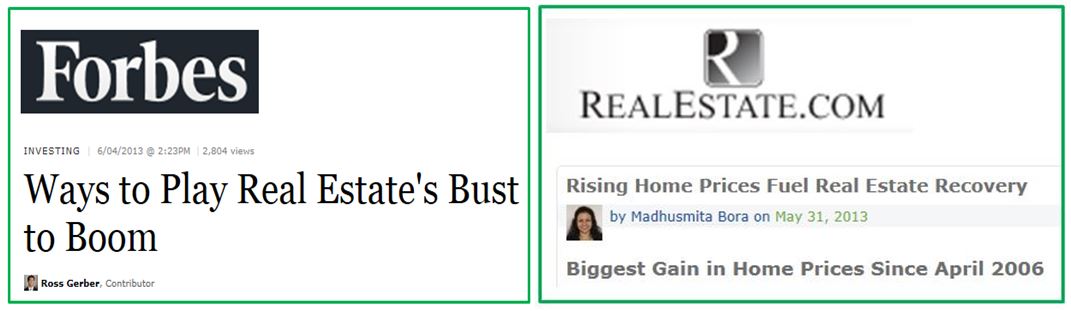
Watching TV and listening to radio, I keep hearing that real estate is booming again. The headlines shown below, from Forbes.com and RealEstate.com, are typical of what is being pumped out there on a daily basis. The question is whether to believe your own experience or the media announcers.
I know many people who have been unsuccessfully been trying to sell their homes for more than one year. They have cut their asking prices, switched realtors and run multiple open houses without receiving anything but insulting, low-ball offers. Certainly, this is anecdotal evidence and not statistically significant by itself, but other data confirms that apart from certain lively areas, the real estate market is not as robust as proclaimed.
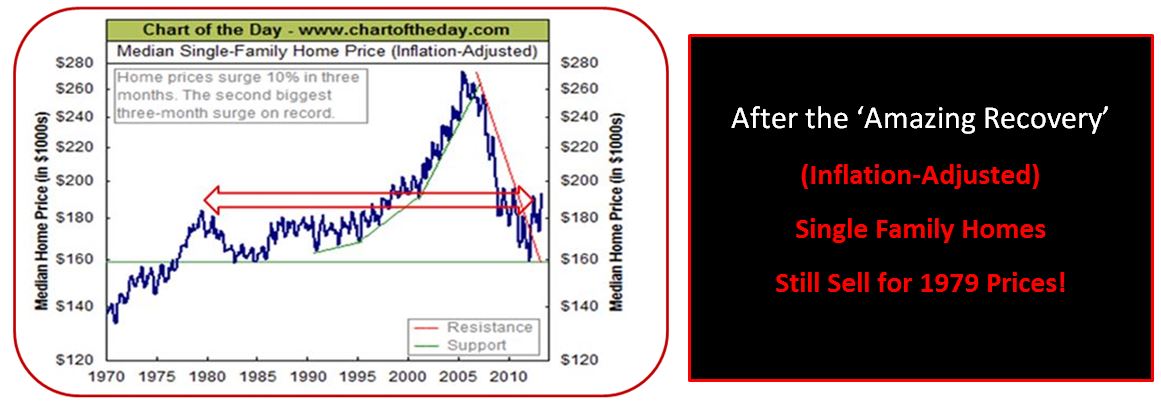
The June 5, 2013 Chart of the Day (below) was an eye-opener. Housing prices percolated to bubble valuations in the 2004 – 2005 time frame. The bubble popped in 2006 – 2007. Many people think that home prices troughed in 2009 along with the stock market. That is incorrect. In most areas of the country, the housing market kept getting worse until 2010 – 2011.
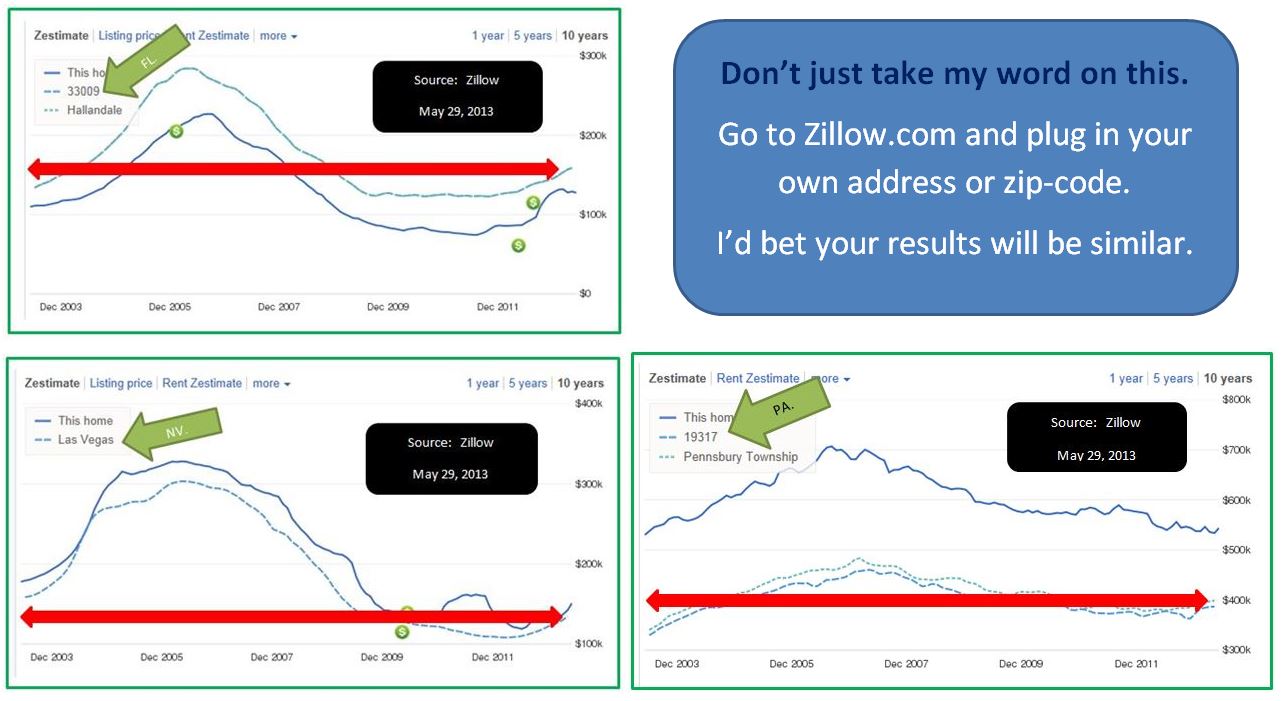
On-line realty site Zillow (Z: $52.88) confirms that most housing markets are much less ebullient than the media is declaring.
Note: Zillow’s price charts use raw dollar prices rather than inflation adjusted figures – the numbers are not adjusted for inflation so today's prices are in real terms even lower. Nevada and Florida were two of the most inflated, then hardest hit, areas during the full housing cycle. They each show only modest rebounds after suffering devastating percentage declines. My own zip-code, in a suburb of Philadelphia, showed the same pattern as Las Vegas and Hallandale, Florida, but with somewhat less dramatic swings. Most geographical areas now sell for nominal prices pretty close to where they were about ten years ago in 2003.
Whoever coined the term ‘Zestimates’ should get a medal. It belongs up there with ‘smog’ and ‘staycation’ in the newly-created-word hall of fame.
Re-Max, Prudential, Century-21 and other real estate brokers want you to get back in the market. Washington, D.C. hopes you’ll get with the program and start spending more freely due to the ‘wealth effect’ of a higher perceived home value.
Until my friends start getting reasonable offers, I'm skeptical when it comes to believing the media hype.

