


Courtesy of Pam Martens.
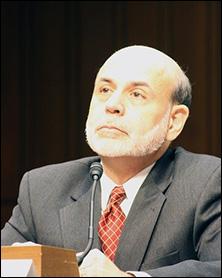
Ben Bernanke, Chairman of the Federal Reserve Board
The Federal Reserve used to manage its future monetary policy in bare whispers; under Chairman Ben Bernanke of late, it’s been lightning bolts of declarative statements that send the stock and bond markets careening in one direction and then another.
In June, Bernanke said the Fed might begin later this year to taper downward its monthly purchases of $85 billion of Treasury and mortgage-backed securities, signaling the beginning of the end of cheap money. While Bernanke did at the time mention economic caveats before this tapering would begin, the markets heard only the lightning bolt of an end to easing and sold off in short order.
Bernanke was out on the stump again yesterday, delivering a 4,000-word speech to the National Bureau of Economic Research at the Royal Sonesta Hotel in Cambridge, Massachusetts. This time, Bernanke delivered a history lesson on the Fed and curtailed his remarks on current policy to a reassurance that low interest rates would prevail until unemployment came down to at least the 6.5 percent range; he called that range a “threshold not a trigger” to alter policy.
Unemployment is currently at 7.6 percent, a rate that Bernanke correctly noted yesterday is likely understating the depths of the problem. Millions of Americans are working part-time because they can’t obtain full time employment and millions more have dropped out of seeking employment because of discouragement.
After detailing the creation of the Fed and its following nine decades, Bernanke had the following to say about the current era:
…

