


Courtesy of Pam Martens.
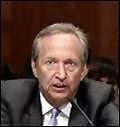
Larry Summers Testifying Before the Senate Budget Committee, June 4, 2013
Let’s put aside for a moment the patently ridiculous question of whether Larry Summers is fit to Chair the Federal Reserve. (Summers is one of the key officials in the Clinton administration who bullied policy makers and won the repeal of the Glass-Steagall Act and prevented the regulation of derivatives, ushering in the financial collapse of 2008. That President Obama has publicly acknowledged that he is considering Summers for the highest monetary post in the U.S. underscores the administration’s serial ability to insult public sensibilities when it comes to Wall Street.)
Even if Summers does not get the nod from the President for Fed Chair, he’s back to his dangerous tinkering with the financial infrastructure of the country. Within the past four days, the New York Times has published two articles, including one on its front page, noting Summers’ involvement with a start-up company called Lending Club, which makes consumer loans online to unsophisticated borrowers. (Put these seven words on paper: loans online, unsophisticated borrowers, Federal Reserve Chairman. Now throw out the three words that don’t make sense in that context.)
Summers was appointed as a Director of Lending Club this past December. There are plans to take the company public next year in an Initial Public Offering that is being touted as a Facebook-style landmark for a financial-tech company.
The heavy attention to Summers’ involvement with Lending Club by the New York Times is likely because they were swept up in the Robert Rubin-Larry Summers-Alan Greenspan-Sandy Weill financial fantasies that led to the massive deregulation of the late 1990s and early 2000s. As the saying goes, “fool me once, shame on you; fool me twice, shame on me.”
On July 27 of last year, the New York Times editorial page editors wrote:
…

