

Excerpt:
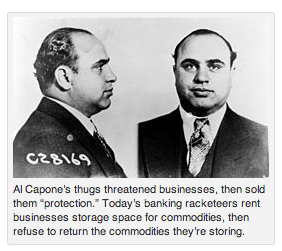 In short order, Wall Street’s biggest banks had essentially won a green light to rush into “mining, processing, transporting, storing, and trading a wide range of vitally important physical commodities.”
No bank rushed more boldly than Goldman Sachs. Three years ago this Wall Street giant bought up a string of 27 aluminum warehouses around Detroit. Industrial users of aluminum use warehouses like these to store, until their factories need it, the metal they buy on the global market.
Before Goldman’s entry into the commodity business, aluminum warehouses would deliver metal to end-users in a timely fashion, typically about six weeks.
With Goldman in charge, that timeliness started slipping, all the way to 16 months. Beverage companies and other manufacturers found themselves paying huge additional storage fees — to Goldman — for the added time.
In 2011, angry Coca-Cola officials formally complained to the metal industry’s global self-regulatory body, the London Metals Exchange. Coke charged that Goldman had “intentionally created” a warehouse bottleneck to drive up the global price of aluminum and cash out on speculative windfalls.
The Metals Exchange, a private body with bankers among its decision makers, feigned deep concern and then doubled the amount of metal that warehouses must ship out daily.
Keep reading: Racketeering Then and Racketeering Now.

