


Courtesy of Pam Martens.
 On June 24 of this year, Senator Elizabeth Warren was incensed. She wrote to the Federal Housing Finance Agency (FHFA), the federal regulator of the Federal Home Loan Banks as well as Freddie Mac and Fannie Mae. Warren had just learned that Sallie Mae, a Fortune 500 company engaged in making private student loans, had obtained an $8.5 billion line of credit from a Federal Home Loan Bank. Sallie Mae had been borrowing on its line of credit at 0.23 percent, then making student loans at 25-40 times that rate according to Warren.
Warren reminded the federal regulator that “Congress established the Federal Home Loan Bank System to serve as a reliable source of funding to local banks and other community lenders that offer families home mortgages.” Warren cited a report from the Consumer Financial Protection Bureau showing that significant levels of student debt pose a barrier to Americans trying to buy their first homes.
With housing stalling and mortgage credit still tight for many borrowers, Wall Street On Parade decided to delve into the financial filings of each of the 12 Federal Home Loan Banks and see who else might be getting a windfall from a program set up to help local lenders compete with the big boys. According to the Federal Home Loan Bank of Boston, the system’s mission is as follows: “By supporting community-based financial institutions, the Federal Home Loan Bank System helps to strengthen communities. The System directly benefits consumers by helping to ensure competition in the housing-finance market.” Got that – competition.
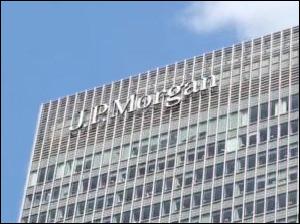
The mission, like so much else that Wall Street touches, seems to have run off the tracks. As of June 30, 2013, three of the giant, global, Wall Street banks are the largest borrowers from the Federal Home Loan Banks, with JPMorgan way out in front with borrowings of $61.840 billion. And it’s not borrowing from just one FHLBank, it’s borrowing from three and grabbing 65.8 percent of all advances from the FHLBank of Cincinnati, which services Kentucky, Ohio, and Tennessee.
Bank of America Corporation comes in second with borrowings of $33.844 billion. Citigroup, parent of Citibank, is next with $25.702 billion. These 3 banks, out of 7500 members of the Federal Home Loan Banks, already control over $2.539 trillion in domestic deposits in their FDIC insured subsidiaries – a whopping 41 percent of all U.S. domestic deposits. Because they are considered too-big-to-fail, they already receive a huge, lower-cost borrowing advantage over community banks and credit unions. With all those deposits, why do they need to go to the well of the FHLBanks?
The suspicion that something is amiss is heightened by the fact that although Wells Fargo is the largest mortgage lender in the country, its name does not appear on the list of the top ten borrowers of the Federal Home Loan Banks. According to Mortgage Daily, Wells Fargo originated approximately $112 billion in mortgages in just the second quarter of this year. If Wells Fargo is able to use its FDIC insured deposit base to lend to home mortgage borrowers, why can’t the other three large deposit holders?
…

