


Courtesy of Pam Martens.
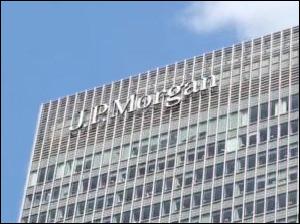 Last week the business press reported that the U.S. Department of Justice may assert charges against JPMorgan Chase for its role in perpetuating the Bernard Madoff Ponzi scheme which defrauded investors out of $17 billion in actual funds and $64 billion in paper losses based on the falsified values shown on client statements. Unnamed sources said the Justice Department may agree to a deferred prosecution agreement in exchange for an outside monitor or, in the alternative, charge JPMorgan’s banking division with violations of the Bank Secrecy Act for failing to report its Madoff suspicions to Federal authorities. Interestingly, JPMorgan did report its suspicions to a government regulator – in the United Kingdom, not in the U.S.
Such a development would also raise serious new questions about how the Board of Trustees of NYU handles conflicts of interest. The Board is already under withering criticism from a group of 400 faculty members. In July, the faculty group issued a letter demanding that Martin Lipton, Chairman of the Board for the past 15 consecutive years, step down over a raft of conflicted actions which came to a head when Ariel Kaminer of the New York Times reported in June in a front page article that NYU, a taxpayer subsidized nonprofit, was doling out forgivable mortgage loans on vacation homes to an elite group of faculty and administrators.
Lipton is a founding partner of the Wall Street law firm, Wachtell Lipton Rosen & Katz, which served as legal counsel to JPMorgan to fight a lawsuit brought by the Madoff Trustee assigned to secure funds for defrauded investors. This was at a time when both Lipton and top executives of JPMorgan served on the Board of NYU units that had themselves been defrauded and could have benefited from monetary clawbacks from JPMorgan.
In the Federal tax returns filed by New York University and NYU Hospitals Center for the 2008 fiscal year, the two entities reported initial estimates of $26 million and $5 million, respectively, in losses stemming from the Bernard Madoff Ponzi scheme. NYU said its losses came from its endowment fund.
According to the tax filings, NYU had invested through a feeder fund, Ariel Fund Limited, overseen by J. Ezra Merkin. NYU has said in court filings that Merkin never revealed to it that he was turning the money over to Madoff. NYU Hospitals Center states on its tax filing that it had invested directly with Madoff Securities.
On the same tax return disclosing NYU Hospitals Center’s loss from the largest Ponzi scheme in U.S. history, the nonprofit also revealed that there was an ongoing business relationship between two members of its Board of Trustees, Jamie Dimon and Heidi G. Miller. At the time the Madoff losses were discovered, Jamie Dimon was serving as both a Trustee to the NYU Hospitals Center as well as Chairman and CEO of JPMorgan Chase. Heidi Miller was both a Trustee and CEO of Treasury and Securities Services at JPMorgan Chase.
…

