


Courtesy of Mish.
A new Gallup survey shows Many Baby Boomers Reluctant to Retire.
True to their “live to work” reputation, some baby boomers are digging in their heels at the workplace as they approach the traditional retirement age of 65. While the average age at which U.S. retirees say they retired has risen steadily from 57 to 61 in the past two decades, boomers — the youngest of whom will turn 50 this year — will likely extend it even further. Nearly half (49%) of boomers still working say they don’t expect to retire until they are 66 or older, including one in 10 who predict they will never retire.
Gallup finds that baby boomers who strongly agree that they currently “have enough money to do everything [they] want to do” expect to retire at age 66. Boomers who strongly disagree with this statement predict they will retire significantly later, at age 73.
Baby Boomers Still a Substantial Part of the Workforce
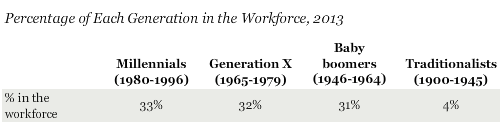
As the largest generation born in U.S. history, baby boomers’ sheer numbers coupled with their reluctance to retire will likely ensure that their influence endures in the workplace in the coming years. Although the first wave of boomers became eligible for early retirement under Social Security about six years ago, the generation still constitutes about one-third (31%) of the workforce, similar to percentages for millennials (33%) and Generation X (32%).
Bottom Line
Whether by choice or necessity, baby boomers will remain a sizable proportion of the workforce in the years ahead, with many expecting to work past the average U.S. retirement age of 61 and even the traditional retirement age of 65. As they continue to age and work, it is important that their organizations build workplaces with outstanding managers who leverage the experiences of older workers by positioning them to do what they do best — listening to their insights and opinions, and continuing to develop their talents into strengths.
By investing in baby boomers’ engagement, employers will reap the benefits that an engaged workforce brings to their bottom line. No matter what their age, engaged workers tend to have higher well-being, better health, and higher productivity than their not-engaged and actively disengaged counterparts. A targeted effort to engage baby boomers could have important ramifications for healthcare costs and productivity for individual workplaces and the overall U.S. economy.

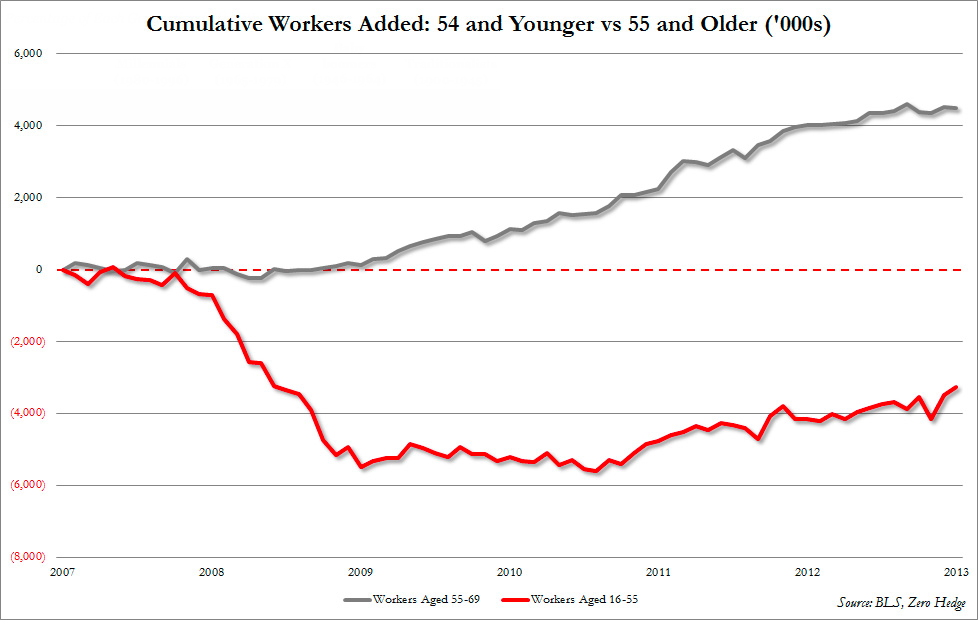
ZeroHedge Cries “BS” On Retirement Thesis
In Spot The Labor Force Collapse Culprit, ZeroHedge produced a chart that allegedly debunks the thesis that the participation rate is declining because of retirement.
…

