


Courtesy of Pam Martens.
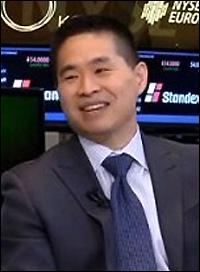
Brad Katsuyama During the Infamous Debate on CNBC About High Frequency Trading and BATS Global Markets
After Senator Carl Levin and members of the U.S. Senate’s Permanent Subcommittee on Investigations give their opening remarks tomorrow, the next thing you will hear are these words or something akin to them:
“Rule number 6 of the U.S. Senate’s Permanent Subcommittee on Investigations requires that all witnesses appearing before the Subcommittee testify under oath.” You might think that would be the rule at every Senate hearing involving Wall Street’s serial malfeasants, but, shockingly, it’s not.
When the men on Panel Two finally take their places, there could be some sweating going on when those right hands are raised. This isn’t just any ole subcommittee; it’s the subcommittee that issued a 2013 scathing 307-page report on JPMorgan’s ethical and legal lapses in the London Whale derivatives trading scandal along with 98 exhibits including deeply incriminating emails. Equally sweat-producing, the subcommittee uses its subpoena power liberally and has a full staff intimately well-versed on the nuances of Wall Street’s jaded ways.
The hearing is titled: “Conflicts of Interest, Investor Loss of Confidence, and High Speed Trading in U.S. Stock Markets” and will begin at 9:30 a.m. in the Hart Senate Office Building.
First up on Panel One will be Brad Katsuyama, President and CEO of IEX Group, Inc. Katsuyama is the young man with the fresh-scrubbed face at the center of the Michael Lewis book, Flash Boys, who is challenging the corrupt practices of some high frequency traders by setting up his own trading platform for institutional investors. Katsuyama has rigged up coiled fiber to blunt the ability of high frequency traders to front run other trades. The coiled fiber simply slows down the trading of the flash boys to put them on a par with everyone else. (High frequency traders are sometimes referred to as flash boys because of the rapid-fire flashing of millions of bids and offers on stocks, which are then quickly withdrawn, to outwit other traders.)
…

