


Courtesy of Pam Martens.
Physical Possession and Storage of Oil by Wall Street Firms Had the Blessing of the Federal Reserve
In July 2013 and again this past January, the U.S. Senate’s Subcommittee on Financial Institutions and Consumer Protection, part of Senate Banking, convened hearings to get a handle on the extensive physical commodity holdings of Wall Street banks. At the January hearing, Senator Sherrod Brown, chair of the Subcommittee, told hearing participants that “the six largest U.S. bank holding companies have 14,420 subsidiaries, only 19 of which are traditional banks.”
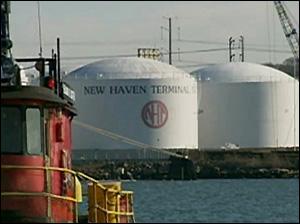
At the time of the July 2013 hearing, Morgan Stanley, one of the nation’s largest retail brokerage firms, an investment bank, as well as an FDIC insured depository bank, owned sprawling crude oil operations. Congress had been aware of Morgan Stanley’s foray into the oil business since at least 2009 when 60 Minutes reported that Morgan Stanley had acquired the capacity to store 20 million barrels of oil.
Ostensibly as a result of the scrutiny, Morgan Stanley announced last December that it was selling its Global Oil Merchanting unit to a 100 percent subsidiary of Rosneft Oil Company, a large Russian crude oil producer. According to the press release Morgan Stanley issued at the time, the sale was to include an “international network of oil terminal storage agreements; inventory; physical oil purchase, sale and supply agreements; equity investments; and freight shipping contracts.”
According to Morgan Stanley, it was also transferring to Rosneft its 49 percent stake in Heidmar Holdings LLC, which manages pools consisting of a fleet of 100 oil tankers.
The deal was originally set to close in this year’s second quarter, then it moved to the third quarter. Now it’s the fourth quarter and the deal still hasn’t closed. In July the U.S. government imposed sanctions on Rosneft as a key player in the Russian economy, hoping to send a message to Moscow over its actions in the Ukraine.
…

