


Courtesy of Pam Martens.
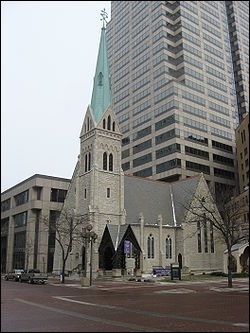
Christ Church Cathedral of Indianapolis
JPMorgan appears incredibly adroit at ever creative means of running its reputation through the mud. Last August the Christ Church Cathedral in Indianapolis filed a lawsuit in Federal Court alleging that its endowment funds meant to feed and shelter homeless families and children, keep food banks stocked, and give exhausted pastors a sabbatical, ended up as a wealth transfer scheme at JPMorgan.
The complaint alleges that JPMorgan engaged in “self-dealing,” made “fraudulent misrepresentations,” omitted material facts about their “widespread and profound conflicts of interests and created “toxic investment products” which resulted in “the surreptitious transfer of wealth from the Christ Church Trusts to JPMorgan.”
Out of the 177 different investment products JPMorgan purchased for the Christ Church endowment, the percentage of its own proprietary products that JPMorgan purchased from itself “ranged from 68% to a staggering 85% of the portfolio” according to the lawsuit.
At the time of the filing of the lawsuit last August, wire services around the globe picked up the story; it then spread to U.S. newspapers and religious publications like Christianity Today. Now the story is back in the headlines with an expanded article yesterday by Bloomberg News reporter Neil Weinberg that reveals yet another church endowment, the Sandscrest Foundation which benefits the Episcopal Diocese of West Virginia, has made similar allegations in a lawsuit against JPMorgan.
The Christ Church case is filed as Rector, Wardens, and Vestrymen of Christ Church Cathedral v JPMorgan et al., case number 1:14-cv-01331. The case resides in the U.S. District Court for the Southern District of Indiana. JPMorgan is represented by attorneys David K. Herzog, Paul A. Wolfla, Sarah C. Jenkins and Katrina M. Gossett of the law firm, Faegre Baker Daniels LLP.
…

