


Courtesy of Pam Martens.
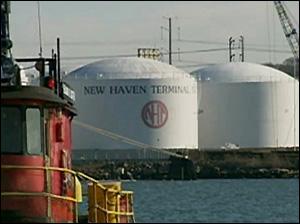
Citigroup read a lot of people’s minds yesterday who have been quietly wondering what happens to the price of oil when the glut becomes so extreme that the world runs out of storage containers to hold the oversupply or the cost of storage becomes uneconomic as the price of oil languishes.
Citigroup’s head of commodity research, Edward Morse, wrote in a report yesterday that “Not only is the market oversupplied, but the consequent inventory build looks likely to continue toward storage tank tops.” Morse said the oversupply could push U.S. domestic crude, West Texas Intermediate or WTI, below $40 and possibly into the “$20 range for a while.” WTI is trading currently at $52.29 in early morning trade. On the basis of the Citigroup report, CNN ran the headline: “End of OPEC Is Closer to Reality.”
Adding to the end of OPEC thesis, the International Energy Agency (IEA), an autonomous group representing 29 member countries, released its Medium Term Oil Market Report yesterday. The report concluded that North America would remain a top source of oil supply growth for the remainder of the decade. IEA Executive Director, Maria van der Hoeven, said shale oil (or Light Tight Oil, LTO) produced in the U.S. and Canada has changed the market and “may have effectively turned LTO into the new swing producer.” Heretofore, Saudi Arabia, a member of OPEC, was seen as the key swing producer, cutting output to stem price declines in times of slack demand or overproduction.
The report summarized the carnage that has gripped oil prices over the past seven months: from its June 2014 price of $115 per barrel, Brent crude oil (the international benchmark) plunged to below $46 per barrel this January. The price plunge picked up speed last October with Brent falling by more than $5 in a single day, on November 27 “when OPEC surprised the market by keeping its production target unchanged in the face of falling revenues and rising non-OPEC supply,” noted the report’s Executive Summary. Prices have moved back over $50 this month.
The report’s Executive Summary correctly identifies slacking global growth as a wild card in the prospect for a recovery in the price of oil, noting:
“Unlike earlier price drops, this one is both supply and demand driven, with record non-OPEC supply growth in 2014 providing only one of the factors behind it, unexpectedly weak demand growth another. On the supply side, US light, tight oil (LTO) extraction technologies, which at the time of the previous market correction barely registered as a source of production, have unlocked a vast resource that long seemed off-limits, and have profoundly upended the traditional division of labour between OPEC and non-OPEC. The latest price drop is also occurring at a time when the dynamics of global demand and the place of oil in the fuel mix are undergoing dramatic change. Emerging economies – China chief among them – which 10 years ago seemed an unstoppable engine of near-vertical demand growth, have entered a new, less oil-intensive stage of development. The global economy, reshaped by the information technology revolution, has generally become less fuel intensive. Concerns over climate change are recasting energy policies. And the globalisation of the natural gas market, coupled with steep reductions in the cost and availability of renewable energy, are causing oil to face a level of inter-fuel competition that would have seemed unfathomable a few years ago.”
…

