


Courtesy of Pam Martens.
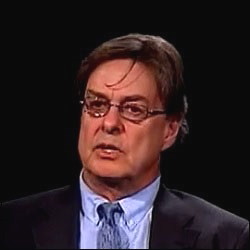
Andrew Cockburn, Washington Editor of Harper’s
Hillary Clinton just can’t catch a break. As her self-inflicted imbroglio over erasing 30,000 emails involving her time as Secretary of State continues to command press attention, the April issue of Harper’s Magazine is focusing gasp-worthy attention on the “loan-sharking” business that Bill Clinton, as President, assisted in transforming into the too-big-to-fail Citigroup that played a leading role in bringing the country to the brink of financial collapse in 2008.
Janet Yellen’s Fed can’t be too happy either about the revelations. The Fed just gave Citigroup a clean bill of health last week under its so-called rigorous stress tests and is allowing the bank to spend like a drunken sailor, raising its dividend 400 percent with permission to buy back as much as $7.8 billion of its own stock. The Fed’s qualitative portion of the stress test is said to look at both risk controls and the internal culture of the bank. Citigroup remains under multiple criminal investigations for money laundering and involvement in rigging currency markets. Apparently, in the Fed’s eyes, this is now de rigueur on Wall Street.
Harper’s six-page article jolts the reader with nugget after nugget unearthed from Citigroup’s unseemly history – facts that both the Clintons and the Fed would no doubt prefer to stay buried. This epistle to greed and excess and regulatory hubris is written by Andrew Cockburn, Harper’s Washington Editor and a man well credentialed to do it justice. Cockburn and his wife, Leslie Cockburn, co-produced the documentary, American Casino, which provided an in-depth look at the players behind the 2008 financial collapse. Cockburn’s father, Claud Cockburn, was on the scene in 1929, covering the epic crash for the London Times. (His memoir of Black Thursday on Wall Street in 1929 can be read here.)
The Harper’s article is subtitled “The catastrophic incompetence of Citigroup,” obviously a tongue-in-cheek assessment since Cockburn meticulously documents the serial charges of crimes at Citigroup as a business model.
Cockburn traces the history of how Sandy Weill parlayed Commercial Credit through a series of mergers that, thanks to the repeal of the Glass-Steagall Act by President Clinton, culminated in the too-big-to-fail Citigroup. The banking behemoth replicated the exact model that brought on the 1929 crash and Great Depression by holding savings deposits while being allowed to gamble with the deposits in wild speculations on Wall Street.
…

