


Courtesy of Pam Martens
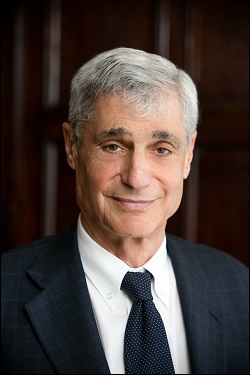
Robert Rubin, Former Treasury Secretary Under Bill Clinton, Played Key Role on Citigroup’s Board During and Leading Up to Its Collapse
“Wall Street Democrats” is a political phrase gaining traction. It encapsulates a growing realization that Bill Clinton’s two terms as President and Barack Obama’s eight years in office have been a great boon to enriching the one percent on Wall Street and an economic disaster for mostly everyone else.
It was the Bill Clinton administration that deregulated the financial markets through the repeal of the Depression era Glass-Steagall Act and it was the Obama administration that created the masquerade that strict regulation of Wall Street was put back into place under the Dodd-Frank Wall Street Reform and Consumer Protection Act. Instead of reform, Wall Street banks have become larger, more dangerous and an increasing threat to the economic stability of the U.S., if not the globe.
There is a serious and growing chorus calling for an expulsion of the Wall Street Democrats from the party and a formal break with its anointed brand – the “Clinton” name. Every time Bill Clinton’s former Treasury Secretary, Robert Rubin, opens his mouth, this message gains more substance.
Rubin, despite his hubristic past, is seen as a close adviser to Hillary Clinton. In a New York Times piece last November, William D. Cohen wrote that “At 76, from his twin perches at the Council on Foreign Relations, of which he is co-chairman, and at the Brookings Institution, where he founded the Hamilton Project, he remains a crucial kingmaker in Democratic policy circles and, as an adviser to the Clintons, Mr. Rubin will play an essential role in Hillary Rodham Clinton’s campaign for president in 2016, should she decide to run.”
Rubin helped push through the repeal of the Glass-Steagall Act in 1999 while U.S. Treasury Secretary. By October of that year, he had taken a job at Citigroup, the Wall Street bank that pushed for the repeal and its primary beneficiary. Rubin accepted a position on the Board of Directors at Citigroup – a position that would pay him $126 million over the next ten years.
…

