


Courtesy of Pam Martens.
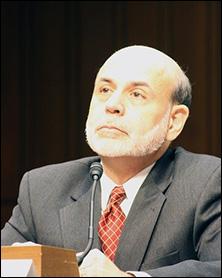
Former Fed Chair Ben Bernanke
Last March, Wall Street On Parade reported that the appointment calendar of Ben Bernanke during his Chairmanship of the Federal Reserve in the years of the greatest financial crash since the Great Depression, showed 84 redactions of meetings he conducted with unnamed persons between January 1, 2007 through the collapse of Bear Stearns on the weekend of March 15-16, 2008.
According to the “official” record, those months were far from the core months of the financial crash, which are said to have been triggered with the collapse of Lehman Brothers on September 15, 2008 and the quick implosion of other major financial institutions that Fall.
Last month, Bernanke released a 600-page tome on the crash, The Courage to Act: A Memoir of a Crisis and its Aftermath. (It’s not every day that an author credits himself with courage in a book title.) What particularly stands out in Bernanke’s telling of the crash is what he has chosen to leave out that would clearly challenge the “courage” narrative and infuse instead a hubris narrative.
Most Americans believe that the massive bailout of Wall Street began with the Troubled Asset Relief Program (TARP), authorized by Congress after a second attempt and signed into law by President George W. Bush on October 3, 2008.
What few Americans remember is that a full year before TARP, Ben Bernanke’s Federal Reserve encouraged the largest banks in the U.S., and one foreign bank, to borrow from the Fed’s discount window – a source of borrowing traditionally reserved for desperate banks who cannot obtain cheaper sources of borrowing. The Fed provided the loans as 30-day, renewable loans rather than the traditional one-day loans. This action occurred on or about August 22, 2007. Bernanke writes as follows in his book:
…

