

Courtesy of Pam Martens.
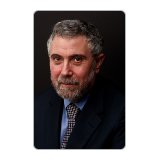
New York Times Columnist, Paul Krugman
Economist Paul Krugman has repeatedly attempted to recast the 2008 Wall Street collapse as triggered by shadow banks rather than the biggest banks on Wall Street. Krugman refuses to let the facts on the ground get in his way. (Later in this article, we’ll produce a document to show just how ridiculously off base Krugman really is.)
On December 14, 2014 Krugman wrote in his column at the New York Times: “In fact, I’d argue that regulating insured banks is something of a sideshow, since the 2008 crisis was brought on mainly by uninsured institutions like Lehman Brothers and A.I.G.” Apparently, Krugman, like his colleague Andrew Ross Sorkin, is ignorant of the fact that both Lehman Brothers and AIG owned FDIC-insured banks at the time of their failure, backstopped by the U.S. taxpayer. (When Wall Street On Parade asked the Public Editor, the Publisher, and the Editor of the New York Times to correct the gross misrepresentations made by Ross Sorkin on this issue in his 2012 article, it ignored each and every one of our requests. That suggested to us that this is an intentional false meme at the New York Times – otherwise known as propaganda.)
Last Friday, Krugman was back at his propaganda desk again, this time attacking Presidential candidate Senator Bernie Sanders in the process. In his column perniciously titled “Sanders Over the Edge,” which the New York Times has generously decided not to put behind its pay wall, Krugman attempts to undercut Sanders’ pledge to break up the big banks by regurgitating the same set of false facts. Krugman writes:
“The easy slogan here is ‘Break up the big banks.’ It’s obvious why this slogan is appealing from a political point of view: Wall Street supplies an excellent cast of villains. But were big banks really at the heart of the financial crisis, and would breaking them up protect us from future crises?
“Many analysts concluded years ago that the answers to both questions were no. Predatory lending was largely carried out by smaller, non-Wall Street institutions like Countrywide Financial; the crisis itself was centered not on big banks but on ‘shadow banks’ like Lehman Brothers that weren’t necessarily that big.”
…

