


Financial Markets and Economy
Who Loses the Most From ‘Brexit’? Try Goldman Sachs (Wall Street Journal)
A vast construction site in the heart of London is a testament to Goldman Sachs Group Inc.’s $500 million bet on the city’s global financial clout.
IMF Sees No Cause for Japan to Intervene Now in Currency Market (Bloomberg)
Japan doesn’t have cause to intervene in foreign exchange markets now to halt the appreciation of the yen, said Luc Everaert, the International Monetary Fund’s mission chief for the country.
Stocks jump on China trade surprise, buoyant banks (Reuters)
Global stocks rose on Wednesday after surprisingly upbeat Chinese trade data offered hope Asia's biggest economy is finally stabilising, boosting risk appetite.
A strong rise in European bank shares, led by renewed optimism surrounding Italy's fund to shore up weak lenders, and a positive reaction to JP Morgan's first quarter earnings also lifted broader indices.
Coal Slump Sends Mining Giant Peabody Energy Into Bankruptcy (Bloomberg)
U.S. coal giant Peabody Energy Corp. filed for bankruptcy on Wednesday, the most powerful convulsion yet in an industry that’s enduring the worst slump in decades.
 U.S. retail sales fall, hurt by weak auto sales (Business Insider)
U.S. retail sales unexpectedly fell in March as households cut back on purchases of automobiles, further evidence that economic growth stumbled in the first quarter.
Regulators Set to Reject Some Big Banks’ ‘Living Wills’ (Wall Street Journal)
Regulators are set to reject the so-called living wills of at least half of the U.S.’s systemically important banks, including J.P. Morgan Chase & Co., sending them scrambling to revise plans for a potential bankruptcy, according to people familiar with the matter.
JPMorgan profit hurt by weak investment banking and trading (Reuters)
JPMorgan Chase & Co, the biggest U.S. bank by assets, reported a drop in quarterly profit – its first in five quarters – as costs to cover sour loans to troubled oil companies rose and revenue from trading and investment banking declined.
But both earnings and revenue beat analysts' lowered expectations, helping to lift the bank's shares by about 2.6 percent to $60.85 in premarket trading on Wednesday.
China Steelmaker Misses 3rd Bond Payment as Defaults Spread (Bloomberg)
Dongbei Special Steel Group Co. defaulted on bonds a third time since its chairman was found dead by hanging last month, adding to mounting debt nonpayments in China.
The Russian ruble's moving on oil — Here's what's happening in FX (Business Insider)
The biggest mover in FX as of Wednesday, April 13 as of 8:15 a.m. ET is the Russian ruble, which is stronger for a fourth day in a row.

 U.S. producer prices fall 0.1%, down second month in row (Market Watch)
U.S. wholesale prices fell 0.1% in March despite an uptick in the cost of gasoline, reflecting the low level of inflation in the guts of the economy.
Economists surveyed by MarketWatch had predicted a seasonally adjusted 0.3% increase in the producer-price index, largely because of the higher oil prices.
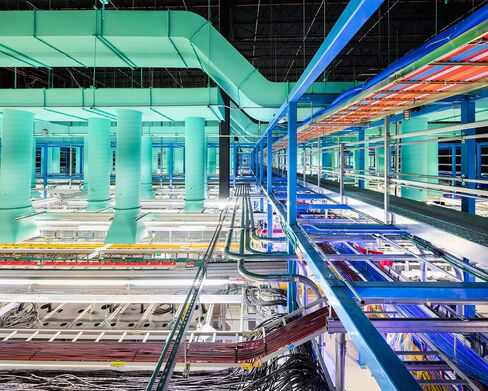 Inside the Nondescript Building Where Trillions Trade Each Day (Bloomberg)
Six miles northwest of the New York Stock Exchange as the microwave flies, across the Hudson River and within earshot of Interstate 95, is a building with no name. Only three numbers mark its address, and, like much of its surroundings, it’s nondescript, encircled by windblown trash and lonely semitrailers waiting to be hauled away somewhere. It’s a part of New Jersey that’s, well, ugly.
More Startups Are Getting Lower Valuations Than Joining the Billion-Dollar Club (Bloomberg)
Well, that’s not the direction Silicon Valley wants to see things going.

A Strike at Verizon (The Atlantic)
The unionized workers, whose contract with the telecoms giant expired in August 2015, are fighting Verizon’s attempts to reduce pension benefits and to make outsourcing work easier. The striking workers, who have not said how long they will stay off the job, are expected to picket Verizon facilities, including stores, from Virginia to Massachusetts.
About 40,000 Verizon wireline workers walk off the job (Reuters)
Verizon Communications Inc's wireline employees walked off the job on Wednesday in one of the largest U.S. strikes in recent years after contract talks reached an impasse.
PBOC Seen Averting Cash Shortage as $155 Billion Leaves Market (Bloomberg)
China’s central bank will probably roll over medium-term loans to avoid a shortage of cash as maturing contracts, tax payments and bank reserve requirements drain more than 1 trillion yuan ($155 billion) from the financial system this month, according to a survey of traders and analysts.

Tax-Rule Changes Ripple Widely (Wall Street Journal)
The Treasury Department’s new corporate rules will reach far beyond the few companies that moved their legal addresses to low-tax countries, forcing many firms based in the U.S. to change their internal financing strategies and tax planning.
Politics
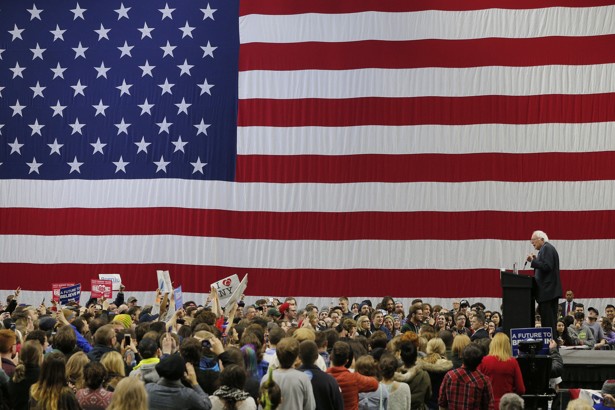 The Future of Bernie Sanders's Grassroots Army (The Atlantic)
Bernie Sanders’s fight for the White House is far from over. The Vermont senator has notched a series of state wins and vowed to stay in the presidential race despite trailing Hillary Clinton in an all-important battle for the delegates needed to secure the Democratic nomination. Even so, many of Sanders’s loyal fans have started to contemplate what will happen when the campaign comes to an end.
Syrians vote for parliament as diplomacy struggles (Reuters)
Syrians voted in a parliamentary election in government-held areas of the country on Wednesday in what voters called a show of support for President Bashar al-Assad, who is holding the poll in defiance of opponents seeking to oust him.
Technology
 Boeing’s new 737 economy seats are inspired by office furniture (Mashable)
In a move that could foresee big changes in aircraft seat manufacturing, Boeing is purchasing seats for the 737 direct from a new supplier.
LIFT by EnCore, the new seat manufacturer Boeing has picked to deliver better economy seats to the 737 Boeing Sky Interior, is on a mission to give a big comfort boost to passengers in the cheap seats.
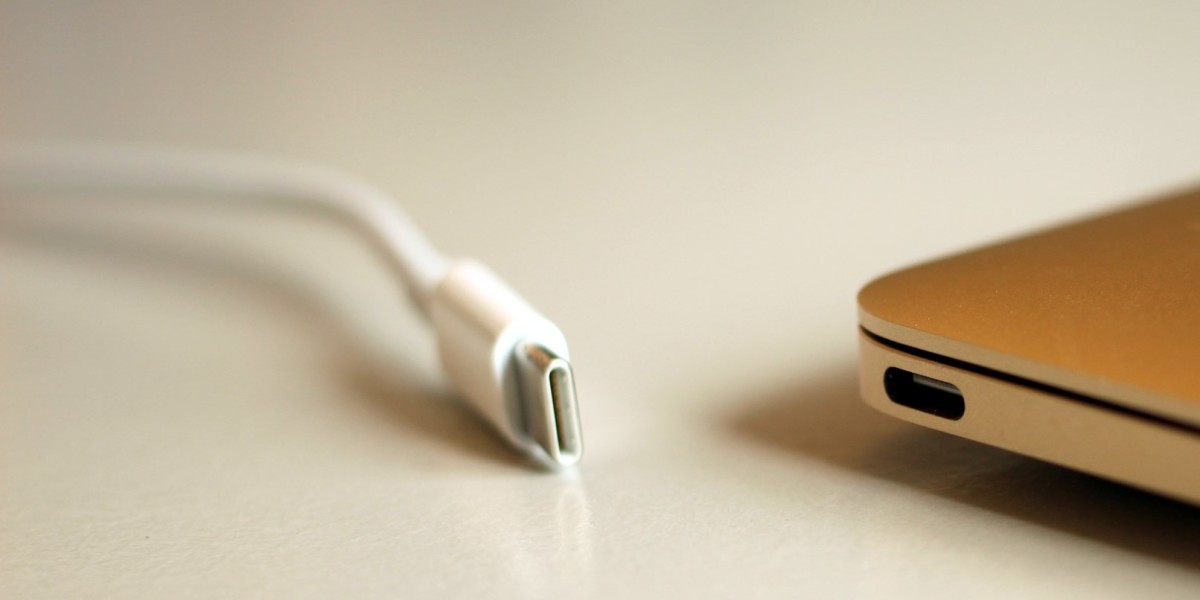 Say goodbye to faulty USB-C cables once and for all (The Next Web)
USB-C cables are supposed to be the end to all our wire woes, thanks to their ability to carry power and data simultaneously, as well as their reversible design. However, some manufacturers flooded the market with faulty cables that aren’t compliant with the specification and don’t work. Thankfully, the USB Implementers Forum (USB-IF), which maintains the USB-C standard, announced a new protocol to protect consumers from the dangers of low-quality gear and make it a thing of the past.
Health and Life Sciences
 One reason to rethink your ‘skinny’ latte (Market Watch)
You may not need to order your latte “skinny.”
American dieters have tried to stay away from fat as obesity rates have risen in recent years, but a new study shows one reason to re-evaluate that during your trip to the milk-and-yogurt aisle.
An Easy Way to Prevent Blisters? Try Tape (NY Times)
Exercise science today is exploring countless mysterious, exciting and poetic aspects of human physiology and performance. But sometimes you just wish that someone would tell you how to keep your feet from hurting. A wonderfully practical new study obliges, providing the first reliable, field-tested evidence about how to prevent blisters during prolonged exercise. Anyone running next week’s Boston Marathon, you’re welcome.
 Beetroots Don’t Cure Cancer (Science-Based Medicine)
Alternative medicine, like all good marketing, is largely about creating a narrative. Once you have sold people on the narrative, products essentially market themselves. That narrative has been evolving for literally centuries, although it seems to have accelerated with the advent of mass media and now the internet. It is optimized to push emotional buttons in order to sell products.
Life on the Home Planet
 Extinct lemurs left behind plant ‘orphans’ (Futurity)
The extinction of several species of large lemurs in Madagascar has created isolated “orphaned” plant species that once depended upon the animals to eat and disperse their large seeds.
These large-seeded plant species now face an uncertain future, says Sarah Federman, a PhD candidate in the ecology and evolutionary biology department at Yale University. “We need to understand the impacts of past extinction events or we cannot adequately design conservation plans for the future.”
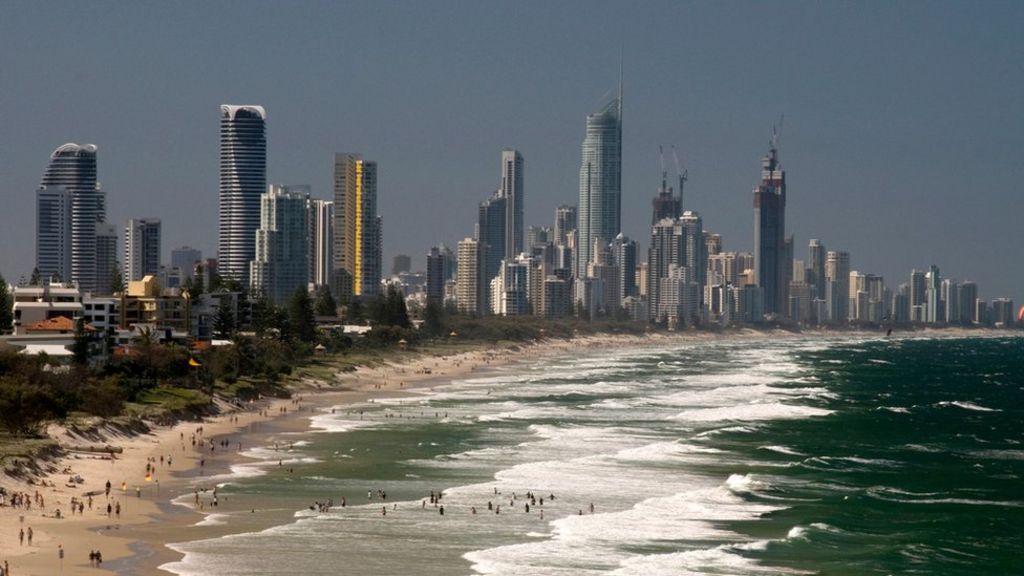 Sea-level rise factors unravelled (BBC)
Over the last 100 years, sea levels have been rising much faster than over previous millennia.
Now, scientists have modelled the cumulative forces driving observed sea-level rise in the modern era.

