

Courtesy of Pam Martens
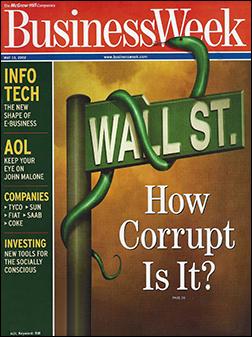
BusinessWeek Cover, May 13, 2002: Americans Need to Continue Asking This Question
Wall Street On Parade has learned, by piecing together the SEC filings of Freddie Mac and Fannie Mae and previous Federal Reserve studies, that these two companies that have been in U.S. government conservatorship since the 2008 financial crisis, continue to pay out billions of dollars to the biggest Wall Street banks on their derivatives contracts.
This raises multiple red flags, not the least of which is how much does the U.S. public really understand about the 2008 financial crisis and what appears to be a continuing taxpayer bailout. It is well known at this point that AIG had to be bailed out because it owed over $90 billion on its derivative and security loan contracts to Wall Street and foreign banks. Now, it’s looking like Fannie Mae and Freddie Mac were also Wall Street’s derivatives patsies – or “dumb tourists” as author Michael Lewis might say.
According to Freddie Mac’s first quarter 10K filed with the Securities and Exchange Commission, this is how much it has paid to its derivatives counterparties in just the past four years: $2.1 billion in 2015; $2.6 billion in 2014; $3.46 billion in 2013; and $3.8 billion in 2012. Fannie Mae’s payouts have been smaller than Freddie Mac’s.
We could not find comparable data for Freddie Mac for the crisis years but its 10K for the first quarter of 2011 shows total derivative losses (declines in the value of its derivatives portfolio plus payouts to counterparties) as follows: $8 billion in 2010; $1.9 billion in 2009; and a stunning $14.95 billion in 2008.
Both the Federal Reserve Bank of New York and the Federal Reserve Bank of St. Louis have conceded in separate studies that placing Freddie and Fannie under U.S. government conservatorship was critical to stemming the bleeding of the big Wall Street banks because of their derivatives counterparty status. The New York Fed’s staff report of March 2015 noted the following…
…

