


Courtesy of Pam Martens.
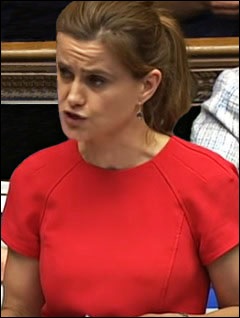
Jo Cox, Member of Parliament, Was Murdered on Thursday, June 16, 2016; U.S. Stocks Rallied on the News
The U.S. stock market was mired in red ink yesterday morning with every major Wall Street bank trading down on news that multiple polls in Britain were showing that a majority of citizens were in favor of the United Kingdom withdrawing from the European Union (EU). A referendum vote on the issue is to be held next Thursday.
Then, at 12:17 p.m. New York time yesterday, Bloomberg News printed the following headline: “U.K. Lawmaker Jo Cox Is Murdered, Silencing Brexit Debate.” Cox was a Member of Parliament from the Labour Party who was an advocate for the U.K. remaining in the EU. Cox, a mother of two children, was shot and stabbed by a man said to be in favor of Brexit, the term for a British exit from the EU. On the news of her death, which fueled the market perception that it would dampen the zeal to leave the EU, the pound and euro rallied along with the Dow Jones Industrial Average and Wall Street bank stocks.
After the U.S. market closed, with the Dow up 92 points on the day, an abrupt turnaround from morning trading, James Mackintosh penned an article at the Wall Street Journal taking note that markets can appear “callous,” but justifying the market reaction to the death of Cox with this line of reasoning:
“But one of the points of markets is that they are amoral. Not immoral — although much of the wrongdoing uncovered after the financial crisis certainly was — but unconcerned with morality at all. They are deliberately unfeeling, heartless and unsympathetic, because they exist to balance out millions of individual views in order to allocate capital and assess risk.”
This is simplistic and naively wrong on so many levels. Let’s start with the U.S. market’s ability to “allocate capital and assess risk.” Here’s what Ron Chernow correctly had to say on this subject back in 2001 in the New York Times…
…

