


The Origins of American Incivility and Fear
 Courtesy of John Mauldin, Outside the Box
My friends and associates know that it is very rare that I am sitting at my desk at 4 AM, as I was this morning. I am not an early morning person. But every now and then I wake up and the mind turns on, and rather than fight it, I go sit at my desk. And almost immediately this morning, I was greeted with this paragraph from my friend Michael Lewitt in his latest letter:
The 2016 presidential election is carving deep scars on the American soul. The country is on the cusp of a constitutional crisis after the FBI reopened the investigation into Hillary Clinton’s use of a private email server. The reputation of virtually every individual and institution touched by this election is ruined – the media, Justice Department, FBI, the candidates, their surrogates and supporters, both political parties and those holding high office. Our so-called elites disgrace themselves on a daily basis. The nation is left to pick up the pieces after November 8th. Financial markets are starting to react to the coming turbulence but remain dangerously complacent.
Which made me realize the importance of the essay my good friend and business partner George Friedman of Geopolitical Futures published yesterday on “The Origins of American Incivility and Fear.” There have frequently been periods in our history, George reminds us, when we Americans dreaded that our nation was in severe decline. The ’60s and ’70s was one such period – we endured a great cultural rift that centered on the Vietnam War. The economy was in rough shape in the ’70s, too – inflation climbed from 4% to 14% during the decade, and unemployment more than tripled from 3% in the late ’60s to nearly 10% in the early ’80s. The DJIA plunged from 7318 in 1965 to 2227 in 1982.
But, says George, American dread of social turmoil
… has deeper roots, particularly in the 20th century. Two events, about 12 years apart, have left a permanent scar on the American psyche. One was the collapse of the stock markets in October 1929 and the following depression. The other was the attack on Pearl Harbor on Dec. 7, 1941 and the following war.
There was a common link between the two. Neither was expected by the public. Both were a shock that transformed everyday life for the worse. An argument can be made that both should have been expected. But they weren’t. These two events engraved a single principle on the American soul: that lurking beneath the surface of peace and prosperity are forces that break through and destroy both.
Now, just a week before Election Day, we once again feel ourselves poised on the brink – and not just over the presidential outcome but also because of the parlous state of the economy.
Yesterday in USA Today, election rules expert Michael McDonald made the case that if the election is a tossup, it could very well “go into overtime,” and that “in this environment” an uncertain, protracted outcome could “rip this country apart.”
 Well, maybe. I’m not saying it can’t happen. But as George points out in the piece you’re about to read, we emerged from the Depression and WWII as the world’s strongest nation; and we weathered the ’60s and ’70s, righted the ship in the '80s, stood by (and maybe nudged a bit) as the Soviet Union collapsed and Japan was struck by an economic tsunami of its own making … and then enjoyed an intense period of technological innovation and economic growth.
Will the outcome be fundamentally different this time around? Will the powerful disruptive forces that are gathering be enough to take us down? I doubt it. The republic has weathered some serious storms in the last 240 years, but it survives. And I see no reason that we will not weather the coming storms, though I admit they’re going to be difficult.
However, glibly saying the Republic will survive doesn’t mean we don’t have to respond and grow our society in ways we haven’t before. It doesn’t mean we don’t have to change, and perhaps change in ways that make many of us uncomfortable. There have been many periods in our history where the changes we were going through made significant numbers of us uncomfortable.
Each of us has the ability to control our own personal destiny by our choices, especially if we can recognize the need to change rather than blindly assuming tomorrow will be like today and that the next years will be like the last years. I take comfort in the fact that I have had to change many times over the years, often in ways that I would have preferred not to; but so far, like the republic, I survive and so do you.
That being said, is this not the most surreal political scene since, possibly, 1824? No novelist, even in my favorite genre of science fiction and fantasy, could have scripted the twists and turns of this election process, let alone the inexplicable last-minute scenario of hundreds of thousands of emails surfacing on seriously discredited Anthony Weiner’s computer, some of them allegedly messages from Hillary Clinton via Huma Abedin. It would render ridiculous any plot line to include something so bizarre. (Seriously, who has that many emails saved on one loan computer?)
In this weekend’s letter I will probably allude to the even more ridiculous plot line that is playing out in Europe. The interposition of massive debt and the Italian referendum loom large. Has anybody noticed that Italian interest rates are beginning to rise? That there is a huge amount of money hightailing it from the rest of the continent for Switzerland, even as there is a 75-basis-point penalty for holding cash? It boggles the mind. I agree with my fellow writer Jared Dillian: it is not clear what is going to happen, but the likely outcome is more volatility. The long vol trade that he is talking about makes a lot of sense to me.
Have a great week, and now let’s turn it over to George. If you like this piece from him, his firm, Geopolitical Futures, is offering Outside the Box readers a one-year subscription to their service for just $99. You can learn more right here.
Your ready for this election to be over analyst,
John Mauldin
The Origins of American Incivility and Fear
By George Friedman
November 1, 2016
U.S. history has left Americans unsettled even in prosperous times.
One of the more striking things about the United States is the sense that it is in decline. Donald Trump’s main theme is that he would make America great again and that it has been in severe decline over the last decades. It was an effective campaign theme because it touched on a deep American dread. In Europe you will find a different sensibility, which is that while Europe has problems, they are nothing compared to the problems in the past – the Soviet threat, Nazi Germany, the mass slaughter of World War I. Europeans look at their past and are grateful to be living when they are. Many Americans feel a sense of a lost greatness and a looming catastrophe.
This sensibility is not new. During the 1970s, there was a deep and oft stated sense that America was in decline. At the end of the Vietnam War the enemy’s flag flew over a capital we had been defending. During the same time, there was a massive social and cultural divide. The culture of the lower-middle class and that of the graduates of the best universities were in sharp contrast. On the whole, it was the lower middle class that fought the war and supported it. The universities were the center of antiwar sentiment and contempt for those who supported the war. The contempt was mutual. The economic situation was catastrophic for many. Unemployment and inflation were both around 10 percent for a good deal of the decade. Interest rates were in the high teens, and buying a house was out of reach for many. At the end of the decade came the Iranian Revolution, with Iranians taking American diplomats hostage and the United States helpless to protect them. The disaster at Desert One followed – a task force sent to rescue the hostages collapsed, with planes destroyed and men dying before the rescue attempt began.
The sense of decline was rampant. It could be seen in crime and decay in the cities, the surge in Japanese exports to the United States, and the sense that the Baby Boomer generation, unable to settle into family or career, was destroying the fabric of society. The feeling was that the Japanese were surging ahead of the United States economically, the Soviets were surging ahead militarily and we were held in contempt by the world.
That was some 40 years ago and clearly the sensibility was wrong. What followed was the Japanese economic crisis, the collapse of the Soviet Union, recovery of the hostages from Iran and the United States emerging as the only global power. Interest rates plunged, as did inflation, and we came into a period of intense innovation and economic growth.
Having passed through the 1970s, as we did, it would seem reasonable that it would serve as a benchmark. A lost war, an extended economic crisis and social stress had not led to catastrophe. Yet, there are few lessons taken from the 1970s to provide some perspective. Similar circumstances are expected to yield the same dreaded disaster.
The sense of dread is more than a response to a particular time. It is also not that Americans lack the ability to use history to frame our concerns – although that may be the case. It has deeper roots, particularly in the 20th century. Two events, about 12 years apart, have left a permanent scar on the American psyche. One was the collapse of the stock markets in October 1929 and the following depression. The other was the attack on Pearl Harbor on Dec. 7, 1941 and the following war.
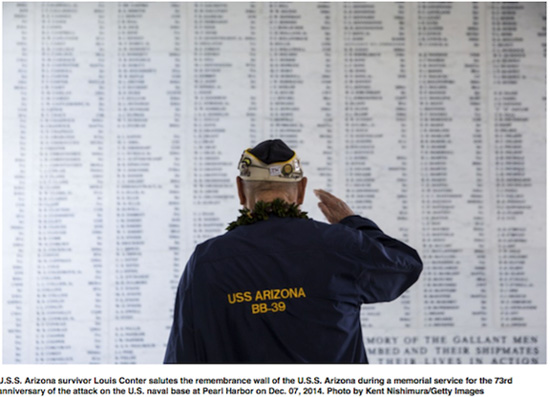
There was a common link between the two. Neither was expected by the public. Both were a shock that transformed everyday life for the worse. An argument can be made that both should have been expected. But they weren’t. These two events engraved a single principle on the American soul: that lurking beneath the surface of peace and prosperity are forces that break through and destroy both. In the more extreme formulation, both 1929 and 1941 were known to the elite, who not only protected themselves from the consequences, but also profited from them.
The 1920s were a time of prosperity in the United States (outside of the regions that experienced the Dust Bowl). As with all times of prosperity, the seeds of its own destruction were there from the beginning; people began to believe that it was the new, permanent normal. 1929 stunned people because it was unexpected, but it was the brutal grinding of the Great Depression that scarred the American soul. It created a national memory of hardship emerging without warning. At least some of us approach the best of times with a bitter certainty that hidden behind the false screen of prosperity, disaster is lurking, whether rooted in impersonal economic forces or the hidden hand of the powerful.
 Pearl Harbor drove home to Americans that an enemy might strike the United States at any time, without being detected, and decimate the country. Most Americans suspected that the United States would enter World War II at some point, but they believed that it would be at the time and place of our choosing. The idea that the Japanese, whom many Americans held in contempt, could strike without warning and destroy the Pacific Fleet changed the world. The change was not simply that the U.S. was at war, it was deeper. It was the sense that war would come without warning and perhaps destroy us.
These two events changed the American sense of the world. It is overstated to say that before these events, the United States was innocent and carefree. The 600,000 dead in the Civil War would prove otherwise. But the Civil War did not strike out of nowhere, nor did the previous economic crises last for a decade. Combining the surprise at the events with how long and deeply they cut into the United States, a new sensibility was born. It was a sensibility of deep suspicion, not so much of people (although a fear of conspiracy was implanted), but simply of the fragility of American life and power.
The fear of the hidden disaster lurking to destroy us is not necessarily delusional. I happen to think that the 1970s provide a framework to think about our current decade and discount the worst fears we have. But there are reasonable fears and fears that will turn out to be reasonable regardless of my view. These fears serve as an engine for intensifying emotions and going to extremes.
Take two examples from opposite sides of the political spectrum. The concern that massive immigration from Mexico will transform American society and cause crime and disorder is not an unreasonable fear. Most immigrant movements to the United States resulted in some criminal activities and social instability. That is in the nature of immigration. However, when you attach the underlying engine of dread to an argument that may be wrong in this case, but isn’t absurd, you reshape the argument to a level of fear that means anyone who disagrees is a fool or a monster.
There is the concern that human activity is changing the climate and that that change poses a threat to humanity. The argument is not irrational, as we have seen increased temperatures that might well cause serious harm. When the argument on global warming is linked to the culture of dread, then the argument becomes a certainty and the only outcome is catastrophe. And those who take issue with it are fools or monsters. If things are as bad as those who want to stop Mexican immigration or those alarmed by climate change claim, then anyone who rejects the argument is like someone who refuses to see that the house is on fire.
Pearl Harbor defined the Cold War. If an attack can come at any time, then the United States must be ready for war 24/7. We drilled out a mountain in Colorado Springs to house the North American Air Defense Command. We had B-52s constantly airborne, submarines on constant patrol and crews in missile silos standing by ready to fire. I am not sure there was another course, but I do know that having raised the possibility of another course would have encountered rage.
When people write to me talking about the trillions of dollars of debt that will crush the American economy, they do so out of fear of the lurking force that will destroy everything. If you say, “It’s a problem, but we can probably manage it,” you might be called a fool or perhaps part of a conspiracy to destroy the economy.
Mexican immigration, climate change, mutual assured destruction and the national debt are all topics worth serious discussion among serious people, each holding open the possibility that the other is right. But when it is declared that the debate is over, that means that there can be no debate and no changing of minds. If it is a matter of the apocalypse, that is a reasonable thing to say. But if everything is apocalyptic, then no conversation on anything is possible.
In retrospect, we were all fools not to expect the Great Depression or Pearl Harbor. If we missed those, then what else are we missing? Someone will be happy to show you what else you are missing and with utter sincerity, he will try to convince you that you are not two reasonable people disagreeing, but that he is trying to save the country, and you are trying to destroy it.
We wonder at the growing incivility of American culture. Going back to the 1960s and 1970s, I remember the chant “hey, hey, LBJ, how many kids did you kill today?” Even in this election, I have heard nothing that uncivil. Nor have I heard that someone has a list of 100 communists in the State Department. Nor have I seen the dead of Antietam. So no, I don’t believe this is the most uncivil time in America. Not even close. But given the deep anxiety bequeathed us by 1929 and Pearl Harbor, we can see the fear of unexpected disaster can fuel spectacular incivility.
A belief has emerged in America that we are surrounded by hidden dangers that will strike when we least expect it and with a terrible fury. We are enraged when others don’t see it, for the same reason someone being ignored when he says there is a fire will be justly enraged. But everything is not on fire. Our time is no worse than the 1970s and that time was not nearly as bad as the 1930s. But then we think of the Depression and Pearl Harbor and we wonder if we are being lulled into a false sense of security. We are not uncivil. We are afraid. Our fears have serious origins. But reality does not always lead to the apocalypse.
****
Like Outside the Box? Then we think you'll love John's premium product, Over My Shoulder. Each week John Mauldin sends his Over My Shouldersubscribers the most interesting items that he personally cherry picks from the dozens of books, reports, and articles he reads each week as part of his research. Learn more about Over My Shoulder.

