


Courtesy of Pam Martens.
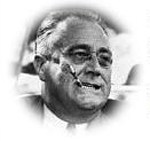
Franklin D. Roosevelt, President During the Great Depression
Following the Wall Street crash of 1929, thousands of banks failed in the United States. More than 3,000 banks went under in 1931 followed by more than 1400 the following year. There was no Federal insurance on bank deposits in those days so both depositors and shareholders were wiped out or received pennies on the dollar when the banks went bust. This deepened the panic and deepened the Great Depression.
Many of the bank failures stemmed from the banks using depositors’ money to speculate in the stock market, sometimes to manipulate the price of their own stock.
Franklin Delano Roosevelt was sworn in as President of the United States on March 4, 1933. Two days later he declared a national banking holiday, meaning that he closed all the banks and sent in the examiners to determine which ones were sound and which ones were insolvent. The banking holiday lasted to March 13. Just three months later, on June 16, 1933, FDR and Congress enacted the Glass-Steagall Act also known as the Banking Act of 1933.
The Glass-Steagall Act created Federal deposit insurance at commercial banks while simultaneously restricting their ability to act as Wall Street casinos and speculate in stocks or risky debt securities. The legislation required that commercial banks had to be separate from investment banks and brokerage firms.
That legislation protected America’s banking system from the hubris of Wall Street traders for the next 66 years until its repeal on November 12, 1999 during the Clinton administration.
…

