

Courtesy of Pam Martens.
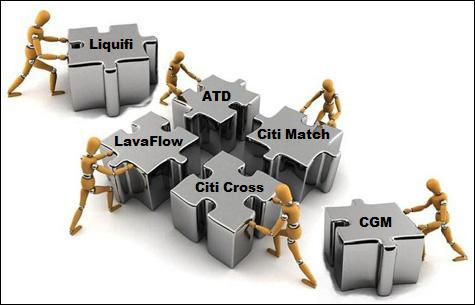
Citigroup, the Bank the U.S. Taxpayer Saved From Insolvency in 2008, Was Operating a Dizzying Array of Dark Pools and Trading Venues in 2014
The Securities and Exchange Commission (SEC), which has had two separate Wall Street lawyers at its helm for the past five years (under both the Wall Street- friendly Obama administration as well as the current Trump administration), has released a 558-page document that attempts to pass itself off as reforming Wall Street’s Dark Pools. Instead, it simply tinkers around the meaningless edges of reform.
Dark Pools are trading venues that should not exist in an efficient, transparent and honest securities market. They are effectively unregulated stock exchanges being run internally by some of the biggest Wall Street banks on Wall Street: The same banks (like Citigroup, JPMorgan Chase, Goldman Sachs and Merrill Lynch) that have been serially charged with abusing their customers.
Instead of sending their stock trades to the New York Stock Exchange or another independent stock exchange, the big Wall Street banks route the customers’ trades to their internal trading venue – raising enormous conflicts of interests which the SEC fully acknowledges in its rule-making document. The SEC uses the old canard that liquidity will be harmed if it doesn’t continue to allow these outrageous conflicts to exist.
As we previously reported (see related articles below), not only is the SEC allowing these Wall Street banks to trade each other’s bank stocks in their Dark Pools, the banks are also being allowed to trade their own bank stock in their own Dark Pool.
This is the second time that the Wall Street “regulators” have put on a show of bringing transparency to Dark Pools. On June 2, 2014, Wall Street’s crony self-regulator, FINRA, began reporting three-week old, weekly aggregated trading data to the public. But that aggregated trading data does not allow one to see: if the trades are manipulative, i.e., being made at the open or close or at times when the market is slumping; if the prices at which the stocks are traded in the Dark Pool are away from the market; if one Wall Street bank’s Dark Pool is trading with another bank’s Dark Pool to create a false market; if the Dark Pool is frontrunning its own customers’ orders, and on and on.
…

