


Courtesy of Pam Martens
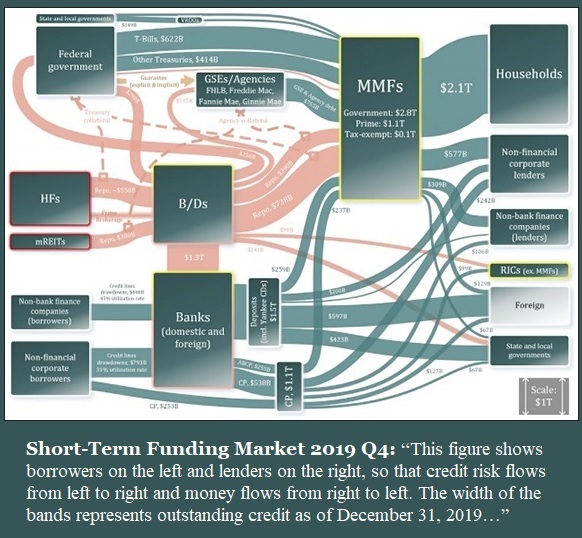
By Pam Martens and Russ Martens
If you suffer from chronic nightmares, experience migraine headaches from stress, or have anger management issues when confronted with abject stupidity, you probably want to avoid looking at the above graph that the Securities and Exchange Commission has created to show how one of the most critical financial markets in the United States functions. Or perhaps we should say, why it’s incapable of functioning when it’s most needed.
The market is Wall Street’s Short-Term Funding Market which includes its integral repurchase agreement (repo) market. The repo market blew up in 2008 during the last financial crisis and required a Fed bailout. It blew up again on September 17, 2019 for reasons that have yet to be credibly explained and required at least $9 trillion in cumulative emergency loans from the Federal Reserve over the next six months. As we reported yesterday, the Fed appears to still be propping up that market while not reporting those Fed loans to the American people.
The SEC’s graph above is part of a report the SEC released in October titled “U.S. Credit Markets Interconnectedness and the Effects of the COVID-19 Economic Shock.” The report makes no mention of the fact that the repo market blew up on September 17, 2019 – months before there was a COVID-19 case reported anywhere in the world. Everything in the SEC’s report is framed around the idea that the COVID-19 pandemic caused all of the dislocations in the repo and related short-term funding markets. (For an in-depth look at the actual events as they unfolded beginning on September 17, 2019, see our archive of articles on this topic.)
The SEC report describes the repo loan market as follows:
…

