


Courtesy of Pam Martens
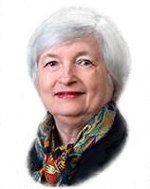
Janet Yellen
Remember all the hubbub in the fall of last year when then U.S. Treasury Secretary Steve Mnuchin demanded in a November 19 letter that the Fed return all of the money from the CARES Act that it had not used for emergency lending programs. Mnuchin’s stated reason for the demand was because he was going to turn the unused funds over to the general fund of the Treasury so that Congress could reappropriate it for other purposes.
At the time, Mnuchin made it sound like the Fed had been sitting on the bulk of the $454 billion that the CARES Act had allotted to be used as loss-absorbing capital for the Fed’s emergency lending programs. In reality, Mnuchin had never turned over the bulk of the CARES Act money to the Fed, but had parked it instead in a Treasury slush fund known as the Exchange Stabilization Fund (ESF). It should be noted that there was not one word in the CARES Act legislation that authorized Mnuchin to put the money in the ESF. (See Research Arm of Congress Confirms that Mnuchin Never Released Bulk of CARES Act Money Earmarked for Fed’s Emergency Loans.)
The size of the ESF is decidedly important for this reason: under current law (31 U.S.C. §5302) the decisions on how to spend the billions in this slush fund belong to the Treasury Secretary and “are final and may not be reviewed by another officer or employee of the Government.” The law also provides that the Treasury Secretary “with the approval of the President, may deal in gold, foreign exchange, and other instruments of credit and securities the Secretary considers necessary.”
Since publicly traded stocks are “securities,” that language would appear to give the U.S. Treasury Secretary the power to intervene in propping up the stock market without the ability of “another officer or employee of Government,” say, like, the Government Accountability Office, having the ability to review or conduct an audit of what’s going on in that regard. Quarterly statements from the ESF are provided to the public, but they simply show where things stand on the last day of the quarter. A lot can go on with the money in the ESF in the prior three months.
The control of the ESF now passes to U.S. Treasury Secretary Janet Yellen, who will have $489.96 billion less than Mnuchin to play with in the slush fund – thanks to Mnuchin’s efforts. Here’s how we did the math:
…

