

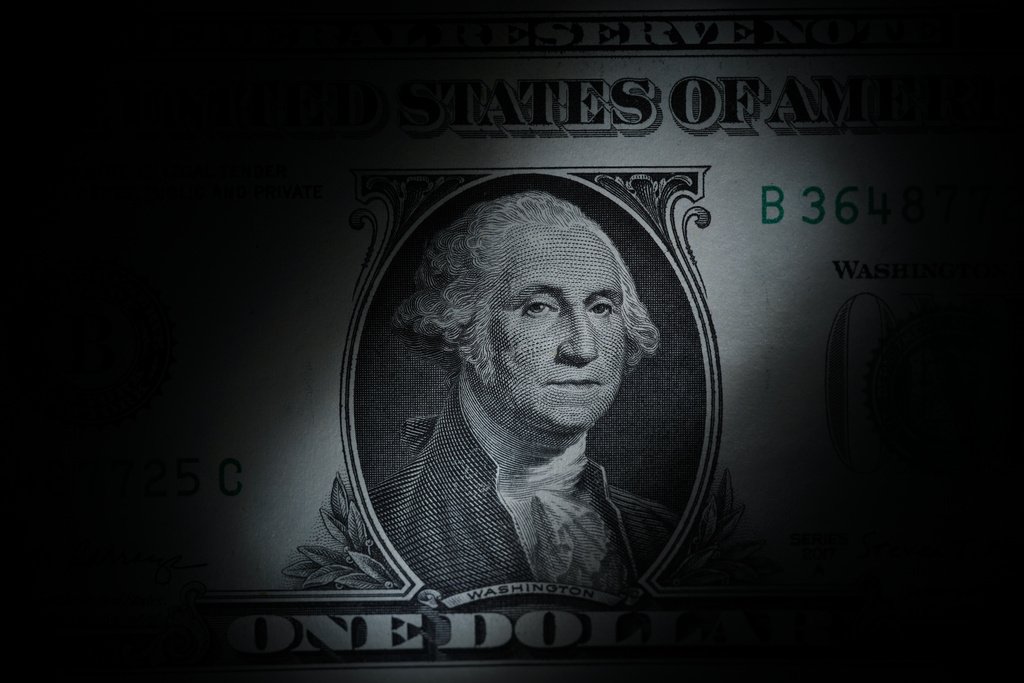
Dollar collapse: The crisis is no longer just theoretical
By Vivekanand Jayakumar, The Hill
The standard textbook viewpoint implied that the imposition of tariffs by the U.S. would lead to a strengthening of the American dollar against the currencies of its major trading partners. Since tariffs make imports more expensive, they can potentially reduce the volume of imports and thus create less demand for foreign currencies to pay for them.
Tariffs can also lead to higher domestic prices and possibly generate an increase in short-term inflation expectations. Consequently, the Federal Reserve would be expected to maintain a tighter monetary policy relative to other major central banks, which is usually a dollar-positive outcome.
****
I asked ChatGPT to explain the first paragraph in the context of the full article. Here’s its explanation:
Why the U.S. Dollar Isn’t Behaving the Way It Used To
According to standard economic theory, U.S. tariffs should make the dollar stronger. The idea is simple: when tariffs make imports more expensive, Americans buy fewer foreign goods. That means they don’t need to exchange as many dollars for foreign currencies, which reduces demand for foreign money and supports the dollar’s value.
Tariffs can also lead to slightly higher inflation in the short term. If inflation rises, central banks like the Federal Reserve are expected to raise interest rates to keep it in check. Higher interest rates attract foreign investors looking for yield, which also strengthens the dollar.
On top of that, the U.S. dollar has long been considered the world’s “safe-haven” currency. In times of global turmoil, investors usually rush into U.S. assets like Treasury bonds. This demand typically pushes the dollar up.
But recently, none of that has happened.
Since its peak in January, the U.S. Dollar Index (DXY) has plunged to a three-year low. Even though Trump’s erratic tariff policies and unpredictable decisions have rattled markets and raised fears of a global trade war, the dollar has weakened — not strengthened.
For the first time in decades, the dollar isn’t the automatic go-to asset in a crisis. Foreign investors are rethinking the U.S.’s role as the anchor of the global financial system. Concerns are mounting about President Trump’s interference in independent institutions like the Federal Reserve and the courts. Worries about political instability, disregard for the rule of law, and threats to financial norms are causing many to question whether U.S. Treasury bonds — long seen as the safest investment in the world — are still safe.
Investors are increasingly turning to gold, Japanese government bonds, and even European assets. The euro has risen sharply against the dollar — a sign that investors are willing to accept lower returns in exchange for what they perceive as greater political stability.
Recession fears are also growing. The belief that Trump’s tax cuts and deregulation would supercharge growth has faded. In its place are concerns that chaotic trade policy and extreme uncertainty are dragging the economy down. And while recessions usually lead to lower interest rates (which push bond prices up), this time investors are hesitant to buy Treasurys because they fear stagflation — a mix of weak growth and persistent inflation.
The U.S.’s long-term debt burden is also in focus. For the first time, the U.S. government spent more on interest payments in fiscal 2024 ($949 billion) than it did on defense ($826 billion). Treasury Secretary Scott Bessent reportedly persuaded Trump to pursue lower long-term interest rates to ease this burden. That raises concerns about possible financial repression — manipulating markets to keep rates artificially low while inflation quietly erodes debt — which could further undermine investor confidence.
All of this has led to an unusual situation: the dollar is weakening even as Treasury yields remain high, and gold is hitting record highs above $3,500 an ounce.
This isn’t just market noise. Since the end of the Bretton Woods system in the 1970s, the dollar has gone through long cycles of strength and weakness. We may now be entering a new downcycle, driven by both market forces and geopolitical shifts.
If the Eurozone expands its issuance of shared euro-denominated bonds, and if China opens up its financial markets and makes its currency more globally usable, the world could shift from a dollar-dominated system to a multipolar one. Countries in the BRICS bloc and other emerging economies are actively seeking alternatives to the dollar’s dominance — and Trump’s policies may be accelerating that shift.
As economic historian Barry Eichengreen has warned, preserving the dollar’s global role depends on promoting financial stability, limiting tariffs, and strengthening alliances. Instead, the Trump administration appears to be doing the opposite.
If current trends continue, we may be witnessing the early stages of a global realignment — one in which the dollar is no longer the uncontested center of the financial universe.

