

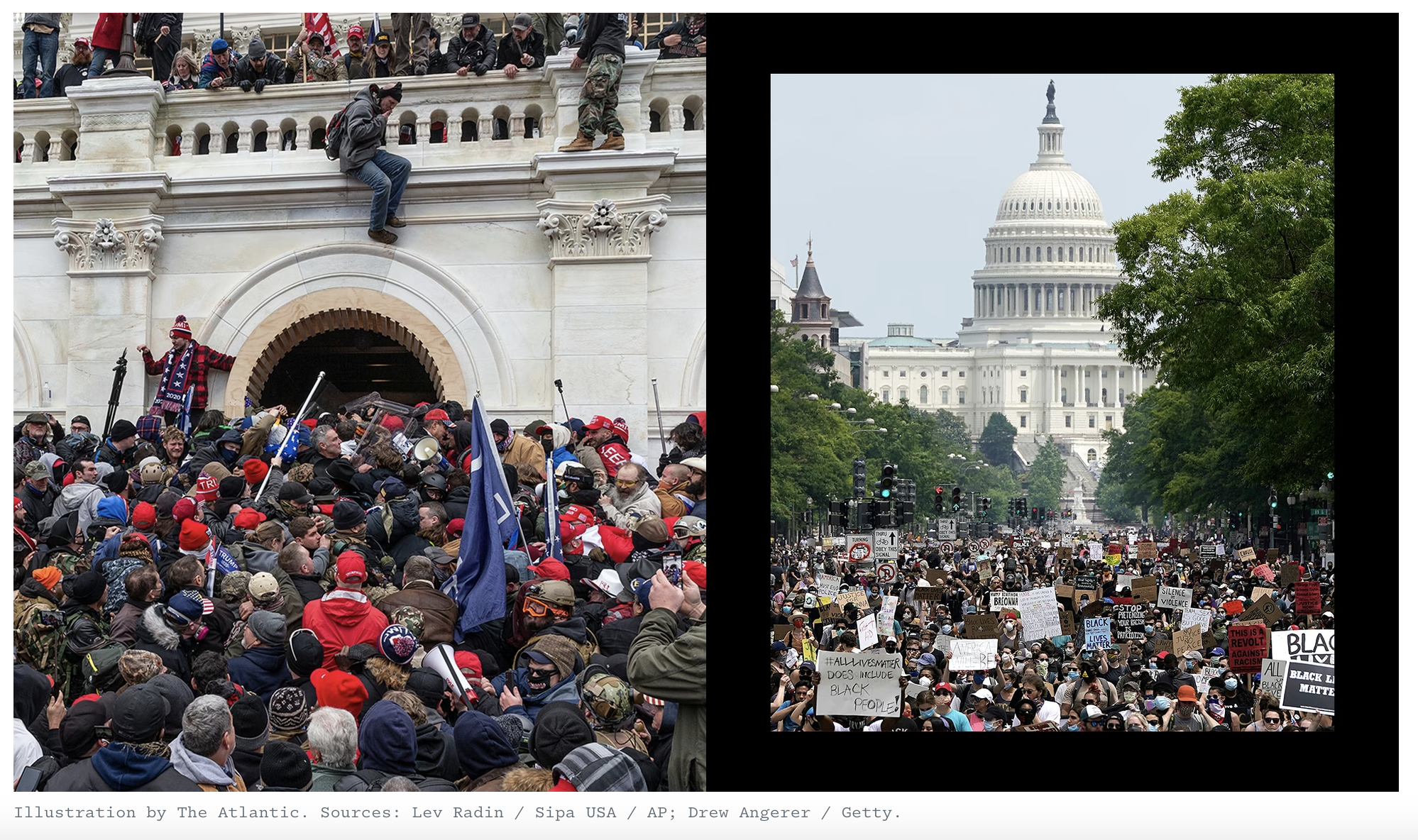
What the summer of 2020 wrought
The social-justice movement that began in earnest with Trayvon Martin’s shooting in 2012, and culminated eight years later, after George Floyd’s murder, once looked unstoppable. By the summer of 2020, a slew of recorded killings of Black people had seemed to convince a pivotal bloc of Americans that the persistence of racial injustice was both inarguable and intolerable.
Yet the ensuing riots—and the disorder they appeared to countenance—prefigured a surge of white grievance that still hasn’t subsided. Throughout the summer of 2020, many on the left exalted lawlessness and violence as pardonable offenses, if not political virtues. Within a few months, this impulse had migrated to the right, yielding even worse damage to the liberal order, most notably on January 6, 2021. The mass unrest of the preceding year certainly did not cause the sacking of the Capitol. But that winter siege amounted to an outgrowth of the summer revolt—the rotten fruit of imitation.

