

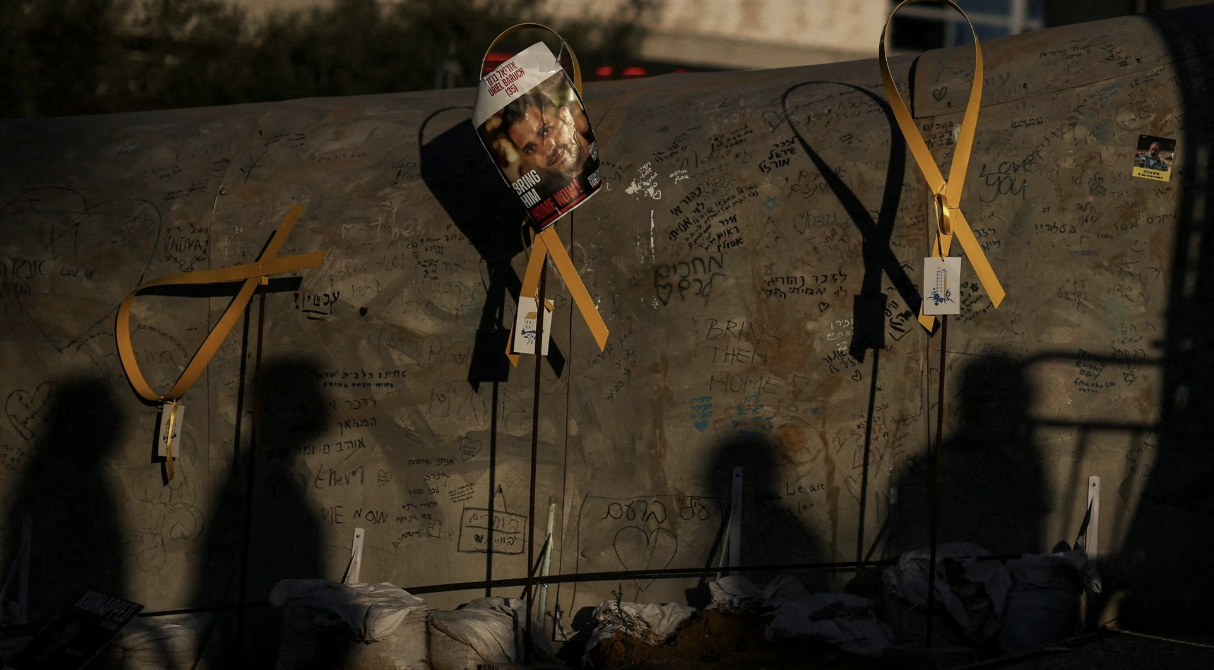
The release of the remaining October 7 captives shows that hope can survive even in the darkest hole.
By Franklin Foer, The Atlantic
In Eli Sharabi’s first hours of freedom earlier this year, a social worker led him to a room stocked with shampoo, toothpaste, and soap. In Gaza’s tunnels, he had gone months without bathing; now he could scrub off the grime of captivity. He had sustained himself through his 491 days as a hostage by picturing the moment when he would rush into the arms of his wife and daughters. But the tunnels had sealed him off from the world. Standing in daylight, he learned that Hamas had murdered his loved ones in their home’s safe room on October 7. The social worker hovered as he showered and changed, to protect Sharabi from himself.

