

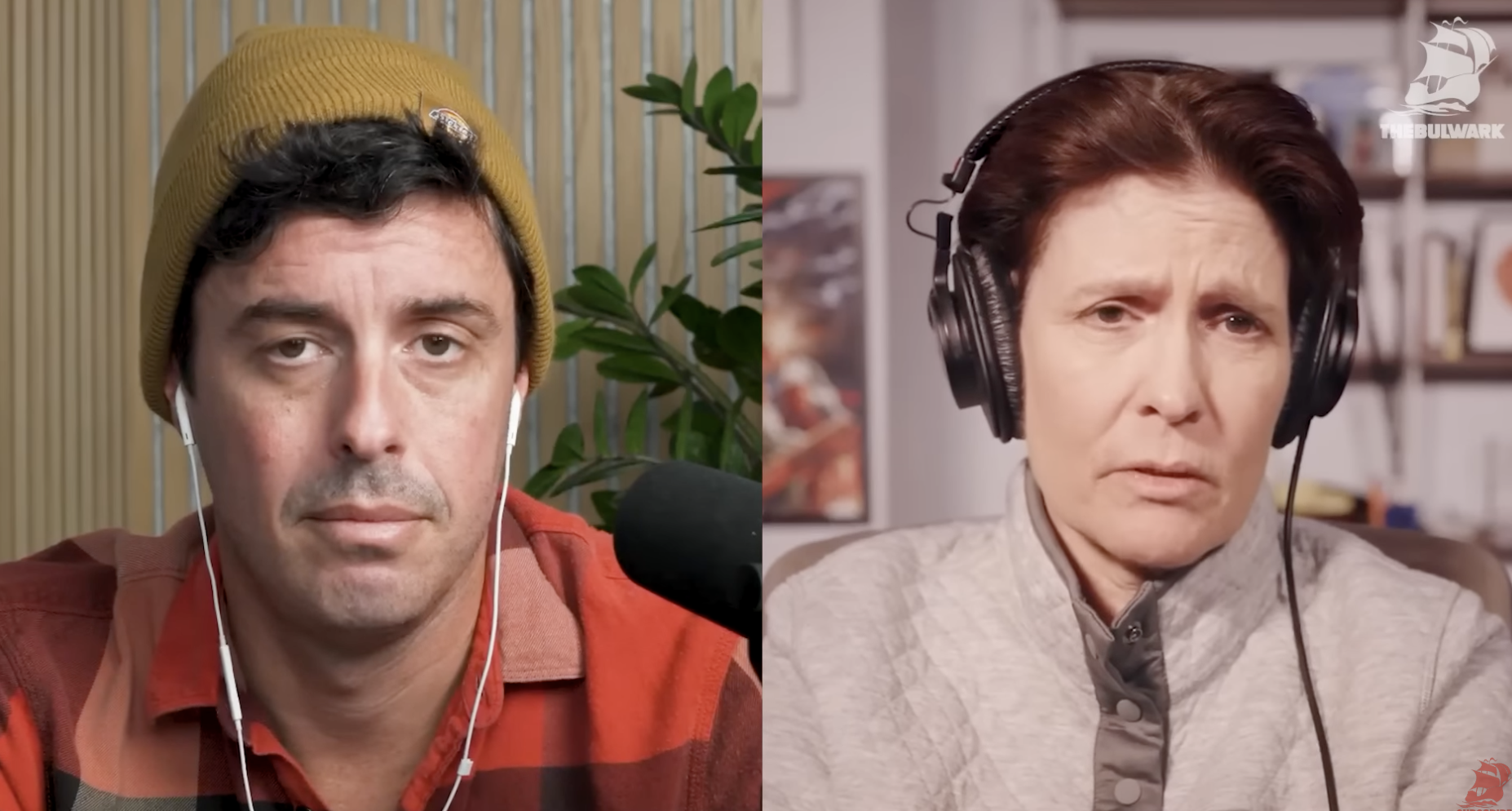
Kara Swisher Nukes the Tech Bros
The Bulwark Podcast, Tim Miller with Kara Swisher
Timeline
0:00 – Intro + Pivot hosting
1:33 – “2025 recap”: tech oligarchy + MAGA alignment as the big story
2:21 – China / AI chip export policy + Trump’s shifting stance
3:16 – University & science funding cuts; brain drain
5:26 – Tech–MAGA “marriage”: convenience, power, “leave me alone” politics
8:38 – Democrats’ dilemma: regulate without driving tech deeper right
11:00 – More realistic politics: broad appetite for kid safety
12:37 – “Gilded Age” visuals, backlash, limits to ostentatious wealth
16:29 – Public trust shift: Silicon Valley net-negative perception
17:11 – AI accountability: liability, safety regs, privacy, taxation
20:09 – Disney/AI licensing strategy
21:22 – Swisher’s “zoomers” view: AI’s upside in health/robotics/real-world
24:12 – Doom zone: misinformation, AI slop, authenticity labeling
28:39 – Scams + “bad people” weaponizing tools
29:43 – Media consolidation – “they have to merge”, streamers, YouTube
35:15 – Antitrust reality: markets shifting faster than regulation
36:22 – Pop culture detour: Pluribus as AI/hive-mind metaphor
37:35 – “Friction” argument: convenience can make people numb/dumb
41:13 – RFK affair reporting story
46:09 – 2026 predictions: robotics + AI as investable theme
49:03 – Tech’s future with Trump/Vance; “they’ll flee if wind changes”
51:22 – K-pop Demon Hunters as politics/branding joke
53:13 – “Power” figure talk + wrap
Summary
Tim Miller and Kara Swisher use a “year in review” frame to argue that the most durable story of 2025 may not be day-to-day Trump drama so much as the consolidation of power between major tech figures and politics. Swisher’s core claim is that the supposed “pivot to the right” is less ideological than transactional: many tech leaders will align with whichever coalition gives them what they want—access, favorable rules, and fewer constraints. In her view, the through-line is oligarchy behavior: “give me everything and leave me alone,” with exceptions like Peter Thiel who she paints as more consistently authoritarian-leaning.
From there, they zoom out to two slow-moving, high-consequence policy issues. First is national competitiveness—especially China and advanced AI chips. Swisher worries the U.S. is rationalizing technology transfer with the argument that “they’ll build it anyway,” which she rejects as self-defeating. Second is the damage from cutting research and university funding: she describes it as a delayed crash where the costs show up later, through stalled innovation and talent leaving for countries offering better support. The subtext is that a lot of “tech progress” is downstream of public institutions, not just private genius.
They also wrestle with what a future Democratic approach to tech should look like. Miller worries that a crackdown could push tech leaders deeper into authoritarian alliances; Swisher counters that regulation isn’t synonymous with vendetta. She points to growing bipartisan interest in safety (especially kids and AI chatbots), and argues the right approach is neither corruption nor obsequiousness—listen to expertise, set guardrails, and address grift.
On AI specifically, their discussion splits into two lanes: promise and harm. Swisher calls herself closer to a “zoomers” position: optimistic about concrete applications like health care, robotics, assistive devices, and autonomy that reduces accidents—areas where AI is a tool that expands capability in the real world. Miller is more pessimistic about information ecosystems: he thinks the biggest near-term risk is epistemic collapse—people losing the ability to tell what’s real, which then amplifies polarization and scams. Swisher agrees the danger is often “the bad people” using the tools, and emphasizes that liability and regulation (privacy, safety standards, and eventually taxation) are the mechanisms that historically force industries to behave.
They extend that logic to media: Swisher expects more consolidation because legacy entertainment companies are trying to survive competition from platforms like YouTube and TikTok, which function as “TV” for younger audiences. In that context, she argues antitrust can’t keep up with how fast markets and distribution change, and that pricing pressure and cost-cutting are inevitable as AI and platform power reshape the industry.
The episode then meanders through cultural detours, the idea that “friction” is healthy, and jokes, before returning to RFK. Swisher recounts how she learned about and reported an RFK affair story through tech-industry gossip channels, and Miller uses it to underline his view that RFK has escaped accountability for predatory behavior and for public-health harm related to vaccine misinformation.

