

Trump Says U.S. Will ‘Run the Country’ After Capture of Maduro
President Trump offered few details about how the United States would oversee Venezuela and for how long, but said its oil industry would “make a lot of money” under U.S. leadership. President Nicolás Maduro and his wife were being taken to New York to stand trial on drug and weapons charges.
By Anatoly Kurmanaev and Tyler Pager, NY Times
President Trump said on Saturday that the United States had captured the Venezuelan president, Nicolás Maduro, and was taking him to New York to face criminal charges, the stunning culmination of a monthslong campaign by his administration to oust the authoritarian leader. The United States would “run” the country until a proper transition of power could be arranged, the president said hours later, raising the prospect of an open-ended commitment.
Mr. Trump offered few details about how the United States would oversee Venezuela, saying only that an unspecified “group” would do so. It was not clear whether that would involve an occupying military force, although Mr. Trump said he was not afraid of “boots on the ground.”
(scroll down to…)
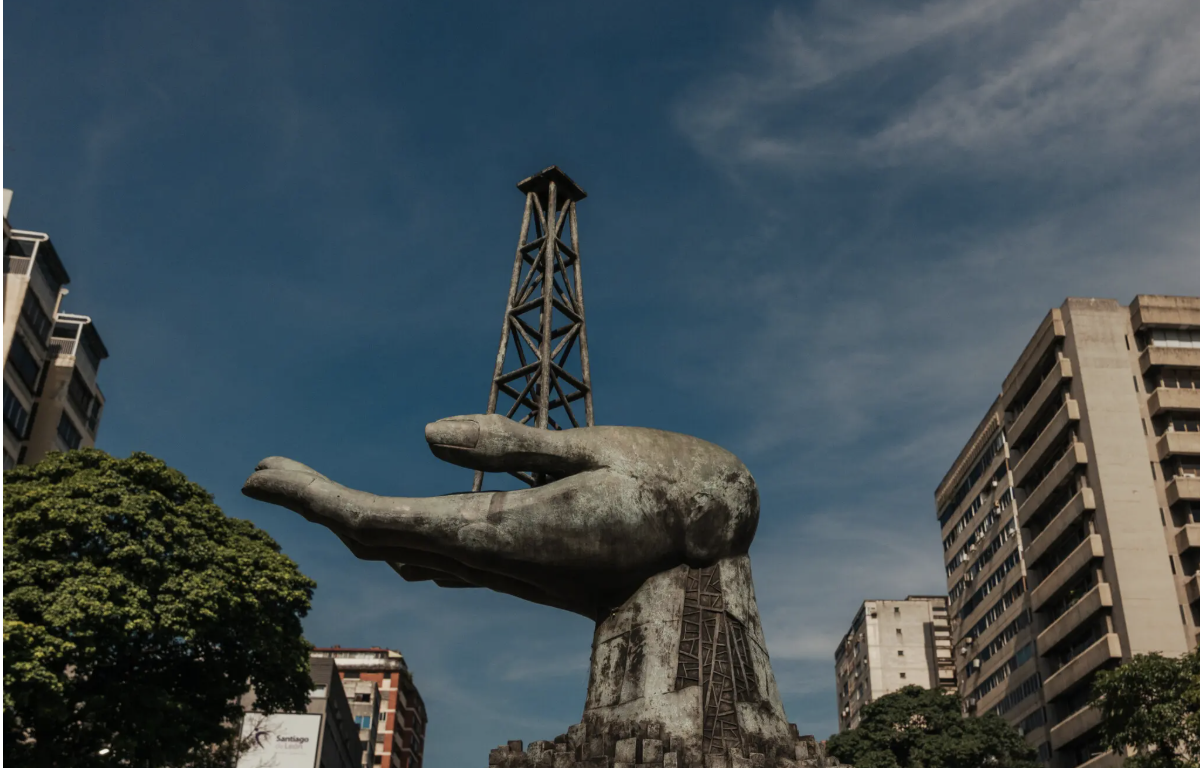
The Venezuela oil industry Trump is planning to revive.
Venezuela’s oil industry would “make a lot of money” with the United States behind it, President Trump said Saturday in a news conference to confirm the capture of the country’s president, Nicolás Maduro, who is facing federal drugs and weapons charges.
“We’re going to have our very large United States oil companies, the biggest anywhere in the world, go in, spend billions of dollars, fix the badly broken infrastructure, the oil infrastructure, and start making money for the country,” Mr. Trump said.
He said the country’s oil industry had been “a total bust,” for a long time, adding, “They were pumping almost nothing by comparison to what they could have been pumping.”
Mr. Trump appears to be counting heavily on U.S. intervention in the oil industry to help transform Venezuela, a proposition that could prove to be complicated and expensive.
Summary of the NYT Article on Trump, Venezuela and the Oil Industry
President Donald Trump confirmed that Venezuelan President Nicolás Maduro has been captured by U.S. forces and is being brought to the United States to face federal charges, including drug- and weapons-related counts. In announcing the operation, Trump said the U.S. intends to “run” Venezuela temporarily and bring in major American oil companies to fix its broken oil industry and generate revenue. AP News
Trump described Venezuela’s oil sector as having been “a total bust” for years, producing far below its potential. He said U.S. firms would be invited to “spend billions of dollars” to rebuild decaying oil infrastructure and return production to higher levels. Reuters
According to the article:
- Venezuela claims the largest oil reserves in the world but currently produces only around 1 million barrels per day, compared with over 2 million b/d in the early 2010s. Reuters
- The state-owned oil company PDVSA lacks capital, skilled personnel, and modern equipment, and the fields and facilities suffer from long-term neglect, power outages, theft, and other operational failures. Reuters
- Chevron remains the main Western company still operating in Venezuela and produces about a quarter of the country’s oil under special arrangements. Reuters
- Analysts quoted in the article say reviving production will be expensive and take time, with estimates of $10 billion just to add 500,000 b/d in output, and “tens of billions” more required for a major turnaround. Reuters
Key Facts About Venezuela’s Oil Industry Quality and Structural Challenges
To understand what “fixing” Venezuela’s oil industry really means, it’s important to note two technical realities:
1. The Oil Is Mostly Heavy and Hard to Process
- Venezuela’s crude is predominantly heavy and extra-heavy oil — much denser and more viscous than the “light sweet” crude that many global refineries prefer. U.S. Energy Information Administration
- Heavy crude requires specialized refining and diluents (lighter hydrocarbons added to make it flow). Shortages of diluent and degraded upgrading and blending infrastructure have significantly constrained production and export ability by limiting the oil’s ability to be transported and sold. U.S. Energy Information Administration
- As of 2023–2024, the majority of Venezuela’s production — commonly estimated at roughly 60–70% — consisted of heavy and extra-heavy crude from the Orinoco Belt, with much smaller volumes of light and medium grades. U.S. Energy Information Administration / industry analysts, TradingView.
2. Massive Investment and Expertise Are Needed
- The oil fields have suffered from years of neglect — with dilapidated rigs, inadequate drilling, frequent power outages, and theft — meaning the infrastructure is far from turnkey. Reuters
- Analysts estimate that substantive recovery in output will require billions upon billions of dollars in capital, technical overhaul, workforce rebuilding, and long-term maintenance. Reuters
- Even if reserves are enormous, proven reserves don’t translate directly into cheap or easy production; heavy oil demands more processing and specialized infrastructure than lighter crudes. Atlantic Council
Bottom Line
Trump’s rhetoric and recent U.S. actions toward Venezuela have revived claims that restoring access to Venezuela’s vast oil reserves could be a strategic or economic objective, even though the country’s oil sector currently operates at only a fraction of its historical capacity due to years of underinvestment, sanctions, degraded infrastructure, and technical constraints. Despite holding the world’s largest proven crude reserves, Venezuela’s production has collapsed from over 3 million barrels per day in the late 1990s to well under 1 million barrels per day in recent years (U.S. Energy Information Administration and Reuters).
Realizing the potential of those reserves — most of which are heavy and extra-heavy crude — would require tens of billions of dollars in capital spending, extensive rebuilding of upgrading and transport infrastructure, restoration of reliable power and diluent supplies, and years of sustained technical effort, even if U.S. companies were allowed to lead the process (Reuters; U.S. Energy Information Administration; Atlantic Council).
References
World’s Largest Proven Oil Reserves
-
“Venezuela, possessing the world’s largest oil reserves…” — as widely reported by Reuters
Link: https://www.reuters.com/business/energy/venezuelan-oil-industry-worlds-largest-reserves-decaying-infrastructure-2026-01-03/
Production Is at Only a Fraction of Capacity
-
“Despite holding about 17% of global reserves — output dropped from millions of barrels to around 1.1 million barrels per day, a small fraction of its historical levels…” — Reuters
Link: https://www.reuters.com/business/energy/venezuelan-oil-industry-worlds-largest-reserves-decaying-infrastructure-2026-01-03/ -
Additional data showing production challenges and declines due to sanctions and infrastructure problems. Reuters
Link: https://www.reuters.com/markets/commodities/us-squeeze-venezuela-oil-wont-create-global-crunch-2025-12-15/
Underinvestment and Infrastructure Decay
-
The U.S. EIA country analysis brief (PDF) documents the decade-long decline in production capacity, lack of maintenance, decline in skilled personnel, and heavy crude mix from the Orinoco Belt. U.S. Energy Information Administration
Link: https://www.eia.gov/international/content/analysis/countries_long/Venezuela/pdf/venezuela_2024.pdf
Heavy and Extra-Heavy Crude and Technical Constraints
-
Heavy crude requiring diluents and specialized infrastructure is a consistent theme in reporting. More than two-thirds (over 60–70%) of production is heavier grades, and poor infrastructure amplifies constraints. Reuters
Link: https://www.reuters.com/markets/commodities/us-squeeze-venezuela-oil-wont-create-global-crunch-2025-12-15/
Long, Costly Investment Required
-
Analysts estimate that tens of billions of dollars in investment will be needed to revive production significantly, with long timelines before output rises meaningfully. This is consistent with expert commentary in Reuters reporting. Reuters
Link: https://www.reuters.com/business/energy/venezuelan-oil-industry-worlds-largest-reserves-decaying-infrastructure-2026-01-03/
-
Reuters commentary on Venezuelan oil suggests that even with waivers and foreign participation, large-scale recovery requires heavy investment and long timelines. Reuters
Link: https://www.reuters.com/commentary/breakingviews/venezuelan-oil-riches-will-stay-mostly-theoretical-2025-12-12/

