

Why “taking over” Greenland would be illegal, foolish — and strategically beneficial to Russia
The proposal that the United States should seize or “take over” Greenland reflects a fundamental misunderstanding — or outright dismissal — of international law, alliance structures, economics, Arctic realities, and U.S. security interests. Once the basic facts are understood, the idea collapses completely.
Greenland is not unclaimed territory — and it is not available to be taken
Greenland (Kalaallit Nunaat) is a self-governing territory with its own elected parliament, operating under the sovereignty of the Kingdom of Denmark. Since 2009, Greenland has exercised extensive self-rule under Denmark’s Self-Government Act, which explicitly recognizes Greenlanders as a distinct people with the right to self-determination.
Neither Denmark nor Greenland has any legal mechanism — or political willingness — to transfer sovereignty to another country. Greenland is not for sale, and Denmark does not have the authority to sell it even if it wanted to. Sovereignty over Greenland ultimately rests on the consent of Greenlanders themselves.
Any attempt by the United States to take Greenland without consent would therefore constitute the seizure of allied territory.
Seizing Greenland would violate the foundation of modern international law
After World War II, states established a basic rule to prevent endless wars of conquest: territory cannot be acquired by force or coercion. This principle is embedded in the Charter of the United Nations, which the United States helped draft and ratified.
Abandoning this rule would have immediate and concrete consequences. It would undermine U.S. opposition to territorial conquest elsewhere, weaken deterrence against similar actions by other major powers, and signal that borders are determined by strength rather than law. Once that signal is sent, the United States loses legal credibility within the very system it relies on to protect its interests.
This is not abstract morality. It is the legal foundation of the post-war international order.
The United States already has everything it needs in Greenland — legally
The claim that the United States must “own” Greenland to secure it is incorrect.
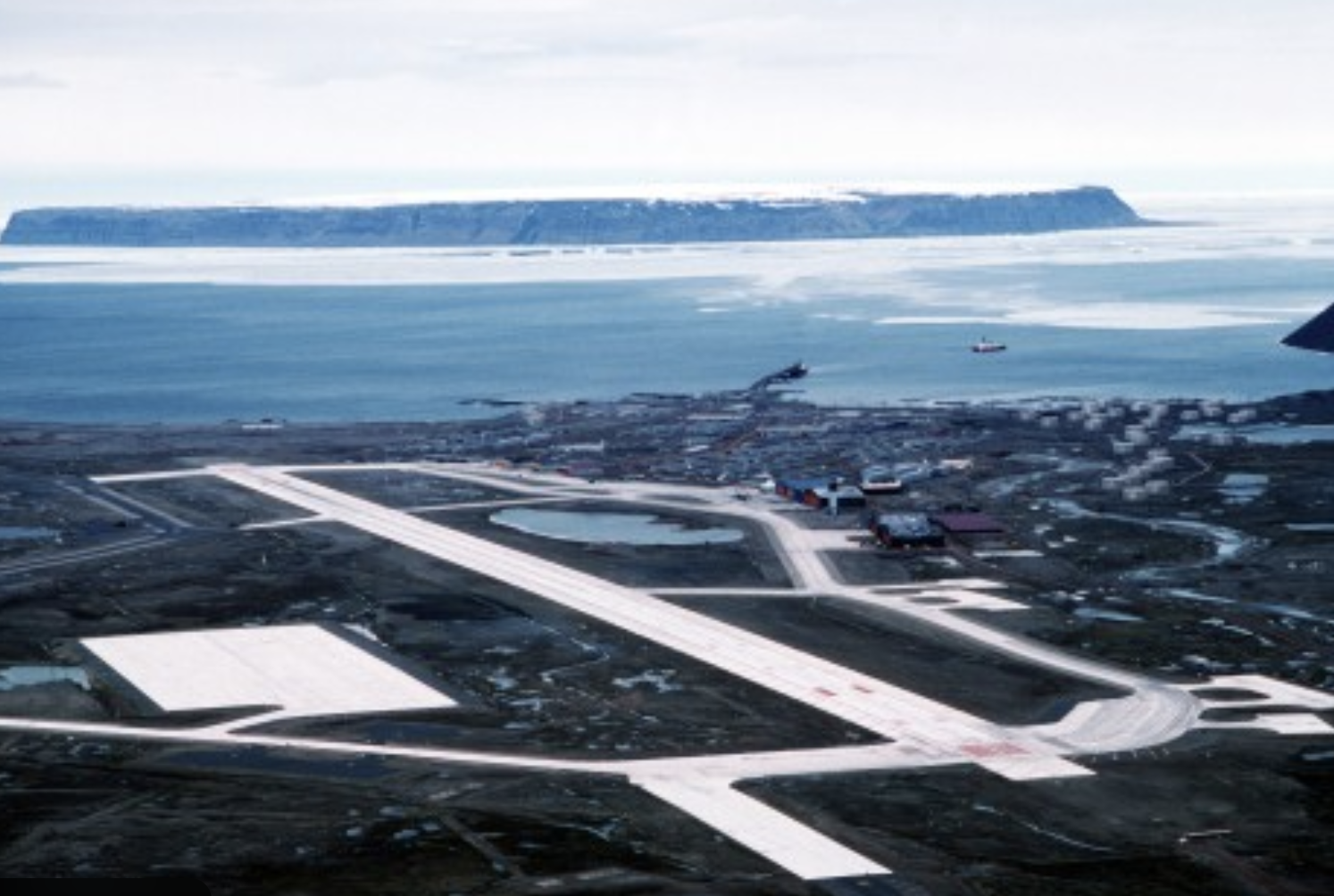
The United States already operates Pituffik Space Base (formerly Thule Air Base), which plays a critical role in early missile warning, space surveillance, and Arctic defense monitoring. These capabilities exist through formal defense agreements with Denmark and Greenland and are reinforced by alliance coordination.
Sovereignty adds nothing to U.S. military effectiveness in Greenland. The access already exists — legally, permanently, and cooperatively.
Greenland is protected by NATO
Denmark is a full member of NATO, and NATO’s founding treaty explicitly includes islands under the jurisdiction of member states in the North Atlantic area north of the Tropic of Cancer. Greenland clearly falls within this geographic scope.
In practical terms, this means that an attack on Greenland would fall squarely within NATO’s collective-defense framework and would almost certainly be treated as a grave alliance-level crisis. The United States would already be involved by virtue of its NATO membership.
NATO deterrence functions because allies trust one another and because commitments are credible. Undermining that trust weakens Arctic security rather than strengthening it.
The “Russia or China will take Greenland” argument fails on basic facts
Supporters of seizing Greenland often argue that if the United States does not own it, Russia or China might invade or establish military bases there. This argument misunderstands how sovereignty, alliances, and deterrence actually work.
A Russian attempt to seize Greenland would require crossing NATO-controlled Arctic airspace and seas, evading U.S. early-warning systems already stationed on the island, sustaining forces in extreme Arctic conditions thousands of miles from Russian territory, and knowingly provoking a confrontation with NATO. Russia has struggled to sustain military operations even near its own borders. Greenland is among the most heavily monitored regions in the Arctic. Such an operation would be strategically irrational and would almost certainly escalate into direct conflict with NATO.
China, meanwhile, is not an Arctic state and has no military basing rights in Greenland. Any Chinese military presence would require approval from the Greenlandic government, Denmark, and political tolerance from NATO. In practice, even limited Chinese infrastructure proposals in Greenland have already been blocked or constrained on security grounds — without U.S. ownership of the territory. The existing legal and alliance framework already prevents hostile military encroachment.
Owning Greenland would make the United States less safe, not more
Greenland is secure precisely because it is embedded in a rules-based alliance system. Seizing it would fracture that system.
Attempting to take Greenland would turn Denmark — an ally — into an adversary, undermine NATO unity, encourage smaller allies to hedge toward rival powers, and legitimize territorial conquest as a security tool. Alliances deter aggression. Imperial behavior invites it.
Greenlanders reject this idea
Greenlanders are not Americans, and they have repeatedly made clear that they seek greater autonomy — not absorption or rule by a foreign power. Disregarding that reality would place the United States in the position of imposing control over a people who have not consented, directly contradicting decades of stated U.S. support for self-determination. Any attempt to assert control by force would damage U.S. credibility; it would openly align the United States with the forms of territorial domination it has spent generations condemning.
Why this logic undercuts the system that made the United States rich and secure
The argument for taking Greenland rests on a dangerous misunderstanding of how U.S. power actually works. The United States did not build its post-World War II position by conquering territory. It built it by creating a rules-based security and trade system that made conquest unnecessary — and made American prosperity possible.
That system includes NATO, but NATO’s purpose was never primarily economic aid to Europe. It was strategic. After World War II, the United States made a deliberate trade: it invested military resources to stabilize key regions, and in return global trade routes became safer, borders more predictable, and capital, goods, and energy could move without constant war.
This arrangement allowed the United States to shape global trade rules, anchor the world’s reserve currency, expand American companies abroad without continuous military conflict, and avoid repeated great-power wars. Yes, the United States spent money — but it benefited enormously.
The result was the longest sustained period without great-power war in modern history, extraordinary growth in U.S. trade and wealth, and a global economy where instability — the most expensive condition imaginable — was dramatically reduced.
That peace dividend is tangible. It appears in lower defense mobilization costs, more stable energy prices, predictable supply chains, and fewer Americans sent into large-scale wars.
When that system breaks down, the costs do not remain overseas. Wars disrupt energy markets, shipping lanes, food prices, insurance markets, and currency stability. And when instability spreads, the United States does not get to opt out. The costs arrive at home through higher prices, military deployments, cyberattacks, and escalation risks that ultimately involve U.S. forces.
Europe is no longer “free-riding”
Another misconception driving this argument is that Europe does not contribute to its own defense. That claim is outdated.
Since Russia’s invasion of Ukraine, European NATO members have sharply increased defense spending. Several countries now meet or exceed NATO’s 2% of GDP benchmark. Europe has committed hundreds of billions of dollars to military modernization and Ukraine support, and Germany alone has reversed decades of defense policy with massive new funding commitments.
Europe is not sitting back. It is rearming because the threat is real. Importantly, much of this spending flows to U.S. defense contractors, strengthens shared military interoperability, and reduces the long-term burden on U.S. forces.
Why “might makes right” logic harms Americans directly
The argument for seizing Greenland — that a powerful country is justified in taking territory because it fears future threats — is the same logic used by other powers to justify aggression. The danger is not that this logic benefits Europe. The danger is that it dismantles the framework that protects U.S. interests.
Once the United States endorses this logic, borders become provisional, alliances become unreliable, trade routes become contested, and military force becomes the default tool again. That world is not cheaper for Americans. It is vastly more expensive.
It means permanently higher defense spending, more frequent military deployments, greater risk of Americans being killed far from home, and constant escalation instead of long periods of peace.
The post-war system was not altruism. It was a strategic investment that paid off for decades. Abandoning it does not save money. It trades predictable costs for unlimited risk — which ultimately means higher costs in both money and lives.
Why this directly serves Vladimir Putin’s strategic interests
For years, Vladimir Putin has pursued a consistent objective: weakening NATO by undermining trust among its members. Russia lacks the economic and military capacity to defeat NATO outright, so its strategy has focused on eroding cohesion, credibility, and confidence inside the alliance.
A U.S. attempt to seize Greenland would advance that objective with remarkable efficiency. It would show a leading NATO power disregarding the sovereignty of another NATO member, turning alliance guarantees into conditional promises rather than firm commitments. Smaller NATO states would be forced to reconsider whether alliance rules actually protect them, while Russian narratives portraying NATO as hypocritical and predatory would gain immediate credibility.
Russia benefits most when NATO members doubt one another. Alliance fragmentation lowers the cost of Russian coercion and weakens deterrence without requiring a single military victory.
It is also notable that Donald Trump has repeatedly attacked NATO as unnecessary, questioned collective defense obligations, and framed alliances as transactional burdens. That posture overlaps directly with Russia’s long-standing goal of hollowing out the alliance system that constrains its power.
In this context, seizing Greenland would accelerate the very alliance decay that Russia has worked toward for decades — and it would do so using American actions with no cost to Russia.
The economics are catastrophically unfavorable
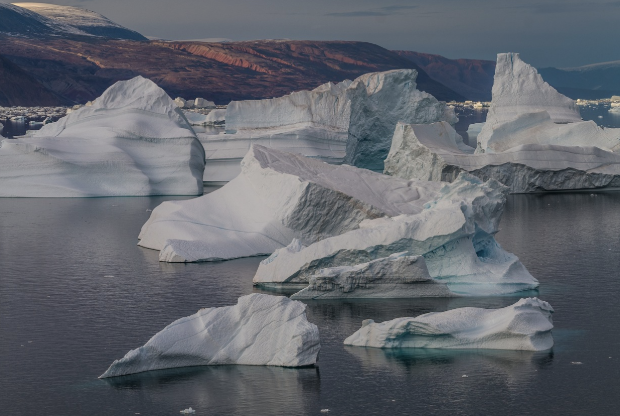
Greenland’s interior is covered by an ice sheet up to two miles thick. It is extremely infrastructure-poor and extraordinarily expensive to operate in. Climate change is destabilizing permafrost, increasing infrastructure risk, and amplifying environmental liabilities.
Any attempt to govern or exploit Greenland would require massive U.S. spending on ports, roads, airfields, power generation, housing, healthcare, civil administration, environmental protection, cleanup, and permanent logistical subsidies.
The popular image of Greenland as a frozen resource vault waiting to be unlocked misunderstands Arctic geology and climate dynamics. As conditions change, costs rise and risks multiply. Serious economic analyses show no credible scenario in which Greenland becomes a net economic asset. It would be a long-term fiscal liability measured in hundreds of billions — potentially far more over time.
Bottom line
The choice is not “pay for alliances” versus “pay nothing.” The real choice is investing in a system that prevents wars — or paying far more later in money, instability, and American lives.
Rather than protecting the United States, seizing Greenland would help dismantle the very order that kept the U.S. wealthy, secure, and largely at peace. History is very clear about what comes next when that order collapses.
The conclusion is unavoidable: taking Greenland would be illegal, violate U.S. treaty obligations, add no meaningful military security, weaken NATO, alienate allies, impose enormous economic costs, and legitimize territorial conquest globally — and it would leave the United States weaker, poorer, and less trusted.
References & Sources
Greenland’s legal status & self-government
-
Government of Greenland – Self-Government Act (2009):
https://naalakkersuisut.gl/en/About-Government-of-Greenland/About-Greenland/Self-Government-Act -
Danish Ministry of Foreign Affairs – Greenland and the Faroe Islands:
https://um.dk/en/foreign-policy/the-faroe-islands-and-greenland
International law: prohibition on territorial conquest
-
United Nations Charter, Article 2(4):
https://www.un.org/en/about-us/un-charter/chapter-1 -
UN General Assembly – Declaration on Principles of International Law (1970):
https://legal.un.org/avl/ha/dpilc/dpilc.html
NATO treaty coverage of Greenland
-
North Atlantic Treaty (1949), Articles 5 and 6:
https://www.nato.int/cps/en/natohq/official_texts_17120.htm -
NATO explainer – Collective Defence (Article 5):
https://www.nato.int/cps/en/natohq/topics_110496.htm
U.S. military presence in Greenland
-
U.S. Space Force – Pituffik Space Base (formerly Thule Air Base):
https://www.spaceforce.mil/About-Us/Bases/Pituffik-Space-Base/ -
Missile Defense Agency – Early Warning Radars:
https://www.mda.mil/system/ewr.html
China and infrastructure concerns in Greenland
-
Reuters – Denmark blocks Chinese role in Greenland airports (2018):
https://www.reuters.com/article/world/denmark-steps-in-to-block-chinese-influence-in-greenland-idUSKCN1ML1U3 -
Danish Institute for International Studies – China’s Arctic ambitions:
https://www.diis.dk/en/research/china-and-the-arctic
Arctic security & surveillance
-
Center for Strategic and International Studies (CSIS) – Arctic Security:
https://www.csis.org/programs/arctic-security-initiative -
RAND Corporation – Arctic military challenges:
https://www.rand.org/topics/arctic-security.html
Environmental and economic realities of Greenland
-
NASA – Greenland Ice Sheet overview:
https://climate.nasa.gov/vital-signs/ice-sheets/ -
U.S. Geological Survey – Arctic resource extraction challenges:
https://www.usgs.gov/programs/energy-and-minerals
Self-determination & international norms
-
United Nations – Right of Self-Determination:
https://www.ohchr.org/en/instruments-mechanisms/instruments/international-covenant-civil-and-political-rights

