

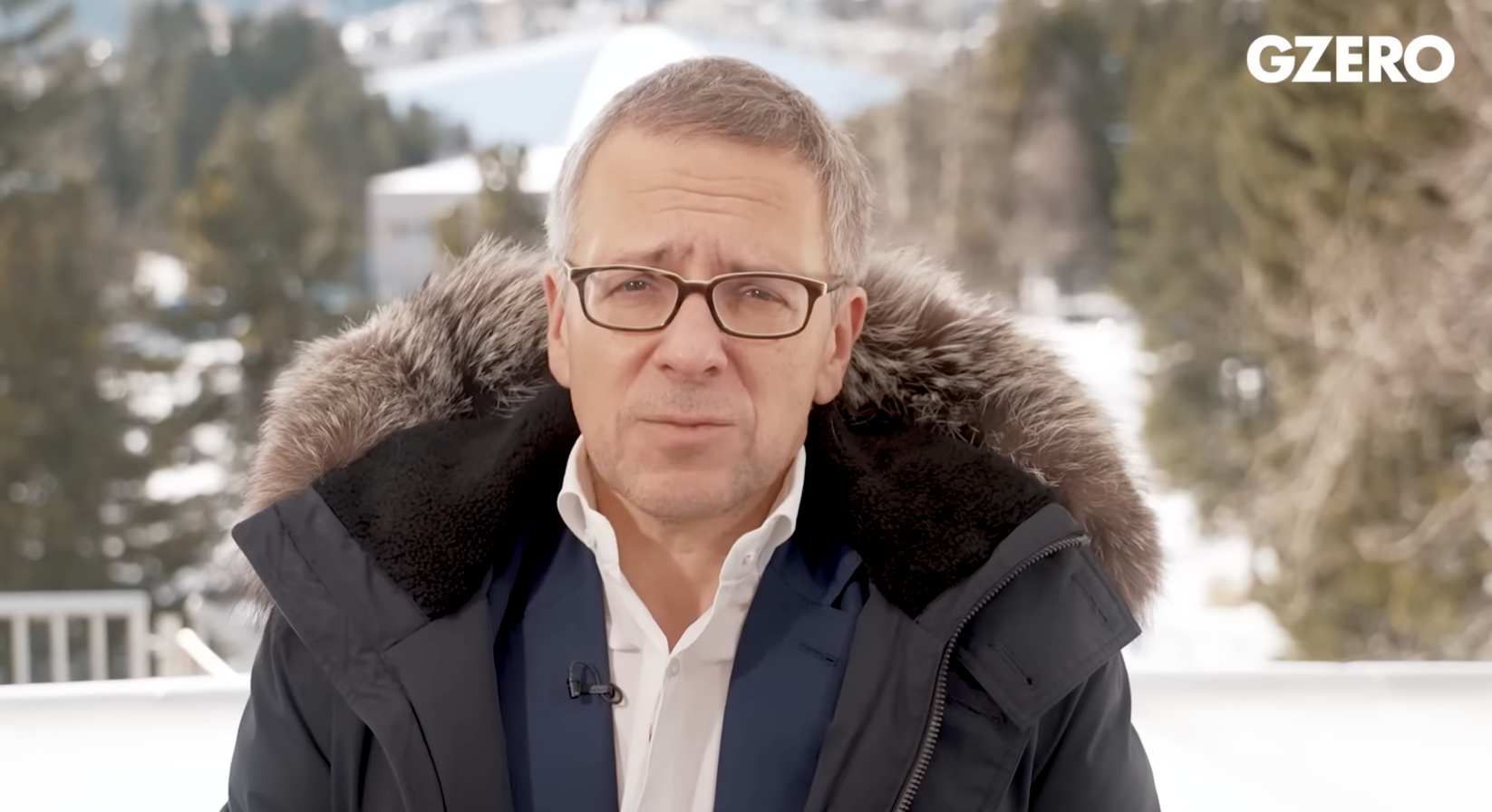
Trump’s demands put Europe in FAFO territory ~ Ian Bremmer’s Quick Take
Checking in from the 2026 World Economic Forum in Davos, Ian Bremmer breaks down a deepening crisis in the transatlantic relationship as President Trump escalates pressure on Europe over Greenland.
Summary
Speaking from Davos, Ian Bremmer argues that President Trump’s renewed insistence that the United States must own Greenland has triggered a genuine crisis in the transatlantic alliance. Europe is already under strain from the war in Ukraine, weak economic growth, and growing doubts about U.S. reliability. In that context, Trump’s posture goes well beyond trade disputes or rhetorical provocation: it openly questions the territorial integrity of a NATO-aligned country. Bremmer’s point is stark — if the U.S. treats allied territory as negotiable, the credibility of NATO itself collapses.
To frame how countries respond to Trump, Bremmer uses the contrast between “FAFO” and “TACO.” Some actors assume Trump is bluffing and fail to prepare for escalation, only to discover too late that he is willing to follow through. Others push back credibly, using real leverage, and force Trump to retreat. The lesson, Bremmer argues, is that Trump backs down only when confronted with unified, tangible power. Weak or fragmented responses invite pressure; firm, coordinated resistance deters it.
Greenland, in this sense, is not really about Arctic resources or security. It is a test of whether Europe can act as a unified political and strategic actor when directly challenged. If Europe fractures — if some states accommodate, others hedge, and others remain silent — Trump can effectively hollow out NATO without formally leaving it. The alliance would survive on paper while losing its core function: collective defense rooted in trust.
This dynamic directly serves the interests of Vladimir Putin. A fractured NATO is far more valuable to Russia than any battlefield gain in Ukraine. When the United States signals that alliance commitments are conditional, transactional, or reversible, it validates Moscow’s long-standing claim that Western security guarantees are unreliable. Every public dispute among allies, every unanswered threat against a smaller NATO partner, weakens deterrence and lowers the cost of future Russian coercion — not just in Eastern Europe, but across the alliance’s periphery.
Bremmer’s underlying warning is that this moment is structural. The global order is fragmenting, and alliances only endure if red lines are enforced collectively. Greenland is simply the most visible pressure point where that reality is now exposed. If Europe cannot push back together, NATO does not gradually erode — it effectively ends, to the strategic benefit of Moscow and the long-term detriment of Western security.

