

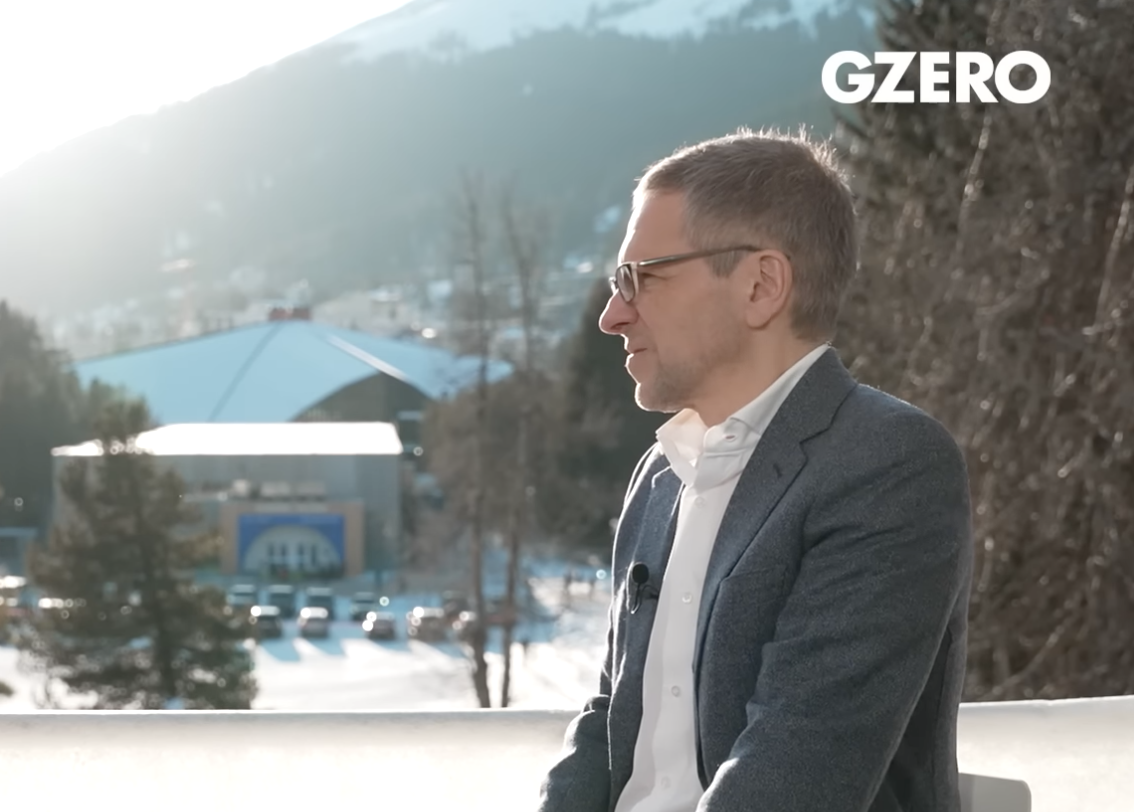
Can Europe stay united?
In this recent episode of GZERO World, Ian Bremmer takes us to the World Economic Forum in Davos, Switzerland, to explore the current state of transatlantic relations and the global economic outlook amid a period of heightened political uncertainty. Bremmer provides insightful discussions with Finland’s President Alexander Stubb on European unity and security challenges, and IMF Managing Director Kristalina Georgieva on the surprising resilience of the world economy.
Timeline
-
Introduction to GZERO World and the World Economic Forum (0:00)
- Ian Bremmer introduces the GZERO World and the 56th annual World Economic Forum in Davos, Switzerland and highlights the tense atmosphere due to President Trump’s threats of tariffs on European nations and his desire to own Greenland.
- The segment sets the stage for discussions on transatlantic relations and the global economy.
-
Interview with Finland’s President Alexander Stubb (2:40)
- US-Europe Relations and Greenland: Stubb discusses the current state of US-Europe relations, noting a perceived closeness despite disagreements over issues like Greenland’s sovereignty. He emphasizes the need to de-escalate.
- European Unity and Response to Crises (5:10): Stubb asserts that the European Union is more united than ever, driven by events like COVID-19, Russia’s war in Ukraine, and the energy crisis.
- War in Ukraine and Russian Failures (8:00): Stubb analyzes the war in Ukraine, highlighting Russia’s failures in its objectives.
- NATO’s Response to Asymmetric Warfare (11:20): Stubb details how NATO and Finland are responding to Russia’s hybrid and cyber warfare tactics.
- Changing World Order (12:50): Stubb discusses the changing world order, emphasizing the need for multilateralism and cooperation to avoid past mistakes, stressing the importance of rebalancing power in international institutions.
-
Interview with IMF Managing Director Kristalina Georgieva (14:30)
- Resilient Global Economy (14:45): Georgieva explains why the world economy has been more resilient than feared, attributing it to four factors: private sector agility, the limited impact of tariffs, productivity gains from AI, and responsible central bank and fiscal policies.
- Eurozone Outlook (18:30): She discusses the Eurozone’s improved economic outlook.
- Importance of Central Bank Independence (21:00): Georgieva stresses the critical role of independent and accountable central banks for economic stability and growth.
In this episode of GZERO World, Ian Bremmer, at the World Economic Forum in Davos, Switzerland, delves into the strained transatlantic relations and the global economic landscape amidst President Trump’s second term.
Bremmer’s first conversation is with Finland’s President Alexander Stubb. Stubb offers a European perspective on the current state of US-Europe relations, particularly concerning the contentious issue of Greenland’s sovereignty. He emphasizes the unprecedented unity within the European Union in facing recent crises, from the war in Ukraine to energy instability. Stubb also provides an insightful analysis of the war in Ukraine, highlighting Russia’s strategic failures and NATO’s adaptive responses.
Next, Bremmer speaks with Kristalina Georgieva, Managing Director of the International Monetary Fund. Georgieva explains the surprising resilience of the global economy despite significant turbulence, attributing it to the agility of the private sector, the muted impact of tariffs, the burgeoning productivity driven by AI, and the actions of central banks and fiscal authorities. She also sheds light on the Eurozone’s improved economic outlook.
This video provides a look at the geopolitical and economic challenges facing Europe and the world, offering insights from key leaders on how to navigate a deeply fractured global moment.

